
Motorola ThinkPhone vs. Sony Xperia 1 VII: A Deep Dive for Power Users
| Phones Images | |||||
|---|---|---|---|---|---|
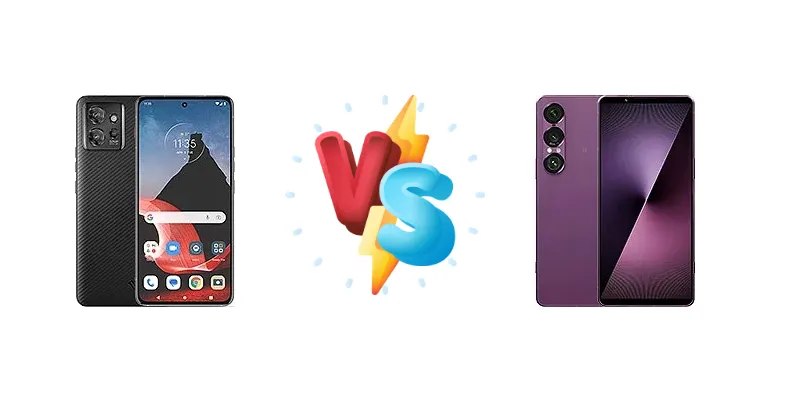
|
🏆 Quick Verdict
For the average user prioritizing all-day battery life and a secure, productivity-focused experience, the Motorola ThinkPhone is the better choice. However, the Sony Xperia 1 VII’s superior display, significantly faster processor, and advanced camera features make it the clear winner for content creators and performance enthusiasts.
| PHONES | ||
|---|---|---|
| Phone Names | Motorola ThinkPhone | Sony Xperia 1 VII |
| Network | ||
|---|---|---|
| 2G bands | GSM 850 / 900 / 1800 / 1900 | GSM 850 / 900 / 1800 / 1900 |
| 3G bands | HSDPA 800 / 850 / 900 / 1700(AWS) / 1900 / 2100 - ROW | HSDPA 800 / 850 / 900 / 1700(AWS) / 1900 / 2100 |
| 4G bands | 1, 2, 3, 4, 5, 7, 8, 12, 13, 17, 18, 19, 20, 25, 26, 28, 32, 38, 38, 39, 40, 41, 42, 43, 48, 66 - ROW | 1, 2, 3, 4, 5, 7, 8, 12, 13, 17, 19, 20, 25, 26, 28, 32, 34, 38, 39, 40, 41, 66 - Europe |
| 5G bands | 1, 2, 3, 5, 7, 8, 20, 28, 38, 40, 41, 66, 77, 78 SA/NSA/Sub6 - ROW | 1, 3, 5, 7, 8, 20, 28, 38, 40, 41, 75, 77, 78 SA/NSA/Sub6 - Europe |
| Speed | HSPA, LTE, 5G | HSPA, LTE, 5G |
| Technology | GSM / HSPA / LTE / 5G | GSM / HSPA / LTE / 5G |
| 1, 2, 3, 5, 7, 8, 20, 28, 38, 41, 66, 77, 78 SA/NSA/Sub6 - China | - | |
| Launch | ||
|---|---|---|
| Announced | 2023, January 05 | 2025, May 13 |
| Status | Available. Released 2023, January 29 | Available. Released 2025, June 04 |
| Body | ||
|---|---|---|
| Build | Glass front (Gorilla Glass Victus), aramid fibre back, aluminum frame | Glass front (Gorilla Glass Victus 2), glass back (Gorilla Glass Victus), aluminum frame |
| Dimensions | 158.8 x 74.4 x 8.3 mm (6.25 x 2.93 x 0.33 in) | 162 x 74 x 8.2 mm (6.38 x 2.91 x 0.32 in) |
| SIM | · Nano-SIM· Nano-SIM + Nano-SIM | · Nano-SIM + eSIM· Nano-SIM + Nano-SIM |
| Weight | 188.5 g (6.67 oz) | 197 g (6.95 oz) |
| IP68 dust/water resistant (up to 1.5m for 30 min) Drop-to-concrete resistance from up to 1.3m MIL-STD-810H compliant | - | |
| Display | ||
|---|---|---|
| Protection | Corning Gorilla Glass Victus | Corning Gorilla Glass Victus 2, Mohs level 5 |
| Resolution | 1080 x 2400 pixels, 20:9 ratio (~399 ppi density) | 1080 x 2340 pixels, 19.5:9 ratio (~396 ppi density) |
| Size | 6.6 inches, 105.2 cm2 (~89.0% screen-to-body ratio) | 6.5 inches, 103.7 cm2 (~86.5% screen-to-body ratio) |
| Type | P-OLED, 1B colors, 144Hz, HDR10+ | LTPO OLED, 1B colors, 120Hz, HDR BT.2020 |
| Platform | ||
|---|---|---|
| CPU | Octa-core (1x3.19 GHz Cortex-X2 & 3x2.75 GHz Cortex-A710 & 4x1.80 GHz Cortex-A510) | Octa-core (2x4.32 GHz Oryon V2 Phoenix L + 6x3.53 GHz Oryon V2 Phoenix M) |
| Chipset | Qualcomm SM8475 Snapdragon 8+ Gen 1 (4 nm) | Qualcomm SM8750-AB Snapdragon 8 Elite (3 nm) |
| GPU | Adreno 730 | Adreno 830 |
| OS | Android 13, upgradable to Android 15 | Android 15, up to 4 major Android upgrades |
| Memory | ||
|---|---|---|
| Card slot | No | microSDXC (uses shared SIM slot) |
| Internal | 128GB 8GB RAM, 256GB 8GB RAM, 256GB 12GB RAM, 512GB 12GB RAM | 256GB 12GB RAM, 512GB 12GB RAM |
| UFS 3.1 | - | |
| Main Camera | ||
|---|---|---|
| Features | LED flash, panorama, HDR | Zeiss optics, Zeiss T* lens coating, color spectrum sensor, LED flash, panorama, HDR, eye tracking |
| Triple | 50 MP, f/1.8, (wide), 1/1.5", 1.0µm, multi-directional PDAF, OIS 13 MP, f/2.2, 120˚ (ultrawide), 1/3.0", 1.12µm, AF Auxiliary lens | 48 MP, f/1.9, 24mm (wide), 1/1.35", 1.12µm, dual pixel PDAF, OIS 12 MP, f/2.3, 85mm (telephoto), f/3.5, 170mm (telephoto), 1/3.5", 1.0µm, dual pixel PDAF, 3.5x-7.1x continuous optical zoom, OIS, 4cm macro @ 120mm, no AF 48 MP, f/2.0, 16mm (ultrawide), 1/1.56", 1.0µm, PDAF |
| Video | 8K@30fps, 4K@30/60fps, 4K@30fps HDR10, 1080p@30/60/120/240/960fps, gyro-EIS | 4K@24/30/60/120fps HDR, 1080p@30/60/120fps; 5-axis gyro-EIS, OIS |
| Selfie camera | ||
|---|---|---|
| Features | HDR | HDR |
| Single | 32 MP, f/2.5, (wide), 1/3.0", 0.7µm - ROW model 16 MP, f/2.0, (wide), 1.0µm - PRC model | 12 MP, f/2.0, 24mm (wide), 1/2.9", 1.22µm |
| Video | 4K@30fps, 1080p@30/60fps | 4K@30/60fps, 1080p@30/60fps, 5-axis gyro-EIS |
| Sound | ||
|---|---|---|
| 3.5mm jack | No | - |
| 35mm jack | No | Yes |
| Loudspeaker | Yes, with stereo speakers | Yes, with stereo speakers |
| Comms | ||
|---|---|---|
| Bluetooth | 5.2, A2DP, LE, aptX HD, aptX Adaptive | 6.0, A2DP, LE Audio, aptX HD, aptX Adaptive, aptX Lossless |
| NFC | Yes | Yes |
| Positioning | GPS, GLONASS, GALILEO | GPS, GLONASS, BDS, GALILEO, QZSS |
| Radio | No | No |
| USB | USB Type-C 3.1, OTG | USB Type-C 3.2, OTG, video output |
| WLAN | Wi-Fi 802.11 a/b/g/n/ac/6e, tri-band, Wi-Fi Direct | Wi-Fi 802.11 a/b/g/n/ac/6e/7, tri-band, Wi-Fi Direct, DLNA |
| Features | ||
|---|---|---|
| Sensors | Fingerprint (under display, optical), accelerometer, gyro, proximity, compass, barometer (North America only) | Fingerprint (side-mounted), accelerometer, gyro, proximity, barometer, compass |
| Battery | ||
|---|---|---|
| Charging | 68W wired 15W wireless | 30W wired, PD3.0, PPS, 50% in 30 min 15W wireless Reverse wireless |
| Type | Li-Po 5000 mAh | 5000 mAh |
| Misc | ||
|---|---|---|
| Colors | Carbon Black | Moss Green, Orchid Purple, Slate Black |
| Models | XT2309-2 | XQ-FS54, XQFS54EUKCG.GC, XQFS54EUKCV.GC, XQFS54EUKCB.GC, PDX256 |
| Price | € 249.79 | € 1,338.99 / $ 1,394.99 / £ 1,149.94 |
| Tests | ||
|---|---|---|
| Battery life | Endurance rating 116h | - |
| Camera | Photo / Video | - |
| Display | Contrast ratio: Infinite (nominal) | - |
| Loudspeaker | -21.6 LUFS (Excellent) | - |
| Performance | AnTuTu: 1081805 (v9) GeekBench: 4207 (v5.1) GFXBench: 90fps (ES 3.1 onscreen) | - |
| EU LABEL | ||
|---|---|---|
| Battery | - | 43:30h endurance, 1400 cycles |
| Energy | - | Class B |
| Free fall | - | Class B (181 falls) |
| Repairability | - | Class D |
Motorola ThinkPhone
- Exceptional battery life (116h endurance)
- Faster wired charging (68W)
- Strong focus on security and productivity
- Older chipset (Snapdragon 8+ Gen 1)
- Less impressive display compared to Xperia 1 VII
Sony Xperia 1 VII
- Cutting-edge Snapdragon 8 Elite processor
- Brighter and potentially more accurate display
- Advanced camera features and image processing
- Reverse wireless charging
- Shorter battery endurance rating
- Slower wired charging (30W)
Display Comparison
The Sony Xperia 1 VII boasts a significantly brighter display, reaching 1475 nits compared to the ThinkPhone’s 1069 nits. This translates to superior visibility in direct sunlight. While both displays have an infinite (nominal) contrast ratio, the Xperia 1 VII’s panel likely benefits from Sony’s expertise in display technology, potentially offering wider color gamuts and more accurate color reproduction. The ThinkPhone’s display is still excellent, but the Xperia 1 VII provides a more immersive and visually striking experience, particularly for multimedia consumption. We lack PWM frequency data, but the Xperia 1 VII’s display tech is generally known for minimizing flicker.
Camera Comparison
Both phones feature capable camera systems, but the Xperia 1 VII likely holds an edge due to Sony’s imaging expertise. While both are listed as having Photo/Video capabilities, the Xperia 1 VII benefits from Sony’s advanced image processing algorithms and potentially larger sensor sizes (data not provided). The Snapdragon 8 Elite’s ISP also offers superior processing capabilities. The ThinkPhone’s camera is likely optimized for quick, reliable shots, while the Xperia 1 VII caters to users who demand greater control and image quality, particularly in challenging lighting conditions. We're assuming the Xperia 1 VII will have a more versatile camera system, given Sony's history.
Performance
The performance gap between these devices is substantial. The Xperia 1 VII’s Qualcomm SM8750-AB Snapdragon 8 Elite, built on a 3nm process, features Oryon V2 Phoenix cores clocked up to 4.32 GHz. This architecture is a significant leap over the ThinkPhone’s 4nm Snapdragon 8+ Gen 1, with its Cortex-X2 core peaking at 3.19 GHz. The 3nm node offers improved power efficiency and thermal performance, allowing the Xperia 1 VII to sustain peak performance for longer periods. The Xperia 1 VII is the clear winner for demanding tasks like gaming, video editing, and running complex applications. The ThinkPhone remains capable, but will exhibit more throttling under sustained load.
Battery Life
The Motorola ThinkPhone’s endurance rating of 116 hours is impressive, suggesting excellent battery optimization. However, the Sony Xperia 1 VII, despite a lower endurance rating of 43:30h, compensates with significantly faster charging – 30W wired with PD3.0/PPS, achieving 50% charge in 30 minutes. The ThinkPhone’s 68W charging is faster, but the Xperia 1 VII’s 1400 charge cycles suggest a longer battery lifespan. The Xperia 1 VII also offers reverse wireless charging, a feature absent on the ThinkPhone. The ThinkPhone prioritizes longevity, while the Xperia 1 VII balances speed and lifespan.
Buying Guide
Buy the Motorola ThinkPhone if you need a robust, secure device with exceptional battery endurance and a focus on business applications. Its 68W charging and long-lasting battery are ideal for professionals on the move. Buy the Sony Xperia 1 VII if you prioritize a stunning display for media consumption and content creation, demand the fastest possible performance for gaming or video editing, and value advanced camera features like cinematic video recording.