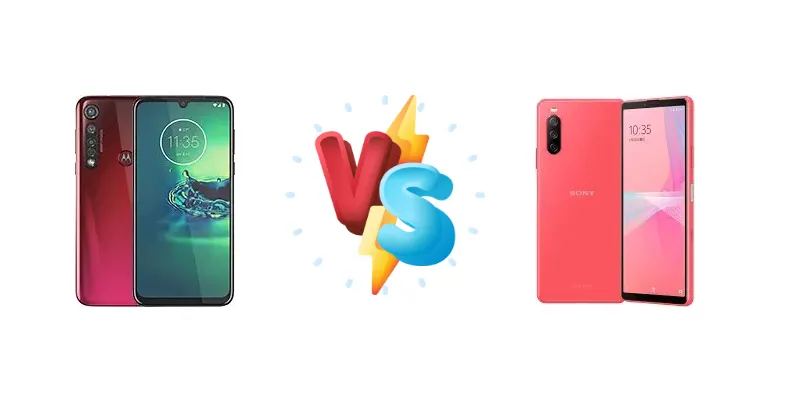
The Motorola One Vision Plus and Sony Xperia 10 III Lite represent different approaches to the mid-range smartphone market. The Motorola, released earlier, focuses on delivering a solid experience at a competitive price. The Sony, a later iteration, introduces 5G connectivity and faster charging, but at a potentially higher cost. This comparison dissects the key differences to determine which device offers the best value.
🏆 Quick Verdict
For the average user prioritizing future-proofing and faster charging, the Sony Xperia 10 III Lite is the better choice. Its Snapdragon 690 5G chipset and 30W charging significantly outperform the Motorola One Vision Plus’s Snapdragon 665 and 15W charging, despite the Motorola potentially offering a slightly better price point.
| Network |
|---|
| 2G bands | GSM 850 / 900 / 1800 / 1900 | GSM 850 / 900 / 1800 / 1900 |
| 3G bands | HSDPA 850 / 900 / 1700(AWS) / 1900 / 2100 | HSDPA 850 / 1900 |
| 4G bands | 1, 2, 3, 4, 5, 7, 8, 18, 19, 20, 26, 28, 38, 40, 41 | 1, 3, 4, 12, 18, 19, 38, 41 |
| 5G bands | - | 77, 78 SA/NSA |
| Speed | HSPA 42.2/5.76 Mbps, LTE (2CA) Cat13 600/100 Mbps | HSPA, LTE, 5G |
| Technology | GSM / HSPA / LTE | GSM / HSPA / LTE / 5G |
| Launch |
|---|
| Announced | 2020, July 10. Released 2020, July 13 | 2021, August 20 |
| Status | Discontinued | Available. Released 2021, August 27 |
| Body |
|---|
| Build | Glass front, plastic back, plastic frame | Glass front (Gorilla Glass 6), glass back (Gorilla Glass 6), plastic frame |
| Dimensions | 158.4 x 75.8 x 9.1 mm (6.24 x 2.98 x 0.36 in) | 154 x 68 x 8.3 mm (6.06 x 2.68 x 0.33 in) |
| SIM | Nano-SIM + Nano-SIM | Nano-SIM + eSIM |
| Weight | 188 g (6.63 oz) | 169 g (5.96 oz) |
| | Water-repellent coating | - |
| Display |
|---|
| Protection | - | Corning Gorilla Glass 6 |
| Resolution | 1080 x 2280 pixels, 19:9 ratio (~400 ppi density) | 1080 x 2520 pixels, 21:9 ratio (~457 ppi density) |
| Size | 6.3 inches, 99.1 cm2 (~82.5% screen-to-body ratio) | 6.0 inches, 84.1 cm2 (~80.3% screen-to-body ratio) |
| Type | IPS LCD | OLED, 1B colors, HDR |
| Platform |
|---|
| CPU | Octa-core (4x2.0 GHz Kryo 260 Gold & 4x1.8 GHz Kryo 260 Silver) | Octa-core (2x2.0 GHz Kryo 560 Gold & 6x1.7 GHz Kryo 560 Silver) |
| Chipset | Qualcomm SDM665 Snapdragon 665 (11 nm) | Qualcomm SM6350 Snapdragon 690 5G (8 nm) |
| GPU | Adreno 610 | Adreno 619 |
| OS | Android 9.0 (Pie), upgradable to Android 10 | Android 11 |
| Memory |
|---|
| Card slot | microSDXC (uses shared SIM slot) | microSDXC (uses shared SIM slot) |
| Internal | 128GB 4GB RAM | 64GB 6GB RAM |
| Main Camera |
|---|
| Features | Laser AF, LED flash, HDR, panorama | LED flash, HDR, panorama |
| Triple | 48 MP, f/1.7, 26mm (wide), 1/2.0", 0.8µm, PDAF
16 MP, f/2.2, 14mm (ultrawide), dedicated video camera (1080p)
Auxiliary lens | 12 MP, f/1.8, 27mm (wide), 1/2.8", PDAF
8 MP, f/2.4, 54mm (telephoto), 1/4.0", PDAF, 2x optical zoom
8 MP, f/2.2, 16mm, 120˚ (ultrawide), 1/4.0" |
| Video | 4K@30fps, 1080p@30/60/120fps, 1080p@30fps (gyro-EIS) | 4K@30fps, 1080p@30fps |
| Selfie camera |
|---|
| Features | HDR | HDR |
| Single | 25 MP, f/2.0, 0.9µm | 8 MP, f/2.0, 24mm (wide), 1/4.0" |
| Video | 1080p@30/120fps | 1080p@30fps |
| Sound |
|---|
| 3.5mm jack | Yes | Yes |
| 35mm jack | Yes | Yes |
| Loudspeaker | Yes, with stereo speakers | Yes |
| Comms |
|---|
| Bluetooth | 5.0, A2DP, LE, aptX | 5.1, A2DP, LE, aptX HD |
| NFC | Yes | Yes |
| Positioning | GPS, GLONASS, BDS, GALILEO | GPS, GLONASS, GALILEO, BDS, QZSS |
| Radio | FM radio | No |
| USB | USB Type-C 2.0, OTG | USB Type-C 3.1, OTG, video output |
| WLAN | Wi-Fi 802.11 a/b/g/n/ac, dual-band, Wi-Fi Direct | Wi-Fi 802.11 a/b/g/n/ac, dual-band, Wi-Fi Direct |
| Features |
|---|
| Sensors | Fingerprint (rear-mounted), accelerometer, gyro, proximity, compass | Fingerprint (side-mounted), accelerometer, proximity, compass |
| Battery |
|---|
| Charging | 15W wired | 30W wired, PD, QC |
| Type | Li-Po 4000 mAh | Li-Po 4500 mAh |
| Misc |
|---|
| Colors | Cosmic Blue, Crystal Pink | Black, White, Blue, Pink |
| Models | - | XQ-BT44 |
| Price | About 170 EUR | About 370 EUR |
Motorola One Vision Plus
- Potentially lower price point
- Reliable performance for basic tasks
- Decent camera for everyday photography
- Slower Snapdragon 665 chipset
- Slow 15W charging
- Lacks 5G connectivity
Sony Xperia 10 III Lite
- Faster Snapdragon 690 5G chipset
- Significantly faster 30W charging (PD/QC)
- 5G connectivity for future-proofing
- Potentially higher price
- May not offer a dramatically better camera experience
- Battery life may be similar to the Motorola
Display Comparison
Neither device boasts a particularly standout display. While specific panel details (like OLED vs LCD) are missing, the core difference lies in the underlying processing power impacting display responsiveness. Both likely feature 1080p+ resolution displays, common in this segment. However, the Sony benefits from the more efficient Snapdragon 690, potentially allowing for smoother animations and a more fluid user experience when navigating the interface. Bezels are likely comparable, given the similar market positioning.
Camera Comparison
Without detailed camera specs, a direct comparison is challenging. However, the chipset plays a crucial role in image processing. The Snapdragon 690’s improved ISP (Image Signal Processor) in the Sony Xperia 10 III Lite will likely result in better dynamic range, noise reduction, and overall image quality, especially in low-light conditions. While both phones likely feature a multi-camera setup, the Motorola’s older chipset may struggle to fully utilize higher-resolution sensors. The Sony’s processing power allows for more sophisticated computational photography features.
Performance
The Sony Xperia 10 III Lite’s Qualcomm SM6350 Snapdragon 690 5G (8nm) represents a significant leap over the Motorola One Vision Plus’s Qualcomm SDM665 Snapdragon 665 (11nm). The 8nm process node is inherently more efficient, leading to better thermal management and sustained performance. The CPU configuration – 2x2.0 GHz Kryo 560 Gold & 6x1.7 GHz Kryo 560 Silver in the Sony versus 4x2.0 GHz Kryo 260 Gold & 4x1.8 GHz Kryo 260 Silver in the Motorola – favors the Sony, particularly in multi-threaded tasks. The Snapdragon 690 also includes a more capable Adreno GPU, offering a noticeable improvement in gaming performance. The 5G modem in the Sony is a key differentiator for users in areas with 5G coverage.
Battery Life
While battery capacity isn’t specified, the real-world impact is heavily influenced by chipset efficiency and charging speed. The Sony Xperia 10 III Lite’s 30W wired charging, supporting Power Delivery (PD) and Quick Charge (QC), is a major advantage. This allows for significantly faster top-ups compared to the Motorola One Vision Plus’s 15W charging. The Snapdragon 690’s 8nm process also contributes to better power efficiency, potentially offsetting any capacity difference. Expect the Sony to achieve a full charge in considerably less time, and potentially offer comparable or better battery life despite a similar or smaller battery size.
Buying Guide
Buy the Motorola One Vision Plus if you need a reliable smartphone for everyday tasks and prioritize a potentially lower upfront cost. It’s a good fit for users who don’t heavily rely on mobile data or demanding applications. Buy the Sony Xperia 10 III Lite if you want 5G connectivity for faster download speeds, appreciate the convenience of significantly faster 30W charging, and anticipate using your phone for several years, benefiting from the newer chipset’s improved efficiency.
Frequently Asked Questions
❓ Does the Snapdragon 690 in the Xperia 10 III Lite offer a noticeable gaming improvement over the Snapdragon 665 in the One Vision Plus?
Yes, the Snapdragon 690’s Adreno 640 GPU provides a substantial performance boost compared to the Snapdragon 665’s Adreno 610. You can expect smoother frame rates and better graphics settings in demanding mobile games on the Xperia 10 III Lite.
❓ How much faster is the 30W charging on the Xperia 10 III Lite compared to the 15W charging on the One Vision Plus?
The 30W charging on the Xperia 10 III Lite can potentially charge the phone from 0% to 100% in around 60-90 minutes, depending on battery capacity. The 15W charging on the One Vision Plus will likely take over 2 hours to achieve a full charge, making the Sony significantly more convenient for users who frequently need to top up their battery.
❓ Is the 5G connectivity on the Xperia 10 III Lite worth the extra cost if I don't currently have 5G coverage in my area?
While you won't benefit from 5G immediately, purchasing the Xperia 10 III Lite future-proofs your device. 5G networks are expanding rapidly, and having a 5G-compatible phone ensures you're ready to take advantage of faster speeds when 5G becomes available in your location. It also offers better resale value down the line.