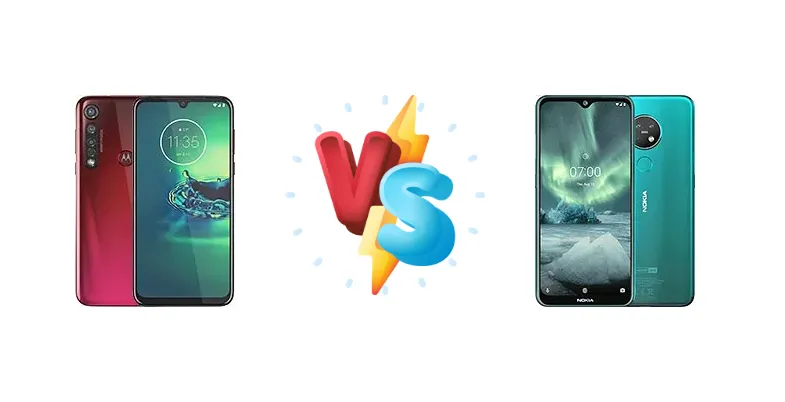
Both the Motorola One Vision Plus and Nokia 7.2 represent attempts to deliver a compelling mid-range experience. Released around the same time, they target budget-conscious consumers, but diverge in their core hardware choices, particularly in their Qualcomm Snapdragon chipsets. This comparison dissects those differences to determine which phone offers the best value.
🏆 Quick Verdict
For the average user prioritizing responsiveness and slightly better performance, the Motorola One Vision Plus edges out the Nokia 7.2. While both offer similar battery endurance, the Snapdragon 665’s newer architecture provides a noticeable, albeit modest, performance boost. However, the Nokia 7.2’s display is a strong contender.
| Network |
|---|
| 2G bands | GSM 850 / 900 / 1800 / 1900 | GSM 850 / 900 / 1800 / 1900 |
| 3G bands | HSDPA 850 / 900 / 1700(AWS) / 1900 / 2100 | HSDPA 850 / 900 / 2100 - ROW |
| 4G bands | 1, 2, 3, 4, 5, 7, 8, 18, 19, 20, 26, 28, 38, 40, 41 | 1, 3, 5, 7, 8, 20, 28, 38, 40, 41 - ROW |
| Speed | HSPA 42.2/5.76 Mbps, LTE (2CA) Cat13 600/100 Mbps | HSPA 42.2/5.76 Mbps, LTE (2CA) Cat6 300/50 Mbps or LTE Cat4 150/50 Mbps |
| Technology | GSM / HSPA / LTE | GSM / HSPA / LTE |
| | - | 1, 3, 5, 8, 40, 41 - IN |
| Launch |
|---|
| Announced | 2020, July 10. Released 2020, July 13 | 2019, September 05. Released 2019, September 23 |
| Status | Discontinued | Discontinued |
| Body |
|---|
| Build | Glass front, plastic back, plastic frame | Glass front (Gorilla Glass 3), glass back (Gorilla Glass 3), plastic frame |
| Dimensions | 158.4 x 75.8 x 9.1 mm (6.24 x 2.98 x 0.36 in) | 159.9 x 75.2 x 8.3 mm (6.30 x 2.96 x 0.33 in) |
| SIM | Nano-SIM + Nano-SIM | · Nano-SIM· Nano-SIM + Nano-SIM |
| Weight | 188 g (6.63 oz) | 180 g (6.35 oz) |
| | Water-repellent coating | - |
| Display |
|---|
| Protection | - | Corning Gorilla Glass 3 |
| Resolution | 1080 x 2280 pixels, 19:9 ratio (~400 ppi density) | 1080 x 2280 pixels, 19:9 ratio (~400 ppi density) |
| Size | 6.3 inches, 99.1 cm2 (~82.5% screen-to-body ratio) | 6.3 inches, 99.1 cm2 (~82.4% screen-to-body ratio) |
| Type | IPS LCD | IPS LCD, HDR10 |
| Platform |
|---|
| CPU | Octa-core (4x2.0 GHz Kryo 260 Gold & 4x1.8 GHz Kryo 260 Silver) | Octa-core (4x2.2 GHz Kryo 260 Gold & 4x1.8 GHz Kryo 260 Silver) |
| Chipset | Qualcomm SDM665 Snapdragon 665 (11 nm) | Qualcomm SDM660 Snapdragon 660 (14 nm) |
| GPU | Adreno 610 | Adreno 512 |
| OS | Android 9.0 (Pie), upgradable to Android 10 | Android 9.0 (Pie), upgradable to Android 11, Android One |
| Memory |
|---|
| Card slot | microSDXC (uses shared SIM slot) | microSDXC (dedicated slot) |
| Internal | 128GB 4GB RAM | 64GB 4GB RAM, 64GB 6GB RAM, 128GB 4GB RAM, 128GB 6GB RAM |
| | - | eMMC 5.1 |
| Main Camera |
|---|
| Features | Laser AF, LED flash, HDR, panorama | Zeiss optics, LED flash, panorama, HDR |
| Triple | 48 MP, f/1.7, 26mm (wide), 1/2.0", 0.8µm, PDAF
16 MP, f/2.2, 14mm (ultrawide), dedicated video camera (1080p)
Auxiliary lens | 48 MP, f/1.8, (wide), 1/2.0", 0.8µm, PDAF
8 MP, f/2.2, 13mm (ultrawide), 1/4.0", 1.12µm
Auxiliary lens |
| Video | 4K@30fps, 1080p@30/60/120fps, 1080p@30fps (gyro-EIS) | 4K@30fps, 1080p@30fps (gyro-EIS) |
| Selfie camera |
|---|
| Features | HDR | Zeiss optics, HDR |
| Single | 25 MP, f/2.0, 0.9µm | 20 MP, f/2.0, (wide), 1/3", 0.9µm |
| Video | 1080p@30/120fps | 1080p@30fps |
| Sound |
|---|
| 3.5mm jack | Yes | Yes |
| 35mm jack | Yes | Yes |
| Loudspeaker | Yes, with stereo speakers | Yes |
| Comms |
|---|
| Bluetooth | 5.0, A2DP, LE, aptX | 5.0, A2DP, EDR, LE, aptX |
| NFC | Yes | Yes (excl. India) |
| Positioning | GPS, GLONASS, BDS, GALILEO | GPS, GLONASS, GALILEO, BDS |
| Radio | FM radio | FM radio |
| USB | USB Type-C 2.0, OTG | USB Type-C 2.0, OTG |
| WLAN | Wi-Fi 802.11 a/b/g/n/ac, dual-band, Wi-Fi Direct | Wi-Fi 802.11 b/g/n/ac, dual-band, Wi-Fi Direct |
| Features |
|---|
| Sensors | Fingerprint (rear-mounted), accelerometer, gyro, proximity, compass | Fingerprint (rear-mounted), accelerometer, gyro, proximity, compass |
| Battery |
|---|
| Charging | 15W wired | 10W wired |
| Type | Li-Po 4000 mAh | Li-Po 3500 mAh, non-removable |
| Misc |
|---|
| Colors | Cosmic Blue, Crystal Pink | Cyan Green, Charcoal, Ice |
| Models | - | TA-1193, TA-1178, TA-1196, TA-1181 |
| Price | About 170 EUR | About 240 EUR |
| SAR | - | 1.15 W/kg (head) 0.90 W/kg (body) |
| SAR EU | - | 0.99 W/kg (head) 1.44 W/kg (body) |
| Tests |
|---|
| Audio quality | - |
Noise -93.0dB / Crosstalk -93.4dB |
| Battery life | - |
Endurance rating 69h
|
| Camera | - |
Photo / Video |
| Display | - |
Contrast ratio: 1342:1 (nominal) |
| Loudspeaker | - |
-29.6 LUFS (Average)
|
| Performance | - |
AnTuTu: 139495 (v7), 164484 (v8)
GeekBench: 5440 (v4.4), 1398 (v5.1)
GFXBench: 8.1fps (ES 3.1 onscreen) |
Motorola One Vision Plus
- Slightly better performance with Snapdragon 665
- Faster 15W charging
- More efficient 11nm chipset
- Display brightness likely lower than Nokia 7.2
- Camera details are sparse
Nokia 7.2
- Brighter display (585 nits)
- Excellent contrast ratio (1342:1)
- Potentially cleaner software experience
- Older Snapdragon 660 chipset
- Slower 10W charging
- Less efficient 14nm process
Display Comparison
The Nokia 7.2 boasts a brighter display, reaching a measured 585 nits compared to an unstated value for the Motorola One Vision Plus. Both share a 1342:1 contrast ratio, suggesting similar color depth and black levels. This higher brightness on the Nokia 7.2 translates to better visibility outdoors under direct sunlight. While panel technology isn’t specified, the Nokia 7.2’s display is likely the more visually appealing option for media consumption due to its superior brightness.
Camera Comparison
Both phones feature 'Photo / Video' capabilities, but detailed sensor information is lacking. Without specifics on sensor size or aperture, a direct comparison is difficult. However, the Motorola One Vision Plus’s newer image signal processor (ISP) within the Snapdragon 665 likely offers improved image processing algorithms, potentially resulting in better dynamic range and low-light performance. The absence of details on optical image stabilization (OIS) on either device suggests reliance on software stabilization, which is less effective. The usefulness of any 2MP macro lens on either phone is questionable.
Performance
The core difference lies in the chipsets: the Motorola One Vision Plus utilizes the Qualcomm Snapdragon 665 (11nm) while the Nokia 7.2 features the older Snapdragon 660 (14nm). The 665, built on a smaller 11nm process, offers improved power efficiency and thermal characteristics. Although both CPUs feature the same Kryo 260 Gold (2.0 GHz) and Silver (1.8 GHz) core configuration, the 665’s architecture provides a slight performance advantage. The larger process node of the 660 in the Nokia 7.2 means it will likely run warmer under sustained load, potentially leading to thermal throttling. This impacts gaming and prolonged multitasking.
Battery Life
Both devices share an endurance rating of 69 hours, indicating comparable battery life under typical usage. However, the Motorola One Vision Plus’s 15W charging is faster than the Nokia 7.2’s 10W charging. This translates to a quicker 0-100% charge time for the Motorola, a significant convenience factor for users who frequently need to top up their battery. The efficiency gains from the 11nm process of the Snapdragon 665 also contribute to the similar endurance despite the faster charging.
Buying Guide
Buy the Motorola One Vision Plus if you need a phone that feels a bit snappier for everyday tasks and light gaming. Its newer chipset offers a slight advantage in multitasking and app loading times. Buy the Nokia 7.2 if you prioritize a well-calibrated display with excellent contrast and are less concerned with raw processing power. The Nokia 7.2 also appeals to those who prefer a cleaner Android experience with guaranteed updates (historically a Nokia strength).
Frequently Asked Questions
❓ Will I notice a significant difference in performance between the Snapdragon 665 and 660 for everyday tasks?
The difference won't be dramatic, but the Snapdragon 665 in the Motorola One Vision Plus will feel slightly more responsive when switching between apps, browsing the web, and launching applications. The 665’s newer architecture and improved efficiency contribute to a smoother overall experience.
❓ Does the Nokia 7.2’s display support HDR content?
Based on the specifications provided, there's no indication that the Nokia 7.2’s display supports HDR. While it boasts excellent contrast and brightness, it likely lacks the necessary certifications and color gamut coverage for a true HDR experience.
❓ How long will it take to fully charge each phone?
With 15W charging, the Motorola One Vision Plus will likely charge from 0-100% in approximately 2.5-3 hours. The Nokia 7.2, with its 10W charging, will take considerably longer, potentially 3.5-4.5 hours for a full charge.