
Motorola One Vision Plus vs Google Pixel 4a 5G: Which Mid-Range 5G Phone Wins?
| Phones Images | |||||
|---|---|---|---|---|---|
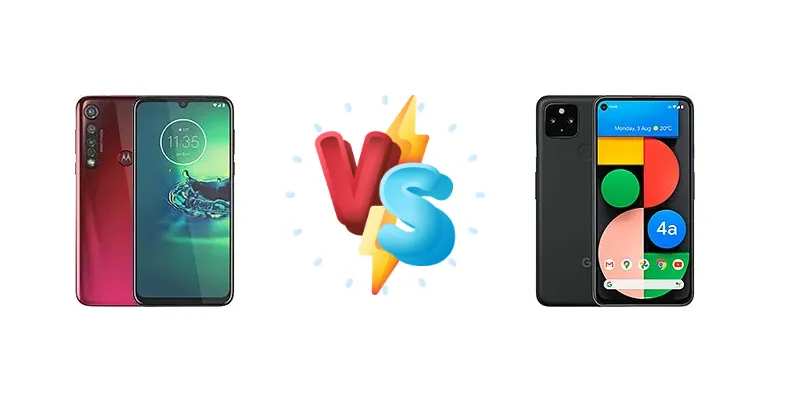
|
🏆 Quick Verdict
For most users, the Google Pixel 4a 5G is the superior choice. Its Snapdragon 765G chipset provides a noticeable performance uplift over the Motorola’s Snapdragon 665, translating to smoother multitasking and a better gaming experience. While the Motorola offers a competitive price, the Pixel’s camera and software support justify the extra investment.
| PHONES | ||
|---|---|---|
| Phone Names | Motorola One Vision Plus | Google Pixel 4a 5G |
| Network | ||
|---|---|---|
| 2G bands | GSM 850 / 900 / 1800 / 1900 | GSM 850 / 900 / 1800 / 1900 |
| 3G bands | HSDPA 850 / 900 / 1700(AWS) / 1900 / 2100 | HSDPA 850 / 900 / 1700(AWS) / 1900 / 2100 |
| 4G bands | 1, 2, 3, 4, 5, 7, 8, 18, 19, 20, 26, 28, 38, 40, 41 | 1, 2, 3, 4, 5, 7, 8, 12, 13, 14, 17, 18, 19, 20, 25, 26, 28, 29, 30, 32, 38, 39, 40, 41, 42, 46, 48, 66, 71 |
| 5G bands | - | 1, 2, 3, 5, 7, 8, 12, 28, 41, 66, 71, 77, 78 Sub6, mmWave (market dependant) |
| Speed | HSPA 42.2/5.76 Mbps, LTE (2CA) Cat13 600/100 Mbps | HSPA, LTE, 5G |
| Technology | GSM / HSPA / LTE | GSM / HSPA / LTE / 5G |
| Launch | ||
|---|---|---|
| Announced | 2020, July 10. Released 2020, July 13 | 2020, September 30 |
| Status | Discontinued | Available. Released 2020, November 05 |
| Body | ||
|---|---|---|
| Build | Glass front, plastic back, plastic frame | Glass front (Gorilla Glass 3), plastic back, plastic frame |
| Dimensions | 158.4 x 75.8 x 9.1 mm (6.24 x 2.98 x 0.36 in) | 153.9 x 74 x 8.2 mm (Sub-6) or 8.5 mm (Sub-6 and mmWave) |
| SIM | Nano-SIM + Nano-SIM | Nano-SIM + eSIM |
| Weight | 188 g (6.63 oz) | 168 g (5G Sub-6); 171 g ( 5G Sub-6 and mmWave) (5.93 oz) |
| Water-repellent coating | - | |
| Display | ||
|---|---|---|
| Protection | - | Corning Gorilla Glass 3 |
| Resolution | 1080 x 2280 pixels, 19:9 ratio (~400 ppi density) | 1080 x 2340 pixels, 19.5:9 ratio (~413 ppi density) |
| Size | 6.3 inches, 99.1 cm2 (~82.5% screen-to-body ratio) | 6.2 inches, 95.7 cm2 (~84.1% screen-to-body ratio) |
| Type | IPS LCD | OLED, HDR |
| - | Always-on display | |
| Platform | ||
|---|---|---|
| CPU | Octa-core (4x2.0 GHz Kryo 260 Gold & 4x1.8 GHz Kryo 260 Silver) | Octa-core (1x2.4 GHz Kryo 475 Prime & 1x2.2 GHz Kryo 475 Gold & 6x1.8 GHz Kryo 475 Silver) |
| Chipset | Qualcomm SDM665 Snapdragon 665 (11 nm) | Qualcomm SM7250 Snapdragon 765G 5G (7 nm) |
| GPU | Adreno 610 | Adreno 620 |
| OS | Android 9.0 (Pie), upgradable to Android 10 | Android 11, upgradable to Android 14 |
| Memory | ||
|---|---|---|
| Card slot | microSDXC (uses shared SIM slot) | No |
| Internal | 128GB 4GB RAM | 128GB 6GB RAM |
| - | UFS 2.1 | |
| Main Camera | ||
|---|---|---|
| Dual | - | 12.2 MP, f/1.7, 27mm (wide), 1/2.55", 1.4µm, dual pixel PDAF, OIS 16 MP, f/2.2, 107˚ (ultrawide), 1.0µm |
| Features | Laser AF, LED flash, HDR, panorama | LED flash, Pixel Shift, Auto-HDR, panorama |
| Triple | 48 MP, f/1.7, 26mm (wide), 1/2.0", 0.8µm, PDAF 16 MP, f/2.2, 14mm (ultrawide), dedicated video camera (1080p) Auxiliary lens | - |
| Video | 4K@30fps, 1080p@30/60/120fps, 1080p@30fps (gyro-EIS) | 4K@30/60fps, 1080p@30/60/120/240fps; gyro-EIS |
| Selfie camera | ||
|---|---|---|
| Features | HDR | HDR |
| Single | 25 MP, f/2.0, 0.9µm | 8 MP, f/2.0, 24mm (wide), 1/4.0", 1.12µm |
| Video | 1080p@30/120fps | 1080p@30fps |
| Sound | ||
|---|---|---|
| 3.5mm jack | Yes | Yes |
| 35mm jack | Yes | Yes |
| Loudspeaker | Yes, with stereo speakers | Yes, with stereo speakers |
| Comms | ||
|---|---|---|
| Bluetooth | 5.0, A2DP, LE, aptX | 5.0, A2DP, LE, aptX HD |
| NFC | Yes | Yes |
| Positioning | GPS, GLONASS, BDS, GALILEO | GPS, GLONASS, GALILEO, QZSS, BDS |
| Radio | FM radio | No |
| USB | USB Type-C 2.0, OTG | USB Type-C 3.1 |
| WLAN | Wi-Fi 802.11 a/b/g/n/ac, dual-band, Wi-Fi Direct | Wi-Fi 802.11 a/b/g/n/ac, dual-band, Wi-Fi Direct |
| Features | ||
|---|---|---|
| Sensors | Fingerprint (rear-mounted), accelerometer, gyro, proximity, compass | Fingerprint (rear-mounted), accelerometer, gyro, proximity, compass, barometer |
| Battery | ||
|---|---|---|
| Charging | 15W wired | 18W wired, PD2.0 |
| Type | Li-Po 4000 mAh | Li-Po 3885 mAh |
| Misc | ||
|---|---|---|
| Colors | Cosmic Blue, Crystal Pink | Just Black, Clearly White |
| Models | - | GD1YQ, G025I, G025E, G025H, G6QU3 |
| Price | About 170 EUR | About 140 EUR |
Motorola One Vision Plus
- Lower price point makes it accessible.
- Near-stock Android experience with minimal bloatware.
- Decent performance for everyday tasks.
- Snapdragon 665 is significantly less powerful than the 765G.
- Slower charging speed (15W).
- Camera performance likely lags behind the Pixel.
Google Pixel 4a 5G
- Powerful Snapdragon 765G chipset for smooth performance.
- Excellent camera quality thanks to Google’s software.
- Faster 18W charging with PD2.0.
- Guaranteed software updates and security patches.
- Higher price compared to the Motorola One Vision Plus.
- May not appeal to users who prefer a completely stock Android experience.
Display Comparison
Neither device boasts a cutting-edge display. Both likely utilize LCD panels, a common choice in this price bracket. The key difference lies in processing power, which doesn't directly impact the display itself. However, the more powerful Snapdragon 765G in the Pixel 4a 5G could contribute to smoother animations and transitions, indirectly enhancing the perceived visual experience. We expect both to have similar color accuracy, typical of mid-range LCDs.
Camera Comparison
While detailed sensor specs are unavailable, the Pixel 4a 5G is expected to excel in image quality due to Google’s renowned computational photography algorithms. The Snapdragon 765G’s image signal processor (ISP) is more advanced than the 665’s, enabling superior noise reduction, dynamic range, and detail preservation. The Pixel’s software processing is likely to compensate for any potential hardware limitations. Motorola’s camera system, while capable, relies more heavily on hardware and may struggle in challenging lighting conditions. The Pixel 4a 5G’s video recording capabilities are also likely to be superior, benefiting from the more powerful ISP.
Performance
The core differentiator here is the chipset. The Google Pixel 4a 5G’s Snapdragon 765G, fabricated on a 7nm process, represents a significant leap over the Motorola One Vision Plus’s Snapdragon 665 (11nm). The 765G’s Kryo 475 Prime core, clocked at 2.4GHz, provides substantially more single-core performance, crucial for responsive app launches and general usability. The 765G also includes an integrated 5G modem, while the 665 relies on external components. This translates to faster download and upload speeds on 5G networks for the Pixel. The 7nm process also contributes to better thermal efficiency, reducing the likelihood of throttling during sustained workloads.
Battery Life
The Motorola One Vision Plus features 15W wired charging, while the Pixel 4a 5G supports 18W charging with PD2.0. This faster charging standard on the Pixel will result in quicker top-ups. While battery capacity isn't specified, the Snapdragon 765G’s improved efficiency could offset any potential capacity difference. The Pixel’s optimized software and power management further contribute to potentially longer real-world battery life, despite the similar or potentially smaller battery size.
Buying Guide
Buy the Motorola One Vision Plus if you prioritize a lower upfront cost and a near-stock Android experience without the Google-specific features. It’s a solid option for basic smartphone tasks and media consumption. Buy the Google Pixel 4a 5G if you value performance, a class-leading camera, guaranteed software updates, and 5G connectivity for a more future-proof experience. It’s ideal for users who frequently game, take photos, or rely on their phone for demanding applications.