
Motorola One Fusion+ vs. Moto G Stylus (2021): A Deep Dive into Performance and Value
| Phones Images | |||||
|---|---|---|---|---|---|
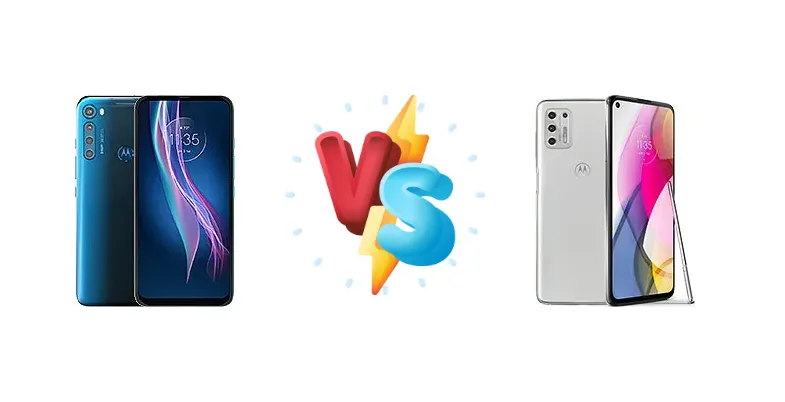
|
🏆 Quick Verdict
For users prioritizing performance and display quality, the Motorola One Fusion+ is the clear winner. Its Snapdragon 730G chipset delivers a noticeably smoother experience, especially in demanding tasks. While the Moto G Stylus (2021) offers the convenience of a stylus and longer battery endurance, it compromises significantly on processing power.
| PHONES | ||
|---|---|---|
| Phone Names | Motorola One Fusion+ | Motorola Moto G Stylus (2021) |
| Network | ||
|---|---|---|
| 2G bands | GSM 850 / 900 / 1800 / 1900 | GSM 850 / 900 / 1800 / 1900 |
| 3G bands | HSDPA 800 / 850 / 900 / 1900 / 2100 International | HSDPA 850 / 900 / 1700(AWS) / 1900 / 2100 |
| 4G bands | 1, 2, 3, 5, 7, 8, 19, 20, 38, 40, 41 - Europe, India | 1, 2, 3, 4, 5, 7, 8, 12, 13, 14, 17, 20, 25, 26, 29, 38, 40, 41, 66, 71 |
| Speed | HSPA 42.2/5.76 Mbps, LTE Cat4 150/50 Mbps | HSPA, LTE |
| Technology | GSM / HSPA / LTE | GSM / CDMA / HSPA / LTE |
| 1, 2, 3, 5, 7, 8, 19, 20, 28, 38, 40, 41 - APEM | CDMA 800 / 1900 | |
| Launch | ||
|---|---|---|
| Announced | 2020, June 08. Released 2020, June 08 | 2021, January 08 |
| Status | Discontinued | Available. Released 2021, January 14 |
| Body | ||
|---|---|---|
| Build | Glass front, plastic back, plastic frame | Glass front, plastic frame, plastic back |
| Dimensions | 162.9 x 76.4 x 9.6 mm (6.41 x 3.01 x 0.38 in) | 169.8 x 77.9 x 9 mm (6.69 x 3.07 x 0.35 in) |
| SIM | · Nano-SIM· Nano-SIM + Nano-SIM | Nano-SIM |
| Weight | 210 g (7.41 oz) | 213 g (7.51 oz) |
| Water-repellent coating | Stylus Water-repellent coating | |
| Display | ||
|---|---|---|
| Resolution | 1080 x 2340 pixels, 19.5:9 ratio (~396 ppi density) | 1080 x 2400 pixels, 20:9 ratio (~386 ppi density) |
| Size | 6.5 inches, 103.7 cm2 (~83.3% screen-to-body ratio) | 6.8 inches, 112.2 cm2 (~84.8% screen-to-body ratio) |
| Type | IPS LCD, HDR10 | IPS LCD |
| Platform | ||
|---|---|---|
| CPU | Octa-core (2x2.2 GHz Kryo 470 Gold & 6x1.8 GHz Kryo 470 Silver) | Octa-core (2x2.2 GHz Kryo 460 Gold & 6x1.7 GHz Kryo 460 Silver) |
| Chipset | Qualcomm SDM730 Snapdragon 730 (8 nm) - EuropeQualcomm SDM730 Snapdragon 730G (8 nm) - India | Qualcomm SDM678 Snapdragon 678 (11 nm) |
| GPU | Adreno 618 | Adreno 612 |
| OS | Android 10 | Android 10 |
| Memory | ||
|---|---|---|
| Card slot | microSDXC (uses shared SIM slot) | microSDXC (dedicated slot) |
| Internal | 128GB 4GB RAM, 128GB 6GB RAM | 128GB 4GB RAM |
| UFS 2.1 | - | |
| Main Camera | ||
|---|---|---|
| Features | LED flash, panorama, HDR | LED flash, HDR, panorama |
| Quad | 64 MP, f/1.8, (wide), 1/1.72", 0.8µm, PDAF 8 MP, f/2.2, 118˚ (ultrawide), 1/4.0", 1.12µm 5 MP (macro) Auxiliary lens | 48 MP, f/1.7, 26mm (wide), 1/2.0", 0.8µm, PDAF 8 MP, f/2.2, 118˚ (ultrawide), 1/4.0, 1.12µm 2 MP (macro) Auxiliary lens |
| Video | 4K@30fps, 1080p@30/60fps | 4K@30fps, 1080p@30/60fps; gyro-EIS |
| Selfie camera | ||
|---|---|---|
| Features | - | HDR |
| Single | Motorized pop-up 16 MP, f/2.0, (wide), 1/3.06", 1.0µm | 16 MP, f/2.0, (wide), 1/3.06", 1.0µm |
| Video | 1080p@30fps | 1080p@30fps, gyro-EIS |
| Sound | ||
|---|---|---|
| 3.5mm jack | Yes | Yes |
| 35mm jack | Yes | Yes |
| Loudspeaker | Yes | Yes |
| Comms | ||
|---|---|---|
| Bluetooth | 5.0, A2DP, LE | 5.0, A2DP, LE |
| NFC | No | No |
| Positioning | GPS, GLONASS, GALILEO, BDS | GPS, GLONASS, BDS, GALILEO |
| Radio | FM radio (market/region dependent) | Unspecified |
| USB | USB Type-C 2.0, OTG | USB Type-C 2.0 |
| WLAN | Wi-Fi 802.11 a/b/g/n/ac, dual-band, Wi-Fi Direct | Wi-Fi 802.11 a/b/g/n/ac, dual-band, Wi-Fi Direct |
| Features | ||
|---|---|---|
| Sensors | Fingerprint (rear-mounted), accelerometer, gyro, proximity | Fingerprint (side-mounted), accelerometer, gyro, proximity |
| Battery | ||
|---|---|---|
| Charging | 15W wired | 10W wired |
| Type | Li-Po 5000 mAh | Li-Po 4000 mAh |
| Misc | ||
|---|---|---|
| Colors | Moonlight White, Twilight Blue | Aurora Black, Aurora White |
| Models | PAKF0002IN | XT2115, XT2115-1 |
| Price | About 300 EUR | About 90 EUR |
| SAR | 0.52 W/kg (head) 1.43 W/kg (body) | - |
| Tests | ||
|---|---|---|
| Battery life | Endurance rating 136h | - |
| Camera | Photo / Video | - |
| Display | Contrast ratio: 1423:1 (nominal) | - |
| Loudspeaker | -27.9 LUFS (Good) | - |
| Performance | AnTuTu: 267980 (v8) GeekBench: 1705 (v5.1) GFXBench: 14fps (ES 3.1 onscreen) | - |
Motorola One Fusion+
- Significantly faster processor (Snapdragon 730G)
- Brighter and higher contrast display
- More responsive user experience
- Slower charging speed (15W)
- Potentially higher price
Motorola Moto G Stylus (2021)
- Integrated stylus for note-taking and drawing
- Potentially longer battery life due to efficient chipset
- Lower price point
- Significantly slower processor (Snapdragon 678)
- Likely lower display quality
- Slower charging speed (10W)
Display Comparison
The Motorola One Fusion+ boasts a superior display experience, achieving a measured peak brightness of 562 nits and a 1423:1 contrast ratio. While the Moto G Stylus (2021) display specifications aren't provided, it's reasonable to assume a lower peak brightness and contrast ratio given its lower price point and chipset. This translates to better visibility outdoors and more vibrant colors on the Fusion+. The lack of detailed display specs for the G Stylus suggests a more basic panel, likely prioritizing cost savings over visual fidelity.
Camera Comparison
Both phones are listed as having 'Photo / Video' capabilities, but specific details are absent. Without sensor size, aperture, or image processing details, a direct comparison is difficult. However, given the Fusion+'s positioning as a slightly more premium device, it's likely to have a more capable camera system. The Moto G Stylus (2021) likely focuses on providing adequate image quality for everyday use, while the Fusion+ may offer more features and better low-light performance. The absence of details suggests neither phone is a standout camera performer.
Performance
The core difference between these two devices lies in their chipsets. The Motorola One Fusion+ utilizes the Qualcomm Snapdragon 730 (or 730G in India), built on an 8nm process. This chipset features an octa-core CPU with 2x2.2 GHz Kryo 470 Gold and 6x1.8 GHz Kryo 470 Silver cores. In contrast, the Moto G Stylus (2021) is equipped with the Snapdragon 678, fabricated on an 11nm process. The 730’s smaller node and more powerful core configuration result in significantly better CPU and GPU performance. This means faster app loading times, smoother multitasking, and a more enjoyable gaming experience on the Fusion+. The 11nm process of the 678, while efficient, simply can't compete with the 8nm process of the 730 in terms of raw power.
Battery Life
The Motorola One Fusion+ achieves an impressive endurance rating of 136 hours, indicating excellent battery life. The Moto G Stylus (2021) battery capacity isn't specified, but its Snapdragon 678 chipset is more power-efficient. However, the Fusion+’s 15W wired charging is slower than what competitors offer, and the G Stylus (2021) charges even slower at 10W. While the G Stylus may last longer on a single charge due to the more efficient chipset, the Fusion+’s endurance is still very competitive, and the difference may not be substantial for typical users.
Buying Guide
Buy the Motorola One Fusion+ if you need a phone capable of handling moderate gaming, multitasking, and content creation without significant lag. It’s ideal for users who value a brighter, more vibrant display and a more responsive user experience. Buy the Motorola Moto G Stylus (2021) if you prioritize battery life above all else and frequently utilize a stylus for note-taking, sketching, or precise navigation. It’s a practical choice for students or professionals who rely on these features.