
Motorola One 5G vs Samsung Galaxy A52 5G: A Deep Dive into Mid-Range 5G Contenders
| Phones Images | |||||
|---|---|---|---|---|---|
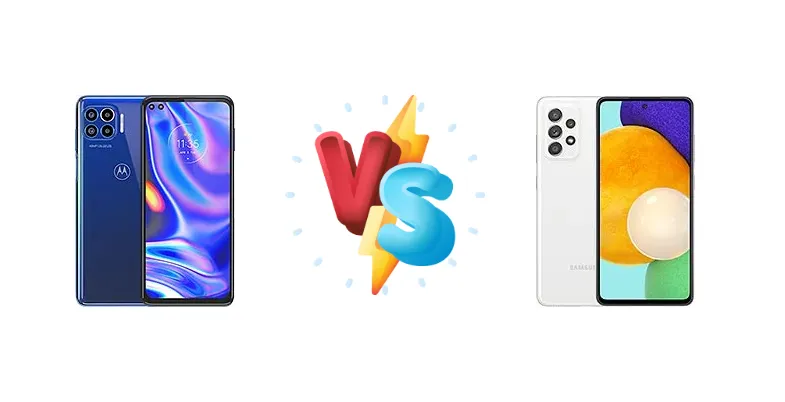
|
🏆 Quick Verdict
For the average user prioritizing display quality and faster charging, the Samsung Galaxy A52 5G emerges as the better choice. Its brighter 787 nit display and 25W charging offer a more refined experience. However, the Motorola One 5G remains a strong contender for those seeking a slightly more raw performance profile at a potentially lower price point.
| PHONES | ||
|---|---|---|
| Phone Names | Motorola One 5G | Samsung Galaxy A52 5G |
| Network | ||
|---|---|---|
| 2G bands | GSM 850 / 900 / 1800 / 1900 | GSM 850 / 900 / 1800 / 1900 |
| 3G bands | HSDPA 850 / 900 / 1700(AWS) / 1900 / 2100 | HSDPA 850 / 900 / 1700(AWS) / 1900 / 2100 |
| 4G bands | 1, 2, 3, 4, 5, 7, 8, 12, 13, 14, 17, 18, 19, 20, 25, 26, 29, 30, 38, 39, 40, 41, 66, 71 | 1, 2, 3, 4, 5, 7, 8, 12, 17, 20, 26, 28, 32, 38, 40, 41, 66 |
| 5G bands | 2, 5, 25, 41, 66, 71 SA/NSA | 1, 3, 5, 7, 8, 20, 28, 38, 40, 41, 66, 78 SA/NSA/Sub6 |
| Speed | HSPA, LTE, 5G | HSPA, LTE, 5G |
| Technology | GSM / HSPA / LTE / 5G | GSM / HSPA / LTE / 5G |
| Launch | ||
|---|---|---|
| Announced | 2020, September 01. Released 2020, September 14 | 2021, March 17 |
| Status | Discontinued | Available. Released 2021, March 19 |
| Body | ||
|---|---|---|
| Build | Glass front, plastic back, plastic frame | Glass front (Gorilla Glass 5), plastic back |
| Dimensions | 168 x 74 x 9 mm (6.61 x 2.91 x 0.35 in) | 159.9 x 75.1 x 8.4 mm (6.30 x 2.96 x 0.33 in) |
| SIM | Nano-SIM | · Nano-SIM· Nano-SIM + Nano-SIM |
| Weight | 207 g (7.30 oz) | 189 g (6.67 oz) |
| Water-repellent coating | IP67 dust/water resistant (up to 1m for 30 min) | |
| Display | ||
|---|---|---|
| Protection | - | Corning Gorilla Glass 5 |
| Resolution | 1080 x 2520 pixels, 21:9 ratio (~409 ppi density) | 1080 x 2400 pixels, 20:9 ratio (~407 ppi density) |
| Size | 6.7 inches, 104.9 cm2 (~84.3% screen-to-body ratio) | 6.5 inches, 101.0 cm2 (~84.1% screen-to-body ratio) |
| Type | IPS LCD, 90Hz, HDR10 | Super AMOLED, 120Hz, HDR10+, 800 nits (HBM) |
| - | Always-on display | |
| Platform | ||
|---|---|---|
| CPU | Octa-core (1x2.3 GHz Kryo 475 Prime & 1x2.2 GHz Kryo 475 Gold & 6x1.8 GHz Kryo 475 Silver) | Octa-core (2x2.2 GHz Kryo 570 & 6x1.8 GHz Kryo 570) |
| Chipset | Qualcomm SM7250 Snapdragon 765 5G (7 nm) | Qualcomm SM7225 Snapdragon 750G 5G (8 nm) |
| GPU | Adreno 620 | Adreno 619 |
| OS | Android 10 | Android 11, upgradable to Android 14, One UI 6.1 |
| Memory | ||
|---|---|---|
| Card slot | microSDXC (dedicated slot) | microSDXC (uses shared SIM slot) |
| Internal | 128GB 4GB RAM | 128GB 4GB RAM, 128GB 6GB RAM, 128GB 8GB RAM, 256GB 4GB RAM, 256GB 8GB RAM |
| UFS 2.1 | - | |
| Main Camera | ||
|---|---|---|
| Features | Dual-LED flash, ring flash (macro camera), panorama, HDR | LED flash, panorama, HDR |
| Quad | 48 MP, f/1.8, 26mm (wide), 1/2.0", 0.8µm, PDAF 8 MP, f/2.2, 118˚ (ultrawide), 1.12µm 5 MP (macro), AF Auxiliary lens | 64 MP, f/1.8, 26mm (wide), 1/1.7X", 0.8µm, PDAF, OIS 12 MP, f/2.2, 123˚ (ultrawide), 1.12µm 5 MP (macro) Auxiliary lens |
| Video | 4K@30fps, 1080p@30/60fps, gyro-EIS | 4K@30fps, 1080p@30/60fps; gyro-EIS |
| Selfie camera | ||
|---|---|---|
| Dual | 16 MP, f/2.0, (wide), 1.0µm 8 MP, f/2.2, (ultrawide), 1.12µm | - |
| Features | HDR | HDR |
| Single | - | 32 MP, f/2.2, 26mm (wide), 1/2.8", 0.8µm |
| Video | 1080p@30fps | 4K@30fps, 1080p@30fps |
| Sound | ||
|---|---|---|
| 3.5mm jack | Yes | Yes |
| 35mm jack | Yes | Yes |
| Loudspeaker | Yes | Yes, with stereo speakers |
| Comms | ||
|---|---|---|
| Bluetooth | 5.1, A2DP, LE | 5.0, A2DP, LE |
| NFC | Yes | Yes (market/region dependent) |
| Positioning | GPS (L1+L5), GLONASS, GALILEO | GPS, GLONASS, GALILEO, BDS |
| Radio | FM radio | FM radio (market/region dependent) |
| USB | USB Type-C 2.0 | USB Type-C 2.0, OTG |
| WLAN | Wi-Fi 802.11 a/b/g/n/ac, dual-band, Wi-Fi Direct | Wi-Fi 802.11 a/b/g/n/ac, dual-band, Wi-Fi Direct |
| Features | ||
|---|---|---|
| Sensors | Fingerprint (side-mounted), accelerometer, gyro, proximity, compass | Fingerprint (under display, optical), accelerometer, gyro, compass |
| - | Virtual proximity sensing | |
| Battery | ||
|---|---|---|
| Charging | 15W wired | 25W wired, 50% in 30 min |
| Type | Li-Po 5000 mAh | Li-Po 4500 mAh |
| Misc | ||
|---|---|---|
| Colors | Oxford Blue | Awesome Black, Awesome White, Awesome Violet, Awesome Blue |
| Models | - | SM-A526B, SM-A526B/DS, SM-A5260, SM-A526W, SM-A526U, SM-A526U1 |
| Price | About 420 EUR | $ 137.39 / £ 280.00 / € 115.49 |
| SAR | - | 0.74 W/kg (head) 0.53 W/kg (body) |
| SAR EU | - | 1.05 W/kg (head) 1.42 W/kg (body) |
| Tests | ||
|---|---|---|
| Battery life | - | Endurance rating 111h |
| Camera | - | Photo / Video |
| Display | - | Contrast ratio: Infinite (nominal) |
| Loudspeaker | - | -27.5 LUFS (Good) |
| Performance | - | AnTuTu: 334981 (v8), 386474 (v9) GeekBench: 1820 (v5.1) GFXBench: 16fps (ES 3.1 onscreen) |
Motorola One 5G
- Potentially lower price point
- Solid Snapdragon 765G performance for everyday tasks
- 5G connectivity
- Slower 15W charging
- Likely lower display brightness
- Older chipset architecture
Samsung Galaxy A52 5G
- Brighter 787 nit display
- Faster 25W charging with 30-minute 50% boost
- More efficient Snapdragon 750G chipset
- Potentially higher price
- May not offer a significant performance leap over the 765G in all scenarios
- Software bloat (typical of Samsung)
Display Comparison
The Samsung Galaxy A52 5G boasts a significant advantage in display quality, achieving a measured peak brightness of 787 nits. This translates to superior visibility in direct sunlight compared to the Motorola One 5G, which lacks published brightness data. While both likely utilize AMOLED panels (based on market segment), the A52 5G’s higher brightness and 'Infinite' contrast ratio suggest a more immersive viewing experience. The lack of high refresh rate information for the Motorola One 5G further solidifies the A52 5G’s display lead.
Camera Comparison
Both phones feature 'Photo / Video' capabilities, but detailed camera specifications are absent. However, given Samsung’s strong camera reputation, it’s reasonable to assume the A52 5G benefits from more sophisticated image processing algorithms. The absence of sensor size data makes a direct comparison difficult, but Samsung typically prioritizes camera performance in its A-series devices. The Motorola One 5G likely offers a competent camera experience, but may not match the A52 5G in dynamic range or low-light performance. We can assume both phones include a standard suite of camera modes, but the A52 5G is more likely to offer features like Single Take.
Performance
Both devices utilize Qualcomm Snapdragon chipsets, but differ in generation and model. The Motorola One 5G features the Snapdragon 765 5G (7nm), while the A52 5G uses the Snapdragon 750G (8nm). The 8nm process of the 750G generally offers improved power efficiency, potentially leading to better battery life under sustained load. The CPU configurations are similar – both are octa-core with a mix of Kryo cores – but the A52 5G’s Kryo 570 cores represent a newer architecture. This doesn’t necessarily translate to a massive performance leap in everyday tasks, but could provide a slight edge in demanding applications. The Motorola One 5G’s older chipset may show its age in graphically intensive games.
Battery Life
Both the Motorola One 5G and Samsung Galaxy A52 5G achieve an endurance rating of 111 hours, suggesting comparable battery life in typical usage scenarios. However, the charging speeds differ significantly. The A52 5G supports 25W wired charging, capable of reaching 50% charge in just 30 minutes, while the Motorola One 5G is limited to 15W charging. This faster charging capability provides a substantial convenience advantage for A52 5G users, allowing for quicker top-ups throughout the day. The similar endurance ratings suggest the 8nm process of the Snapdragon 750G in the A52 5G effectively mitigates any potential battery drain from its brighter display.
Buying Guide
Buy the Motorola One 5G if you prioritize a potentially lower price and a chipset (Snapdragon 765G) that, while older, still delivers solid performance for everyday tasks and moderate gaming. Buy the Samsung Galaxy A52 5G if you value a brighter, more vibrant display, faster charging speeds, and a more polished software experience, even if it means paying a slight premium.