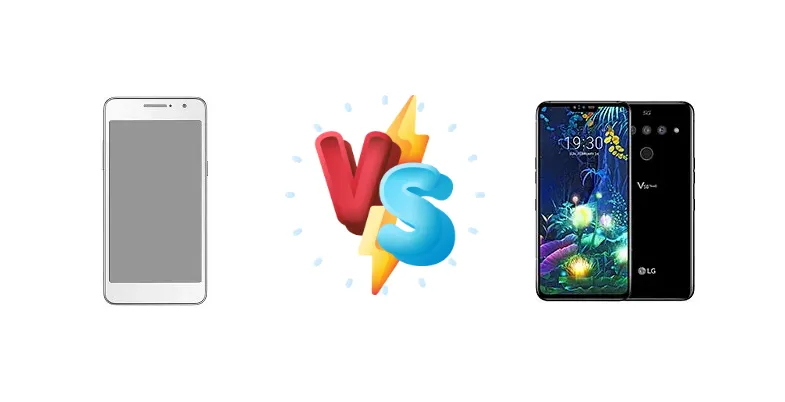
Released in 2019, both the Motorola Moto Z4 Force and the LG V50 ThinQ 5G represent a peak in Snapdragon 855 performance. However, they targeted slightly different audiences. The Moto Z4 Force focused on modularity and a relatively clean software experience, while the LG V50 ThinQ 5G prioritized 5G connectivity and a premium multimedia experience. This comparison dissects their strengths and weaknesses to determine which device holds up better today.
🏆 Quick Verdict
For the average user, the LG V50 ThinQ 5G emerges as the stronger choice. While both phones share the Snapdragon 855 chipset, the V50’s superior battery endurance rating of 96 hours and significantly higher display contrast ratio of 194000:1 provide a more compelling overall experience, especially for media consumption and demanding tasks.
| Network |
|---|
| 2G bands | GSM 850 / 900 / 1800 / 1900 | GSM 850 / 900 / 1800 / 1900 |
| 3G bands | HSDPA 850 / 900 / 1900 / 2100 | HSDPA 850 / 900 / 1700(AWS) / 1900 / 2100 - USA |
| 4G bands | LTE | 1, 2, 3, 4, 5, 7, 8, 12, 13, 17, 20, 25, 26, 28, 40, 41, 46, 66, 71 - USA |
| 5G bands | - | 41, 260, 261 NSA |
| Speed | HSPA 42.2/5.76 Mbps, LTE (5CA) Cat18 1200/150 Mbps | HSPA 42.2/5.76 Mbps, LTE (6CA) Cat18 1200/75 Mbps, 5G (2+ Gbps DL) |
| Technology | GSM / HSPA / LTE | GSM / CDMA / HSPA / EVDO / LTE / 5G |
| | - | CDMA2000 1xEV-DO |
| Launch |
|---|
| Announced | Not announced yet | 2019, February 24. Released 2019, April 19 |
| Status | Cancelled | Discontinued |
| Body |
|---|
| Build | - | Glass front (Gorilla Glass 5), glass back (Gorilla Glass 6), aluminum frame |
| Dimensions | - | 159.2 x 76.1 x 8.3 mm (6.27 x 3.00 x 0.33 in) |
| SIM | · Nano-SIM· Nano-SIM + Nano-SIM | · Nano-SIM· Nano-SIM + Nano-SIM |
| Weight | - | 183 g (6.46 oz) |
| | Splash and dust resistant | IP68 dust/water resistant (up to 1.5m for 30 min)
MIL-STD-810G compliant*
*does not guarantee ruggedness or use in extreme conditions |
| Display |
|---|
| Protection | Corning Gorilla Glass (unspecified version) | Corning Gorilla Glass 5 |
| Resolution | 1080 x 2340 pixels, 19.5:9 ratio (~403 ppi density) | 1440 x 3120 pixels, 19.5:9 ratio (~538 ppi density) |
| Size | 6.4 inches, 100.5 cm2 | 6.4 inches, 100.2 cm2 (~82.7% screen-to-body ratio) |
| Type | Super AMOLED | P-OLED, HDR10 |
| | - | Always-on display |
| Platform |
|---|
| CPU | Octa-core (1x2.84 GHz Kryo 485 & 3x2.42 GHz Kryo 485 & 4x1.78 GHz Kryo 485) | Octa-core (1x2.84 GHz Kryo 485 & 3x2.42 GHz Kryo 485 & 4x1.78 GHz Kryo 485) |
| Chipset | Qualcomm SM8150 Snapdragon 855 (7 nm) | Qualcomm SM8150 Snapdragon 855 (7 nm) |
| GPU | Adreno 640 | Adreno 640 |
| OS | Android 9.0 (Pie) | Android 9.0 (Pie), upgradable to Android 11 |
| Memory |
|---|
| Card slot | microSDXC (uses shared SIM slot) | microSDXC (dedicated slot) |
| Internal | 128GB 8GB RAM | 128GB 6GB RAM |
| | - | UFS 2.1 |
| Main Camera |
|---|
| Features | Dual-LED dual-tone flash, panorama, HDR | LED flash, HDR, panorama |
| Triple | 48 MP, f/1.6, (wide), 1/2.0", 0.8µm, PDAF
8 MP, f/2.0, (telephoto)
13 MP, f/1.8, (wide) | 12 MP, 27mm (wide), f/1.5, 1/2.55", 1.4µm, dual pixel PDAF, 3-axis OIS
12 MP, 52mm (telephoto), f/2.4, 1/3.4", 1.0µm, 2x optical zoom, PDAF, OIS
16 MP, 16mm (ultrawide), f/1.9, 1/3.1", 1.0µm, no AF |
| Video | 4K@30fps, 1080p@30/60fps | 4K@30/60fps, 1080p@30/60/240fps, 24-bit/192kHz stereo sound rec., HDR10 video, gyro-EIS |
| Selfie camera |
|---|
| Dual | - | 8 MP, f/1.9, 26mm (wide), 1/4.0", 1.12µm
5 MP, 21mm (wide), f/2.2, 1/5.0", 1.12µm |
| Features | HDR | HDR |
| Single | 25 MP, f/1.9 | - |
| Video | 1080p@30fps | 1080p@60fps |
| Sound |
|---|
| 3.5mm jack | Yes | Yes |
| 35mm jack | Yes | Yes |
| Loudspeaker | Yes | Yes, with stereo speakers |
| | - | 32-bit/192kHz audio
24-bit/192kHz audio recording
Tuned with Meridian Audio |
| Comms |
|---|
| Bluetooth | 5.0, A2DP, LE, EDR | 5.0, A2DP, LE, aptX HD |
| NFC | Yes | Yes |
| Positioning | GPS, GLONASS, BDS | GPS, GLONASS, GALILEO |
| Radio | FM radio | FM radio |
| USB | USB Type-C 3.1, OTG, magnetic connector | USB Type-C 3.1 |
| WLAN | Wi-Fi 802.11 a/b/g/n/ac, dual-band, Wi-Fi Direct | Wi-Fi 802.11 a/b/g/n/ac, dual-band, Wi-Fi Direct, DLNA |
| Features |
|---|
| Sensors | Fingerprint (under display, optical), accelerometer, gyro, proximity, compass | Fingerprint (rear-mounted), accelerometer, gyro, proximity, compass, barometer |
| | Moto Mods snap-on accessories | - |
| Battery |
|---|
| Charging | - | 18W wired, PD2.0, QC3, 50% in 36 min
10W wireless (Qi) |
| Type | Li-Ion, non-removable | Li-Po 4000 mAh, non-removable |
| Misc |
|---|
| Colors | Black | New Aurora Black |
| Models | - | LM-V500, LM-V500N, LM-V500EM, LM-V500XM, LM-V450PM, LM-V450 |
| Price | - | About 550 EUR |
| Tests |
|---|
| Audio quality | - |
Noise -92.5dB / Crosstalk -92.6dB |
| Battery life | - |
Endurance rating 96h
|
| Camera | - |
Photo / Video |
| Display | - |
Contrast ratio: 194000:1 (nominal) |
| Loudspeaker | - |
-25.2 LUFS (Very good)
|
| Performance | - |
AnTuTu: 343758 (v7), 421934 (v8)
GeekBench: 10928 (v4.4), 2672 (v5.1)
GFXBench: 22fps (ES 3.1 onscreen) |
Motorola Moto Z4 Force
- Modular design with Moto Mods
- Near-stock Android experience
- Snapdragon 855 performance
- Battery life is unknown and likely inferior to V50
- Camera specifications are unclear
LG V50 ThinQ 5G
- Exceptional 96-hour battery life
- High contrast display (194000:1)
- 5G connectivity
- 18W charging is relatively slow by today's standards
- LG's software can be bloated
Display Comparison
The LG V50 ThinQ 5G boasts a clear advantage in display quality. With a measured peak brightness of 533 nits, it’s comparable to the Moto Z4 Force (brightness data unavailable for Z4 Force), but the V50’s astonishing 194000:1 contrast ratio delivers significantly deeper blacks and more vibrant colors. This makes a noticeable difference when viewing HDR content. While both likely utilize OLED panels, the V50’s implementation is demonstrably superior. Bezels are comparable, but the overall viewing experience favors the LG.
Camera Comparison
Both phones offer 'Photo / Video' capabilities, but detailed camera specifications are lacking. Without sensor size or aperture information, a direct comparison is difficult. However, given LG’s history with smartphone cameras, it’s reasonable to assume the V50’s image processing algorithms are more refined, potentially offering better dynamic range and low-light performance. The Moto Z4 Force’s modularity *could* allow for camera mod upgrades, but this is an additional cost and doesn’t represent a core feature of the phone itself.
Performance
Both devices are powered by the Qualcomm SM8150 Snapdragon 855 (7 nm) chipset, featuring an Octa-core CPU configuration (1x2.84 GHz Kryo 485, 3x2.42 GHz Kryo 485, 4x1.78 GHz Kryo 485). This means raw processing power is virtually identical. However, the LG V50’s larger battery capacity (implied by the 96h endurance rating) likely allows for sustained peak performance for longer periods, mitigating potential thermal throttling. RAM configurations are unknown for both, but the V50’s 5G capabilities suggest a more robust thermal solution to handle the increased power draw.
Battery Life
The LG V50 ThinQ 5G’s 96-hour endurance rating is a significant advantage. While the Moto Z4 Force’s battery life is unknown, the V50’s rating suggests a substantially larger capacity. The V50 also supports 18W wired charging with PD2.0 and QC3 standards, reaching 50% charge in 36 minutes, alongside 10W wireless charging (Qi). This provides flexibility in charging options. The Moto Z4 Force’s charging capabilities are unknown, but the V50’s faster charging speeds are a clear benefit for users on the go.
Buying Guide
Buy the Motorola Moto Z4 Force if you value a modular ecosystem and a near-stock Android experience. The Moto Mods offer unique functionality, and the cleaner software is appealing to those who dislike heavy customization. Buy the LG V50 ThinQ 5G if you prioritize battery life, a vibrant display with exceptional contrast, and 5G connectivity, making it ideal for streaming, gaming, and users who demand all-day performance.
Frequently Asked Questions
❓ Does the LG V50 ThinQ 5G still receive software updates?
While LG has exited the smartphone market, the V50 ThinQ 5G received updates for a period after its release. However, long-term software support is limited. Users should expect to rely on the existing Android version and security patches.
❓ Are Moto Mods still actively developed for the Moto Z4 Force?
Moto Mods development has slowed significantly since the Z4 Force's release. While some mods are still available, new releases are infrequent. The modular ecosystem is no longer a primary focus for Motorola.
❓ How does the 5G connectivity on the LG V50 ThinQ 5G perform in 2024?
The LG V50 ThinQ 5G supports sub-6GHz 5G. While 5G networks have expanded, performance will vary significantly based on location and carrier. It won't support the fastest mmWave 5G speeds.