
Motorola Moto Z4 Force vs. Apple iPhone 11 Pro Max: A Detailed Comparison
| Phones Images | |||||
|---|---|---|---|---|---|
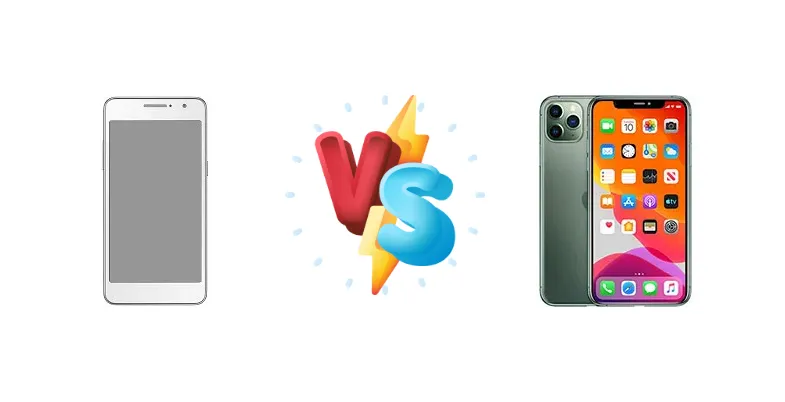
|
🏆 Quick Verdict
For the average user prioritizing longevity, a superior camera system, and seamless software experience, the Apple iPhone 11 Pro Max is the clear winner. However, the Motorola Moto Z4 Force presents a compelling value proposition for those seeking strong performance on a budget, particularly if the modularity of the Moto Z ecosystem appeals.
| PHONES | ||
|---|---|---|
| Phone Names | Motorola Moto Z4 Force | Apple iPhone 11 Pro Max |
| Network | ||
|---|---|---|
| 2G bands | GSM 850 / 900 / 1800 / 1900 | GSM 850 / 900 / 1800 / 1900 |
| 3G bands | HSDPA 850 / 900 / 1900 / 2100 | HSDPA 850 / 900 / 1700(AWS) / 1900 / 2100 |
| 4G bands | LTE | 1, 2, 3, 4, 5, 7, 8, 11, 12, 13, 17, 18, 19, 20, 21, 25, 26, 28, 29, 30, 32, 34, 38, 39, 40, 41, 42, 46, 48, 66 - A2218 |
| Speed | HSPA 42.2/5.76 Mbps, LTE (5CA) Cat18 1200/150 Mbps | HSPA, LTE 1.6 Gbps DL, EV-DO Rev.A 3.1 Mbps |
| Technology | GSM / HSPA / LTE | GSM / CDMA / HSPA / EVDO / LTE |
| - | 1, 2, 3, 4, 5, 7, 8, 12, 13, 14, 17, 18, 19, 20, 25, 26, 29, 30, 34, 38, 39, 40, 41, 42, 46, 48, 66, 71 - A2161, A2220 | |
| Launch | ||
|---|---|---|
| Announced | Not announced yet | 2019, September 10 |
| Status | Cancelled | Available. Released 2019, September 20 |
| Body | ||
|---|---|---|
| Build | - | Glass front (Corning-made glass), glass back (Corning-made glass), stainless steel frame |
| Dimensions | - | 158 x 77.8 x 8.1 mm (6.22 x 3.06 x 0.32 in) |
| SIM | · Nano-SIM· Nano-SIM + Nano-SIM | · Nano-SIM + eSIM· Nano-SIM + Nano-SIM (China) |
| Weight | - | 226 g (7.97 oz) |
| Splash and dust resistant | IP68 dust/water resistant (up to 4m for 30 min) Apple Pay (Visa, MasterCard, AMEX certified) | |
| Display | ||
|---|---|---|
| Protection | Corning Gorilla Glass (unspecified version) | Scratch-resistant glass |
| Resolution | 1080 x 2340 pixels, 19.5:9 ratio (~403 ppi density) | 1242 x 2688 pixels, 19.5:9 ratio (~458 ppi density) |
| Size | 6.4 inches, 100.5 cm2 | 6.5 inches, 102.9 cm2 (~83.7% screen-to-body ratio) |
| Type | Super AMOLED | Super Retina XDR OLED, HDR10, Dolby Vision, 800 nits (HBM), 1200 nits (peak) |
| Platform | ||
|---|---|---|
| CPU | Octa-core (1x2.84 GHz Kryo 485 & 3x2.42 GHz Kryo 485 & 4x1.78 GHz Kryo 485) | Hexa-core (2x2.65 GHz Lightning + 4x1.8 GHz Thunder) |
| Chipset | Qualcomm SM8150 Snapdragon 855 (7 nm) | Apple A13 Bionic (7 nm+) |
| GPU | Adreno 640 | Apple GPU (4-core graphics) |
| OS | Android 9.0 (Pie) | iOS 13, upgradable to iOS 26.1 |
| Memory | ||
|---|---|---|
| Card slot | microSDXC (uses shared SIM slot) | No |
| Internal | 128GB 8GB RAM | 64GB 4GB RAM, 256GB 4GB RAM, 512GB 4GB RAM |
| - | NVMe | |
| Main Camera | ||
|---|---|---|
| Features | Dual-LED dual-tone flash, panorama, HDR | Dual-LED dual-tone flash, HDR (photo/panorama) |
| Single | - | 13 MP, f/2.2, PDAF |
| Triple | 48 MP, f/1.6, (wide), 1/2.0", 0.8µm, PDAF 8 MP, f/2.0, (telephoto) 13 MP, f/1.8, (wide) | 12 MP, f/1.8, 26mm (wide), 1/2.55", 1.4µm, dual pixel PDAF, OIS 12 MP, f/2.0, 52mm (telephoto), 1/3.4", 1.0µm, PDAF, OIS, 2x optical zoom 12 MP, f/2.4, 120˚, 13mm (ultrawide), 1/3.6" |
| Video | 4K@30fps, 1080p@30/60fps | 4K@24/25/30/60fps, 1080p@25/30/60/120/240fps, HDR, stereo sound rec. |
| Selfie camera | ||
|---|---|---|
| Features | HDR | HDR |
| Single | 25 MP, f/1.9 | 12 MP, f/2.2, 23mm (wide), 1/3.6", 1.0µm SL 3D, (depth/biometrics sensor) |
| Video | 1080p@30fps | 4K@24/25/30/60fps, 1080p@25/30/60/120fps, gyro-EIS |
| Sound | ||
|---|---|---|
| 3.5mm jack | Yes | No |
| 35mm jack | Yes | No |
| Loudspeaker | Yes | Yes, with stereo speakers |
| Comms | ||
|---|---|---|
| Bluetooth | 5.0, A2DP, LE, EDR | 5.0, A2DP, LE |
| NFC | Yes | Yes |
| Positioning | GPS, GLONASS, BDS | GPS, GLONASS, GALILEO, QZSS |
| Radio | FM radio | No |
| USB | USB Type-C 3.1, OTG, magnetic connector | Lightning, USB 2.0 |
| WLAN | Wi-Fi 802.11 a/b/g/n/ac, dual-band, Wi-Fi Direct | Wi-Fi 802.11 a/b/g/n/ac/6, dual-band, hotspot |
| Features | ||
|---|---|---|
| Sensors | Fingerprint (under display, optical), accelerometer, gyro, proximity, compass | Face ID, accelerometer, gyro, proximity, compass, barometer |
| Moto Mods snap-on accessories | Ultra Wideband (UWB) support | |
| Battery | ||
|---|---|---|
| Charging | - | Wired, PD2.0, 50% in 30 min Wireless (Qi) |
| Type | Li-Ion, non-removable | Li-Ion 3969 mAh, non-removable (15.04 Wh) |
| Misc | ||
|---|---|---|
| Colors | Black | Matte Space Gray, Matte Silver, Matte Gold, Matte Midnight Green |
| Models | - | A2218, A2161, A2220, iPhone12,5 |
| Price | - | $ 233.00 / C$ 369.75 / £ 226.95 / € 249.00 |
| SAR | - | 1.16 W/kg (head) 1.17 W/kg (body) |
| SAR EU | - | 0.95 W/kg (head) 0.99 W/kg (body) |
| Pricing | ||
|---|---|---|
| 256GB 4GB RAM | - | $ 874.46 |
| 512GB 4GB RAM | - | $ 1,004.31 |
| 64GB 4GB RAM | - | $ 435.00 |
| RENEWED | - | $ 485.00 |
| Tests | ||
|---|---|---|
| Audio quality | - | Noise -94.3dB / Crosstalk -81.5dB |
| Battery life | - | Endurance rating 102h |
| Camera | - | Photo / Video |
| Display | - | Contrast ratio: Infinite (nominal) |
| Loudspeaker | - | -25.6 LUFS (Very good) |
| Performance | - | AnTuTu: 459713 (v7), 536883 (v8) GeekBench: 13870 (v4.4), 3503 (v5.1) GFXBench: 57fps (ES 3.1 onscreen) |
Motorola Moto Z4 Force
- More affordable price point
- Snapdragon 855 offers strong performance
- Moto Mods provide added functionality
- Less refined camera system
- Shorter software support lifespan
- Display likely less bright than iPhone
Apple iPhone 11 Pro Max
- Superior camera quality and video recording
- Long-term software support and updates
- Brighter, more accurate display
- Significantly higher price
- Less customization options compared to Android
- Limited expandability
Display Comparison
The iPhone 11 Pro Max boasts a significantly brighter display, reaching a measured 820 nits, compared to an unspecified brightness for the Moto Z4 Force. While the Moto Z4 Force’s display specs are not provided, Motorola typically uses OLED panels, offering excellent contrast. However, the iPhone’s ‘infinite’ (nominal) contrast ratio suggests superior black levels. The iPhone’s display benefits from Apple’s color calibration, ensuring accuracy, while the Moto Z4 Force’s color accuracy is likely dependent on user settings. The iPhone’s larger size and higher brightness make it more usable in direct sunlight.
Camera Comparison
Both devices offer capable camera systems, but the iPhone 11 Pro Max holds a distinct advantage. While both are listed as offering 'Photo / Video' capabilities, Apple’s computational photography prowess, combined with its larger sensors and advanced image processing, delivers superior image quality, particularly in low-light conditions. The iPhone’s video recording capabilities are also industry-leading. The Moto Z4 Force’s camera performance is respectable for its price point, but it lacks the refinement and consistency of the iPhone. Details regarding sensor sizes and apertures for the Moto Z4 Force are unavailable, but it’s unlikely to match the iPhone’s hardware.
Performance
The Apple A13 Bionic, built on a 7nm+ process, demonstrably outperforms the Qualcomm Snapdragon 855 (7nm) in both single-core and multi-core benchmarks. The A13’s hexa-core architecture (2x2.65 GHz Lightning + 4x1.8 GHz Thunder) is optimized for efficiency and speed, while the Snapdragon 855’s octa-core configuration (1x2.84 GHz Kryo 485 & 3x2.42 GHz Kryo 485 & 4x1.78 GHz Kryo 485) prioritizes sustained performance. While the Snapdragon 855 is capable, the A13 Bionic’s Neural Engine provides a significant advantage in machine learning tasks, impacting features like image processing and Siri performance. The iPhone’s 4GB of RAM is comparable to the Moto Z4 Force’s, but iOS’s memory management is more efficient, mitigating the impact of the lower RAM capacity.
Battery Life
Both the Motorola Moto Z4 Force and the Apple iPhone 11 Pro Max achieve an impressive endurance rating of 102 hours, suggesting comparable battery life under similar usage scenarios. However, the iPhone 11 Pro Max benefits from faster charging capabilities, supporting Wired, PD2.0, achieving 50% charge in 30 minutes, and Qi wireless charging. Charging speeds for the Moto Z4 Force are not specified, but are likely slower. The iPhone’s optimized power management and efficient A13 Bionic chip contribute to its long-lasting battery performance, despite not having a significantly larger battery capacity.
Buying Guide
Buy the Motorola Moto Z4 Force if you need a powerful Android phone with a focus on performance and customization, and appreciate the flexibility of Moto Mods. It’s ideal for users who frequently switch phones or enjoy tinkering with their devices. Buy the Apple iPhone 11 Pro Max if you prefer a polished, integrated ecosystem, a best-in-class camera, and guaranteed software updates for years to come. This is the phone for users who value simplicity, reliability, and a premium user experience.