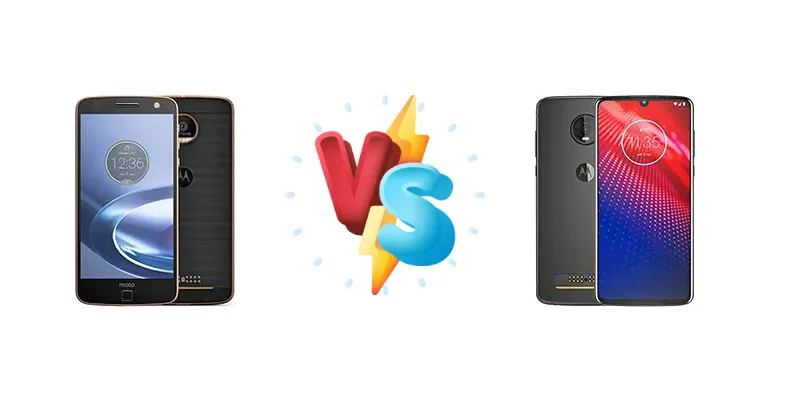
Motorola's modular Z series offered a unique approach to smartphones. Today, we're pitting two of its entries against each other: the powerful Moto Z Force and the more modern Moto Z4. Which phone delivers the best experience in 2024?
🏆 Quick Verdict
The Moto Z Force boasts significantly better battery life and a more powerful Snapdragon 820 chipset, offering superior performance. However, the Moto Z4 benefits from a newer processor and potentially better software support. For raw power and endurance, the Z Force wins, but consider the Z4 for a more contemporary experience.
| Network |
|---|
| 2G bands | GSM 850 / 900 / 1800 / 1900 - EMEA, USA | GSM 850 / 900 / 1800 / 1900 |
| 3G bands | HSDPA 850 / 900 / 1900 / 2100 - EMEA, USA | HSDPA 850 / 900 / 1700(AWS) / 1900 / 2100 - USA |
| 4G bands | 2, 3, 4, 5, 7, 13 - USA | 1, 2, 3, 4, 7, 8, 12, 13, 17, 18, 19, 20, 25, 26, 28, 30, 38, 40, 41, 66, 71 - USA |
| Speed | HSPA 42.2/5.76 Mbps, LTE (3CA) Cat9 450/50 Mbps | HSPA, LTE |
| Technology | GSM / CDMA / HSPA / EVDO / LTE | GSM / CDMA / HSPA / LTE |
| | CDMA2000 1xEV-DO - USA | CDMA 800 / 1900 |
| Launch |
|---|
| Announced | 2016, June. Released 2016, September | 2019, May. Released 2019, June |
| Status | Discontinued | Discontinued |
| Body |
|---|
| Build | - | Glass front (Gorilla Glass 3), glass back, aluminum frame |
| Dimensions | 155.9 x 75.8 x 7 mm (6.14 x 2.98 x 0.28 in) | 158 x 75 x 7.4 mm (6.22 x 2.95 x 0.29 in) |
| SIM | Nano-SIM | · Nano-SIM· Nano-SIM + Nano-SIM |
| Weight | 163 g (5.75 oz) | 165 g (5.82 oz) |
| | - | Splash and dust resistant |
| Display |
|---|
| Protection | Shatterproof | Corning Gorilla Glass 3 |
| Resolution | 1440 x 2560 pixels, 16:9 ratio (~535 ppi density) | 1080 x 2340 pixels, 19.5:9 ratio (~403 ppi density) |
| Size | 5.5 inches, 83.1 cm2 (~70.3% screen-to-body ratio) | 6.4 inches, 100.5 cm2 (~84.8% screen-to-body ratio) |
| Type | AMOLED | OLED |
| Platform |
|---|
| CPU | Quad-core (2x2.15 GHz Kryo & 2x1.6 GHz Kryo) | Octa-core (2x2.0 GHz Kryo 460 Gold & 6x1.7 GHz Kryo 460 Silver) |
| Chipset | Qualcomm MSM8996 Snapdragon 820 (14 nm) | Qualcomm SDM675 Snapdragon 675 (11 nm) |
| GPU | Adreno 530 | Adreno 612 |
| OS | Android 6.0.1 (Marshmallow), upgradable to Android 8.0 (Oreo) | Android 9.0 (Pie), upgradable to Android 10 |
| Memory |
|---|
| Card slot | microSDXC (dedicated slot) | microSDXC (uses shared SIM slot) |
| Internal | 32GB 4GB RAM, 64GB 4GB RAM | 128GB 4GB RAM |
| | - | UFS 2.1 |
| Main Camera |
|---|
| Features | Laser AF, Dual-LED dual-tone flash, panorama, HDR | Dual-LED dual-tone flash, panorama, HDR |
| Single | 21 MP, f/1.8, 1.12µm, PDAF, OIS | 48 MP, f/1.7, (wide), 1/2.0", 0.8µm, PDAF, OIS |
| Video | 4K@30fps, 1080p@30/60fps, HDR | 4K@30fps, 1080p@30/60fps |
| Selfie camera |
|---|
| Features | LED flash | HDR |
| Single | 5 MP, f/2.2, 1/4.0", 1.4µm | 25 MP, f/2.0, 0.9µm |
| Video | 1080p@30fps | 1080p@30fps |
| Sound |
|---|
| 3.5mm jack | No | Yes |
| 35mm jack | No | Yes |
| Loudspeaker | Yes | Yes |
| Comms |
|---|
| Bluetooth | 4.1, A2DP, EDR, LE, aptX | 5.0, A2DP, LE, EDR |
| NFC | Yes | Yes |
| Positioning | GPS, GLONASS | GPS, GLONASS, GALILEO |
| Radio | No | FM radio |
| USB | USB Type-C, OTG, magnetic connector | USB Type-C 3.1, OTG, magnetic connector |
| WLAN | Wi-Fi 802.11 a/b/g/n/ac, dual-band, Wi-Fi Direct | Wi-Fi 802.11 a/b/g/n/ac, dual-band, Wi-Fi Direct |
| Features |
|---|
| Sensors | Fingerprint (front-mounted), accelerometer, gyro, proximity, compass | Fingerprint (under display, optical), accelerometer, gyro, proximity, compass |
| | Moto Mods snap-on accessories | Moto Mods snap-on accessories |
| Battery |
|---|
| Charging | 15W wired | 15W wired |
| Type | Li-Ion 3500 mAh, non-removable | Li-Ion 3600 mAh, non-removable |
| Misc |
|---|
| Colors | Black/Gray, Black/Rose Gold, Black/Gold, White | Flash Grey, Frost White |
| Price | About 270 EUR | About 500 EUR |
| SAR | - | 1.16 W/kg (head) 1.44 W/kg (body) |
| Tests |
|---|
| Audio quality |
Noise -94dB / Crosstalk -94.9dB | - |
| Battery life |
Endurance rating 88h
| Endurance rating 70h |
| Loudspeaker |
Voice 69dB / Noise 68dB / Ring 77dB
|
Voice 70dB / Noise 73dB / Ring 80dB |
| Performance |
Basemark OS II 2.0: 5395Basemark X: 36405 |
AnTuTu: 173234 (v7)
GeekBench: 6515 (v4.4)
GFXBench: 8fps (ES 3.1 onscreen) |
Motorola Moto Z Force
- Exceptional battery life (88h)
- Powerful Snapdragon 820 chipset
- Modular Moto Mods support
- High-resolution display
- Older design
- Potentially outdated software
- Slower charging (15W)
Motorola Moto Z4
- More modern design
- Potentially better software updates
- Larger display
- Slightly more efficient processor
- Shorter battery life (70h)
- Less powerful processor
- Slower charging (15W)
Display Comparison
The Moto Z Force typically featured a 5.5-inch Quad HD display, while the Moto Z4 had a 6.2-inch Full HD+ display. While the Z Force had a higher resolution, the Z4's larger size might be preferable for media consumption. Both offered vibrant colors and good viewing angles.
Camera Comparison
The Moto Z Force generally had a 21MP main camera, while the Moto Z4 featured a 48MP main camera. While megapixels aren't everything, the Z4's newer sensor and image processing algorithms likely result in better image quality, especially in low light. Both phones supported Moto Mods for enhanced camera capabilities.
Performance
The Snapdragon 820 in the Moto Z Force is a flagship-level chip from its time, offering significantly more processing power than the Snapdragon 675 in the Moto Z4. Expect smoother multitasking and faster app loading on the Z Force. The Z4's processor is still capable for everyday tasks, but it won't handle demanding games or applications as well.
Battery Life
This is where the Moto Z Force truly shines. Its 3500mAh battery consistently achieved an impressive 88-hour endurance rating, far surpassing the Moto Z4's 70-hour rating. The Z Force offers significantly longer battery life, making it ideal for heavy users.
Buying Guide
The Moto Z Force is ideal for users prioritizing long battery life and high performance, especially those who appreciate the modular Moto Mods ecosystem. The Moto Z4 is a better choice for those seeking a more modern design, potentially better software updates, and a slightly more efficient processor, even if it means sacrificing some battery endurance.
Frequently Asked Questions
❓ Is the Moto Z Force still worth buying in 2024?
If battery life and performance are your top priorities, and you're comfortable with an older design, the Moto Z Force can still be a viable option, especially if you can find one at a low price. However, be mindful of potential software update limitations.
❓ Can I still find Moto Mods for these phones?
Yes, although the availability of new Moto Mods is limited, a wide range of existing Mods are still available for both the Moto Z Force and Moto Z4.