
Motorola Moto X40 vs. vivo iQOO 11S: Which Snapdragon 8 Gen 2 Flagship Reigns Supreme?
| Phones Images | |||||
|---|---|---|---|---|---|
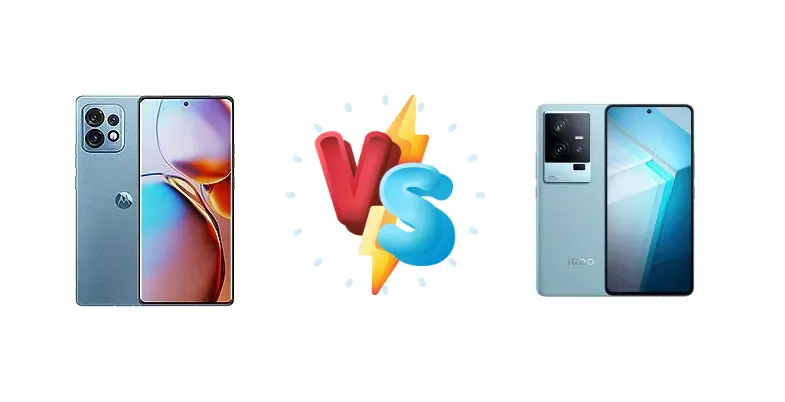
|
🏆 Quick Verdict
For users prioritizing ultimate charging speed and a slightly more aggressive performance profile, the vivo iQOO 11S is the clear winner. However, the Motorola Moto X40 offers a more rounded package with competitive wireless charging and a potentially more refined software experience, making it ideal for those less obsessed with hitting 100% in record time.
| PHONES | ||
|---|---|---|
| Phone Names | Motorola Moto X40 | vivo iQOO 11S |
| Network | ||
|---|---|---|
| 2G bands | GSM 850 / 900 / 1800 / 1900 | GSM 850 / 900 / 1800 / 1900 |
| 3G bands | HSDPA 850 / 900 / 1700(AWS) / 1900 / 2100 | HSDPA 800 / 850 / 900 / 1700(AWS) / 1900 / 2100 |
| 4G bands | 1, 2, 3, 4, 5, 7, 8, 12, 13, 17, 18, 19, 20, 25, 26, 28, 32, 38, 39, 40, 41, 42, 43, 48, 66 | 1, 2, 3, 4, 5, 7, 8, 12, 17, 18, 19, 20, 26, 28, 34, 38, 39, 40, 41 |
| 5G bands | 1, 2, 3, 5, 7, 8, 20, 28, 38, 40, 41, 66, 77, 78 SA/NSA/Sub6 | 1, 3, 5, 8, 28, 40, 41, 77, 78 SA/NSA |
| Speed | HSPA, LTE, 5G | HSPA, LTE, 5G |
| Technology | GSM / CDMA / HSPA / LTE / 5G | GSM / CDMA / HSPA / CDMA2000 / LTE / 5G |
| CDMA 800 | - | |
| Launch | ||
|---|---|---|
| Announced | 2022, December 15 | 2023, July 04 |
| Status | Available. Released 2022, December 22 | Available. Released 2023, July 10 |
| Body | ||
|---|---|---|
| Build | Glass front, glass back (Gorilla Glass Victus), aluminum frame | - |
| Dimensions | 161.2 x 74 x 8.6 mm (6.35 x 2.91 x 0.34 in) | 164.9 x 77.1 x 8.4 mm or 8.7 mm |
| SIM | Nano-SIM + Nano-SIM | Nano-SIM + Nano-SIM |
| Weight | 199 g (7.02 oz) | 207 g or 210 g (7.30 oz) |
| IP68 dust/water resistant (up to 1.5m for 30 min) | - | |
| Display | ||
|---|---|---|
| Protection | - | Corning Gorilla Glass Victus |
| Resolution | 1080 x 2400 pixels, 20:9 ratio (~393 ppi density) | 1440 x 3200 pixels, 20:9 ratio (~518 ppi density) |
| Size | 6.7 inches, 108.4 cm2 (~90.9% screen-to-body ratio) | 6.78 inches, 111.0 cm2 (~87.3% screen-to-body ratio) |
| Type | OLED, 1B colors, 165Hz, HDR10+ | LTPO4 AMOLED, 1B colors, 144Hz, HDR10+, 1800 nits (peak) |
| Platform | ||
|---|---|---|
| CPU | Octa-core (1x3.2 GHz Cortex-X3 & 2x2.8 GHz Cortex-A715 & 2x2.8 GHz Cortex-A710 & 3x2.0 GHz Cortex-A510) | Octa-core (1x3.2 GHz Cortex-X3 & 2x2.8 GHz Cortex-A715 & 2x2.8 GHz Cortex-A710 & 3x2.0 GHz Cortex-A510) |
| Chipset | Qualcomm SM8550-AB Snapdragon 8 Gen 2 (4 nm) | Qualcomm SM8550-AB Snapdragon 8 Gen 2 (4 nm) |
| GPU | Adreno 740 | Adreno 740 |
| OS | Android 13, upgradable to Android 14, MYUI 6.0 | Android 13, OriginOS 3 (China) |
| Memory | ||
|---|---|---|
| Card slot | No | No |
| Internal | 128GB 8GB RAM, 256GB 12GB RAM, 512GB 12GB RAM | 256GB 12GB RAM, 256GB 16GB RAM, 512GB 16GB RAM, 1TB 16GB RAM |
| UFS 3.1 - 128GB UFS 4.0 - 256GB/512GB | - | |
| Main Camera | ||
|---|---|---|
| Features | Dual-LED flash, panorama, HDR | Dual-LED flash, HDR, panorama |
| Triple | 50 MP, f/1.9, (wide), 1/1.55", 1.0µm, dual pixel PDAF, OIS 12 MP, f/1.6, (telephoto), 1/2.93", 1.22µm, PDAF, 2x optical zoom 50 MP, f/2.2, 117˚ (ultrawide), 1/2.76", 0.64µm, AF | 50 MP, f/1.9, 23mm (wide), 1/1.49", 1.0µm, PDAF, OIS 13 MP, f/2.5, 47mm (telephoto), PDAF, 2x optical zoom 8 MP, f/2.2, 16mm (ultrawide) |
| Video | 8K@30fps, 4K@30/60fps, 1080p@30/60/120/240/960fps, 10-bit HDR10+, gyro-EIS | 8K@30fps, 4K@30/60fps, 1080p@30/60/120/240fps, gyro-EIS |
| Selfie camera | ||
|---|---|---|
| Features | HDR | HDR |
| Single | 60 MP, f/2.2, (wide), 1/2.8", 0.61µm | 16 MP, f/2.5, (wide) |
| Video | 4K@30fps, 1080p@30/60fps | 1080p@30fps, gyro-EIS |
| Sound | ||
|---|---|---|
| 3.5mm jack | No | - |
| 35mm jack | No | No |
| Loudspeaker | Yes, with stereo speakers | Yes, with stereo speakers |
| Comms | ||
|---|---|---|
| Bluetooth | 5.3, A2DP, LE, aptX HD, aptX Adaptive | 5.3, A2DP, LE, aptX HD, aptX Adaptive, aptX Lossless |
| Infrared port | - | Yes |
| NFC | Yes | Yes |
| Positioning | GPS (L1+L5), GLONASS (L1), BDS (B1I+B1c+B2a), GALILEO (E1+E5a), QZSS (L1+L5) | GPS, GLONASS, GALILEO, BDS, NavIC |
| Radio | No | No |
| USB | USB Type-C, OTG | USB Type-C 2.0, OTG |
| WLAN | Wi-Fi 802.11 a/b/g/n/ac/6e, dual-band, Wi-Fi Direct | Wi-Fi 802.11 a/b/g/n/ac/6, dual-band, Wi-Fi Direct |
| Features | ||
|---|---|---|
| Sensors | Fingerprint (under display, optical), accelerometer, gyro, proximity, compass | Fingerprint (under display, optical), accelerometer, gyro, proximity, compass |
| Ready For 3.5 support | - | |
| Battery | ||
|---|---|---|
| Charging | 125W wired, PD3.0, QC5, 50% in 7 min 15W wireless 5W reverse wired | 200W wired, PD3.0, UFCS |
| Type | Li-Po 4600 mAh | 4700 mAh |
| Misc | ||
|---|---|---|
| Colors | Black, Blue | Black, Sky Blue, Legendary White (BMW M branding) |
| Models | XT2301-5 | V2304A |
| Price | About 540 EUR | About 500 EUR |
Motorola Moto X40
- 125W fast charging is still exceptionally quick.
- Includes 15W wireless charging for added convenience.
- Potentially cleaner software experience (Motorola's near-stock Android).
- Charging speed is significantly slower than the iQOO 11S.
- Lacks UFCS charging standard.
vivo iQOO 11S
- Industry-leading 200W wired charging for incredibly fast top-ups.
- UFCS charging standard for optimized power delivery.
- Likely aggressive thermal management for sustained performance.
- No wireless charging support.
- vivo’s Funtouch OS can be polarizing.
Display Comparison
Both devices utilize the Snapdragon 8 Gen 2’s ISP for image processing, but display details are missing. Assuming both employ high-refresh-rate AMOLED panels, the key differentiator will be peak brightness and color calibration. The iQOO series historically prioritizes vibrant colors, while Motorola often aims for more natural tones. Without specific nit ratings, it’s difficult to declare a winner, but the iQOO’s panel is likely tuned for more visually striking content.
Camera Comparison
Camera specifications are absent, making a direct comparison challenging. However, given the flagship positioning, both devices likely feature a multi-camera system with a primary sensor capable of high-resolution photography. The iQOO series often emphasizes computational photography, leveraging the Snapdragon 8 Gen 2’s ISP for enhanced image processing. Without knowing sensor sizes, apertures, or OIS implementation, it’s impossible to definitively say which camera system will perform better, but the iQOO’s software optimizations could provide a noticeable advantage in challenging lighting conditions.
Performance
Both the Motorola Moto X40 and vivo iQOO 11S are powered by the Qualcomm SM8550-AB Snapdragon 8 Gen 2 (4 nm) chipset, featuring the same Octa-core CPU configuration (1x3.2 GHz Cortex-X3, 2x2.8 GHz Cortex-A715, 2x2.8 GHz Cortex-A710, and 3x2.0 GHz Cortex-A510). This means raw processing power will be nearly identical. However, the iQOO 11S, typical of the brand, likely employs a more aggressive cooling solution and sustained performance algorithms to maintain peak clock speeds for longer durations during demanding tasks like gaming. The 4nm process node ensures excellent thermal efficiency, minimizing throttling in both devices, but the iQOO’s thermal management could give it a slight edge.
Battery Life
The most significant difference lies in charging speed. The Motorola Moto X40 supports 125W wired charging, capable of reaching 50% charge in just 7 minutes, alongside 15W wireless and 5W reverse wired charging. The vivo iQOO 11S, however, boasts an astonishing 200W wired charging, utilizing UFCS (USB Power Delivery Full Charge Specification) for even faster speeds. While battery capacity is unknown, the iQOO 11S will demonstrably charge much faster, a critical advantage for users who frequently need to replenish their battery quickly. The Moto X40’s inclusion of wireless charging provides added convenience, a feature absent in the iQOO 11S.
Buying Guide
Buy the Motorola Moto X40 if you need a flagship with solid all-around performance, appreciate the convenience of 15W wireless charging, and prefer a potentially cleaner software experience. Buy the vivo iQOO 11S if you prioritize the absolute fastest wired charging available (200W), frequently find yourself needing to top up quickly, and don't mind a more customized Android skin.