
Motorola Moto X40 vs Moto X30 Pro: The Ultimate Showdown
| Phones Images | |||||
|---|---|---|---|---|---|
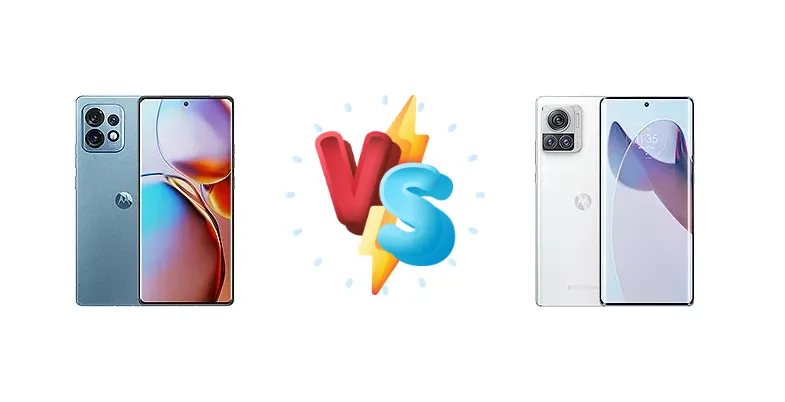
|
🏆 Quick Verdict
The Moto X40 takes the crown thanks to its newer Snapdragon 8 Gen 2 chipset, offering superior performance and efficiency. While the X30 Pro boasts faster wireless charging, the X40's overall package, including its improved processor, makes it the better choice for most users.
| PHONES | ||
|---|---|---|
| Phone Names | Motorola Moto X40 | Motorola Moto X30 Pro |
| Network | ||
|---|---|---|
| 2G bands | GSM 850 / 900 / 1800 / 1900 | GSM 850 / 900 / 1800 / 1900 |
| 3G bands | HSDPA 850 / 900 / 1700(AWS) / 1900 / 2100 | HSDPA 850 / 900 / 1700(AWS) / 1900 / 2100 |
| 4G bands | 1, 2, 3, 4, 5, 7, 8, 12, 13, 17, 18, 19, 20, 25, 26, 28, 32, 38, 39, 40, 41, 42, 43, 48, 66 | LTE |
| 5G bands | 1, 2, 3, 5, 7, 8, 20, 28, 38, 40, 41, 66, 77, 78 SA/NSA/Sub6 | SA/NSA/Sub6 |
| Speed | HSPA, LTE, 5G | HSPA, LTE, 5G |
| Technology | GSM / CDMA / HSPA / LTE / 5G | GSM / CDMA / HSPA / LTE / 5G |
| CDMA 800 | CDMA 800 / 1900 | |
| Launch | ||
|---|---|---|
| Announced | 2022, December 15 | 2022, August 11 |
| Status | Available. Released 2022, December 22 | Available. Released 2022, August 11 |
| Body | ||
|---|---|---|
| Build | Glass front, glass back (Gorilla Glass Victus), aluminum frame | Glass front, glass back (Gorilla Glass 5) |
| Dimensions | 161.2 x 74 x 8.6 mm (6.35 x 2.91 x 0.34 in) | 161.7 x 73.5 x 8.4 mm (6.37 x 2.89 x 0.33 in) |
| SIM | Nano-SIM + Nano-SIM | Nano-SIM + Nano-SIM |
| Weight | 199 g (7.02 oz) | 198.5 g (7.02 oz) |
| IP68 dust/water resistant (up to 1.5m for 30 min) | Splash and dust resistant | |
| Display | ||
|---|---|---|
| Resolution | 1080 x 2400 pixels, 20:9 ratio (~393 ppi density) | 1080 x 2400 pixels, 20:9 ratio (~393 ppi density) |
| Size | 6.7 inches, 108.4 cm2 (~90.9% screen-to-body ratio) | 6.7 inches, 108.4 cm2 (~91.2% screen-to-body ratio) |
| Type | OLED, 1B colors, 165Hz, HDR10+ | OLED, 1B colors, 144Hz, HDR10+, 1000 nits (HBM), 1250 nits (peak) |
| Platform | ||
|---|---|---|
| CPU | Octa-core (1x3.2 GHz Cortex-X3 & 2x2.8 GHz Cortex-A715 & 2x2.8 GHz Cortex-A710 & 3x2.0 GHz Cortex-A510) | Octa-core (1x3.19 GHz Cortex-X2 & 3x2.75 GHz Cortex-A710 & 4x1.80 GHz Cortex-A510) |
| Chipset | Qualcomm SM8550-AB Snapdragon 8 Gen 2 (4 nm) | Qualcomm SM8475 Snapdragon 8+ Gen 1 (4 nm) |
| GPU | Adreno 740 | Adreno 730 |
| OS | Android 13, upgradable to Android 14, MYUI 6.0 | Android 12, MYUI 4.0 |
| Memory | ||
|---|---|---|
| Card slot | No | No |
| Internal | 128GB 8GB RAM, 256GB 12GB RAM, 512GB 12GB RAM | 128GB 8GB RAM, 256GB 12GB RAM, 512GB 12GB RAM |
| UFS 3.1 - 128GB UFS 4.0 - 256GB/512GB | UFS 3.1 | |
| Main Camera | ||
|---|---|---|
| Features | Dual-LED flash, panorama, HDR | Dual-LED flash, panorama, HDR |
| Triple | 50 MP, f/1.9, (wide), 1/1.55", 1.0µm, dual pixel PDAF, OIS 12 MP, f/1.6, (telephoto), 1/2.93", 1.22µm, PDAF, 2x optical zoom 50 MP, f/2.2, 117˚ (ultrawide), 1/2.76", 0.64µm, AF | 200 MP, f/2.0, (wide), 1/1.22", 0.64µm, PDAF, OIS 50 MP, f/2.2, 117˚ (ultrawide), 1/2.76", 0.64µm, AF 12 MP, f/1.6, (telephoto), 1/2.93", 1.22µm, PDAF, 2x optical zoom |
| Video | 8K@30fps, 4K@30/60fps, 1080p@30/60/120/240/960fps, 10-bit HDR10+, gyro-EIS | 8K@30fps, 4K@30fps, 1080p@30/60/120/240fps, gyro-EIS |
| Selfie camera | ||
|---|---|---|
| Features | HDR | HDR |
| Single | 60 MP, f/2.2, (wide), 1/2.8", 0.61µm | 60 MP, f/2.2, (wide), 0.64µm |
| Video | 4K@30fps, 1080p@30/60fps | 4K@30fps, 1080p@30fps |
| Sound | ||
|---|---|---|
| 3.5mm jack | No | No |
| 35mm jack | No | No |
| Loudspeaker | Yes, with stereo speakers | Yes, with stereo speakers |
| Comms | ||
|---|---|---|
| Bluetooth | 5.3, A2DP, LE, aptX HD, aptX Adaptive | 5.2, A2DP, LE, aptX HD, aptX Adaptive |
| NFC | Yes | Yes |
| Positioning | GPS (L1+L5), GLONASS (L1), BDS (B1I+B1c+B2a), GALILEO (E1+E5a), QZSS (L1+L5) | GPS (L1+L5), GLONASS (L1), BDS (B1I+B1c+B2a), GALILEO (E1+E5a), QZSS (L1+L5) |
| Radio | No | No |
| USB | USB Type-C, OTG | USB Type-C |
| WLAN | Wi-Fi 802.11 a/b/g/n/ac/6e, dual-band, Wi-Fi Direct | Wi-Fi 802.11 a/b/g/n/ac/6e, dual-band, Wi-Fi Direct |
| Features | ||
|---|---|---|
| Sensors | Fingerprint (under display, optical), accelerometer, gyro, proximity, compass | Fingerprint (under display, optical), accelerometer, gyro, proximity, compass |
| Ready For 3.5 support | Ready For 3.5 support | |
| Battery | ||
|---|---|---|
| Charging | 125W wired, PD3.0, QC5, 50% in 7 min 15W wireless 5W reverse wired | 125W wired, 50% in 7 min, 100% in 19 min 50W wireless |
| Type | Li-Po 4600 mAh | Li-Po 4610 mAh |
| Misc | ||
|---|---|---|
| Colors | Black, Blue | White, Black |
| Models | XT2301-5 | XT2241-1 |
| Price | About 540 EUR | About 550 EUR |
Motorola Moto X40
- Newer Snapdragon 8 Gen 2 chipset
- Faster wired charging (125W)
- Potentially improved display brightness
- Slightly better battery efficiency
- Slower wireless charging (15W)
- Design may be less refined than X30 Pro
Motorola Moto X30 Pro
- Fast wireless charging (50W)
- Excellent low-light camera performance
- Mature design
- Older Snapdragon 8+ Gen 1 chipset
- Slower wired charging compared to competitors
- Battery life slightly less efficient than X40
Display Comparison
Both phones feature vibrant OLED displays with high refresh rates (likely 144Hz). The X40 is expected to have a slightly larger display (around 6.67 inches) compared to the X30 Pro (6.6 inches). Expect excellent color accuracy and brightness on both, making them suitable for various lighting conditions. The X40 may have a slightly improved peak brightness.
Camera Comparison
The X30 Pro features a standout 60MP primary camera with OIS, known for its impressive low-light performance. The X40 is expected to have a similar or slightly improved camera system, potentially with a different sensor or image processing algorithms. Both should deliver excellent image quality, but the X30 Pro's established reputation in low light gives it a slight edge.
Performance
The X40's Snapdragon 8 Gen 2 is a significant upgrade over the X30 Pro's Snapdragon 8+ Gen 1. The Gen 2 offers improved CPU and GPU performance, resulting in smoother multitasking, faster app loading times, and better gaming experiences. Expect noticeable improvements in demanding tasks.
Battery Life
Both phones have a 4600mAh battery. The X40's more efficient Snapdragon 8 Gen 2 should translate to slightly better battery life. The X40's 125W wired charging is incredibly fast, matching the X30 Pro. However, the X30 Pro's 50W wireless charging is significantly faster than the X40's 15W.
Buying Guide
The Motorola Moto X40 is ideal for power users and gamers who demand the latest and greatest performance. The Moto X30 Pro is a great option for those prioritizing fast wireless charging and a slightly more mature design, but are willing to compromise on raw processing power.