
Motorola Moto X40 vs Edge+ (2023): A Detailed Showdown
| Phones Images | |||||
|---|---|---|---|---|---|
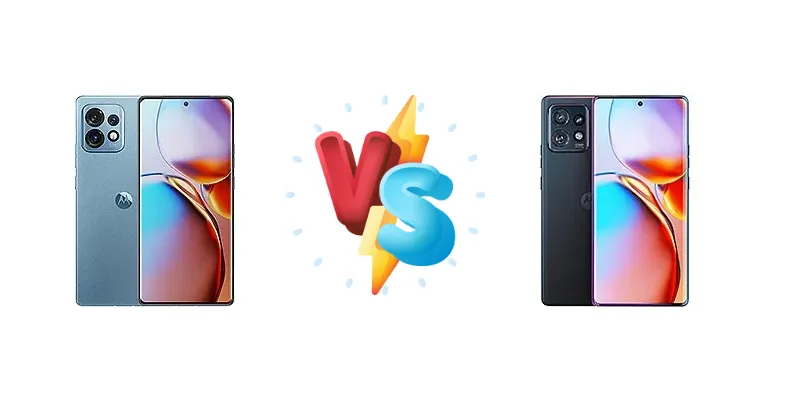
|
🏆 Quick Verdict
The Moto X40 takes the lead with its blazing-fast 125W wired charging and potentially a more aggressive price point. However, the Edge+ (2023) likely offers a more premium build, potentially better camera software optimization, and reverse wireless charging, making it a strong contender for users prioritizing those features.
| PHONES | ||
|---|---|---|
| Phone Names | Motorola Moto X40 | Motorola Edge+ (2023) |
| Network | ||
|---|---|---|
| 2G bands | GSM 850 / 900 / 1800 / 1900 | GSM 850 / 900 / 1800 / 1900 |
| 3G bands | HSDPA 850 / 900 / 1700(AWS) / 1900 / 2100 | HSDPA 850 / 900 / 1700(AWS) / 1900 / 2100 |
| 4G bands | 1, 2, 3, 4, 5, 7, 8, 12, 13, 17, 18, 19, 20, 25, 26, 28, 32, 38, 39, 40, 41, 42, 43, 48, 66 | 1, 2, 3, 4, 5, 7, 8, 12, 13, 14, 17, 18, 20, 25, 26, 28, 29, 30, 38, 39, 40, 41, 41, 46, 48, 66, 71 |
| 5G bands | 1, 2, 3, 5, 7, 8, 20, 28, 38, 40, 41, 66, 77, 78 SA/NSA/Sub6 | 1, 2, 3, 5, 7, 12, 14, 20, 25, 26, 28, 29, 30, 38, 41, 41, 48, 66, 70, 71, 77, 78 SA/NSA/Sub6/mmWave |
| Speed | HSPA, LTE, 5G | HSPA, LTE, 5G |
| Technology | GSM / CDMA / HSPA / LTE / 5G | GSM / HSPA / LTE / 5G |
| CDMA 800 | - | |
| Launch | ||
|---|---|---|
| Announced | 2022, December 15 | 2023, May 02 |
| Status | Available. Released 2022, December 22 | Available. Released 2023, May 19 |
| Body | ||
|---|---|---|
| Build | Glass front, glass back (Gorilla Glass Victus), aluminum frame | Glass front (Gorilla Glass Victus), glass back (Gorilla Glass Victus), aluminum frame |
| Dimensions | 161.2 x 74 x 8.6 mm (6.35 x 2.91 x 0.34 in) | 161.2 x 74 x 8.6 mm (6.35 x 2.91 x 0.34 in) |
| SIM | Nano-SIM + Nano-SIM | Nano-SIM + eSIM |
| Weight | 199 g (7.02 oz) | 203 g (7.16 oz) |
| IP68 dust/water resistant (up to 1.5m for 30 min) | IP68 dust/water resistant (up to 1.5m for 30 min) | |
| Display | ||
|---|---|---|
| Protection | - | Corning Gorilla Glass Victus |
| Resolution | 1080 x 2400 pixels, 20:9 ratio (~393 ppi density) | 1080 x 2400 pixels, 20:9 ratio (~395 ppi density) |
| Size | 6.7 inches, 108.4 cm2 (~90.9% screen-to-body ratio) | 6.67 inches, 107.4 cm2 (~90.0% screen-to-body ratio) |
| Type | OLED, 1B colors, 165Hz, HDR10+ | OLED, 1B colors, 165Hz, HDR10+, Dolby Vision, 1300 nits (peak) |
| Platform | ||
|---|---|---|
| CPU | Octa-core (1x3.2 GHz Cortex-X3 & 2x2.8 GHz Cortex-A715 & 2x2.8 GHz Cortex-A710 & 3x2.0 GHz Cortex-A510) | Octa-core (1x3.2 GHz Cortex-X3 & 2x2.8 GHz Cortex-A715 & 2x2.8 GHz Cortex-A710 & 3x2.0 GHz Cortex-A510) |
| Chipset | Qualcomm SM8550-AB Snapdragon 8 Gen 2 (4 nm) | Qualcomm SM8550-AB Snapdragon 8 Gen 2 (4 nm) |
| GPU | Adreno 740 | Adreno 740 |
| OS | Android 13, upgradable to Android 14, MYUI 6.0 | Android 13, upgradable to Android 14 |
| Memory | ||
|---|---|---|
| Card slot | No | No |
| Internal | 128GB 8GB RAM, 256GB 12GB RAM, 512GB 12GB RAM | 512GB 8GB RAM |
| UFS 3.1 - 128GB UFS 4.0 - 256GB/512GB | UFS 4.0 | |
| Main Camera | ||
|---|---|---|
| Features | Dual-LED flash, panorama, HDR | Dual-LED flash, panorama, HDR |
| Triple | 50 MP, f/1.9, (wide), 1/1.55", 1.0µm, dual pixel PDAF, OIS 12 MP, f/1.6, (telephoto), 1/2.93", 1.22µm, PDAF, 2x optical zoom 50 MP, f/2.2, 117˚ (ultrawide), 1/2.76", 0.64µm, AF | 50 MP, f/1.8, (wide), 1/1.55", 1.0µm, multi-directional PDAF, OIS 12 MP, f/1.6, (telephoto), 1/2.93", 1.22µm, PDAF, 2x optical zoom 50 MP, f/2.2, 114˚ (ultrawide), 1/2.76", 0.64µm, AF |
| Video | 8K@30fps, 4K@30/60fps, 1080p@30/60/120/240/960fps, 10-bit HDR10+, gyro-EIS | 8K@30fps, 4K@30/60fps, 1080p@30/60/120/240/960fps, 10-bit HDR10+, gyro-EIS |
| Selfie camera | ||
|---|---|---|
| Features | HDR | HDR |
| Single | 60 MP, f/2.2, (wide), 1/2.8", 0.61µm | 60 MP, f/2.2, (wide), 1/2.8", 0.61µm |
| Video | 4K@30fps, 1080p@30/60fps | 4K@30/60fps, 1080p@30/60/120/240fps |
| Sound | ||
|---|---|---|
| 3.5mm jack | No | No |
| 35mm jack | No | No |
| Loudspeaker | Yes, with stereo speakers | Yes, with stereo speakers |
| Comms | ||
|---|---|---|
| Bluetooth | 5.3, A2DP, LE, aptX HD, aptX Adaptive | 5.3, A2DP, LE, aptX HD, aptX Adaptive |
| NFC | Yes | Yes |
| Positioning | GPS (L1+L5), GLONASS (L1), BDS (B1I+B1c+B2a), GALILEO (E1+E5a), QZSS (L1+L5) | GPS, GLONASS, GALILEO, BDS |
| Radio | No | No |
| USB | USB Type-C, OTG | USB Type-C 3.2, OTG, DisplayPort 1.4 |
| WLAN | Wi-Fi 802.11 a/b/g/n/ac/6e, dual-band, Wi-Fi Direct | Wi-Fi 802.11 a/b/g/n/ac/6e/7, tri-band, Wi-Fi Direct |
| Features | ||
|---|---|---|
| Sensors | Fingerprint (under display, optical), accelerometer, gyro, proximity, compass | Fingerprint (under display, optical), accelerometer, gyro, proximity, compass, barometer |
| Ready For 3.5 support | Ready For 3.5 support | |
| Battery | ||
|---|---|---|
| Charging | 125W wired, PD3.0, QC5, 50% in 7 min 15W wireless 5W reverse wired | 68W wired 15W wireless 5W reverse wired 5W reverse wireless |
| Type | Li-Po 4600 mAh | Li-Po 5100 mAh |
| Misc | ||
|---|---|---|
| Colors | Black, Blue | Interstellar Black |
| Models | XT2301-5 | - |
| Price | About 540 EUR | $ 298.99 |
Motorola Moto X40
- Blazing-fast 125W charging
- Powerful Snapdragon 8 Gen 2
- Likely more affordable
- Potentially slimmer design
- Potentially less refined camera system
- May lack premium build materials
- No reverse wireless charging
Motorola Edge+ (2023)
- Premium design and build quality
- Potentially superior camera performance and software
- Reverse wireless charging
- Likely better display calibration
- Slower 68W charging
- Higher price point
- May be bulkier
Display Comparison
Both phones likely feature OLED displays with high refresh rates (144Hz is probable for both). The Edge+ (2023) may have slightly better color accuracy and brightness due to its premium positioning, potentially utilizing a higher quality panel. Screen size is likely similar, around 6.5-6.7 inches. We'll need to confirm exact resolutions and peak brightness for a definitive comparison.
Camera Comparison
While both phones likely have multiple rear cameras, the Edge+ (2023) is expected to have a more refined camera system with potentially larger sensors and improved image processing. The Moto X40 might offer a more basic camera setup. Expect the Edge+ to excel in low-light photography and video recording.
Performance
Both devices are powered by the Snapdragon 8 Gen 2, ensuring flagship-level performance. Expect smooth multitasking, responsive gaming, and effortless handling of demanding applications. Differences in thermal management and software optimization could slightly impact sustained performance, but overall, they should feel very similar.
Battery Life
The Moto X40's 125W charging is a significant advantage, allowing for incredibly fast top-ups. The Edge+ (2023) with its 68W charging will still be relatively quick, but not as impressive. Battery capacity is likely similar, around 4500-5000 mAh, so real-world battery life should be comparable if charging isn't a primary concern.
Buying Guide
The Motorola Moto X40 is ideal for users who prioritize fast charging, value for money, and a powerful processor for gaming and demanding tasks. The Motorola Edge+ (2023) is better suited for those seeking a premium design, potentially superior camera performance, and the convenience of reverse wireless charging, even if it means paying a higher price.