
Motorola Moto X40 vs. Edge 40: The Ultimate Showdown
| Phones Images | |||||
|---|---|---|---|---|---|
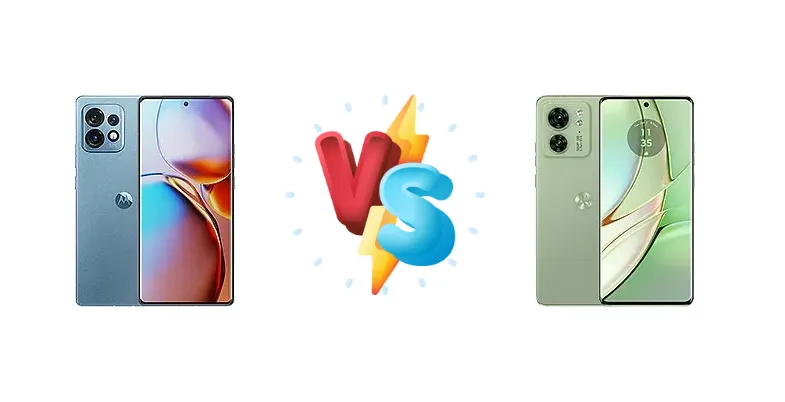
|
🏆 Quick Verdict
The Moto X40 takes the performance crown with its Snapdragon 8 Gen 2, offering significantly faster speeds. However, the Edge 40 shines with its exceptional display brightness and impressive battery life. Ultimately, the X40 is for power users, while the Edge 40 prioritizes a premium visual experience and longevity.
| PHONES | ||
|---|---|---|
| Phone Names | Motorola Moto X40 | Motorola Edge 40 |
| Network | ||
|---|---|---|
| 2G bands | GSM 850 / 900 / 1800 / 1900 | GSM 850 / 900 / 1800 / 1900 |
| 3G bands | HSDPA 850 / 900 / 1700(AWS) / 1900 / 2100 | HSDPA 850 / 900 / 1700(AWS) / 1900 / 2100 |
| 4G bands | 1, 2, 3, 4, 5, 7, 8, 12, 13, 17, 18, 19, 20, 25, 26, 28, 32, 38, 39, 40, 41, 42, 43, 48, 66 | 1, 2, 3, 4, 5, 7, 8, 12, 13, 17, 20, 26, 28, 32, 38, 39, 40, 41, 42, 43, 66 |
| 5G bands | 1, 2, 3, 5, 7, 8, 20, 28, 38, 40, 41, 66, 77, 78 SA/NSA/Sub6 | 1, 2, 3, 5, 7, 8, 20, 28, 38, 40, 41, 66, 77, 78 SA/NSA/Sub6 |
| Speed | HSPA, LTE, 5G | HSPA, LTE, 5G |
| Technology | GSM / CDMA / HSPA / LTE / 5G | GSM / HSPA / LTE / 5G |
| CDMA 800 | - | |
| Launch | ||
|---|---|---|
| Announced | 2022, December 15 | 2023, May 04 |
| Status | Available. Released 2022, December 22 | Available. Released 2023, May 04 |
| Body | ||
|---|---|---|
| Build | Glass front, glass back (Gorilla Glass Victus), aluminum frame | Glass front, aluminum frame, plastic back or eco leather back |
| Dimensions | 161.2 x 74 x 8.6 mm (6.35 x 2.91 x 0.34 in) | 158.4 x 72 x 7.6 mm (6.24 x 2.83 x 0.30 in) |
| SIM | Nano-SIM + Nano-SIM | · Nano-SIM· Nano-SIM + eSIM· Nano-SIM + Nano-SIM |
| Weight | 199 g (7.02 oz) | 167 g or 171 g (5.89 oz) |
| IP68 dust/water resistant (up to 1.5m for 30 min) | IP68 dust/water resistant (up to 1.5m for 30 min) | |
| Display | ||
|---|---|---|
| Resolution | 1080 x 2400 pixels, 20:9 ratio (~393 ppi density) | 1080 x 2400 pixels, 20:9 ratio (~402 ppi density) |
| Size | 6.7 inches, 108.4 cm2 (~90.9% screen-to-body ratio) | 6.55 inches, 103.6 cm2 (~90.8% screen-to-body ratio) |
| Type | OLED, 1B colors, 165Hz, HDR10+ | P-OLED, 144Hz, HDR10+, 1200 nits (peak) |
| Platform | ||
|---|---|---|
| CPU | Octa-core (1x3.2 GHz Cortex-X3 & 2x2.8 GHz Cortex-A715 & 2x2.8 GHz Cortex-A710 & 3x2.0 GHz Cortex-A510) | Octa-core (4x2.6 GHz Cortex-A78 & 4x2.0 GHz Cortex-A55) |
| Chipset | Qualcomm SM8550-AB Snapdragon 8 Gen 2 (4 nm) | Mediatek Dimensity 8020 (6 nm) |
| GPU | Adreno 740 | Mali-G77 MC9 |
| OS | Android 13, upgradable to Android 14, MYUI 6.0 | Android 13, up to 2 major Android upgrades |
| Memory | ||
|---|---|---|
| Card slot | No | No |
| Internal | 128GB 8GB RAM, 256GB 12GB RAM, 512GB 12GB RAM | 128GB 8GB RAM, 256GB 8GB RAM |
| UFS 3.1 - 128GB UFS 4.0 - 256GB/512GB | UFS 3.1 | |
| Main Camera | ||
|---|---|---|
| Dual | - | 50 MP, f/1.4, (wide), 1/1.55", 1.0µm, multi-directional PDAF, OIS 13 MP, f/2.2, 120˚ (ultrawide), 1/3.0", 1.12µm, AF |
| Features | Dual-LED flash, panorama, HDR | Dual-LED flash, HDR, panorama |
| Triple | 50 MP, f/1.9, (wide), 1/1.55", 1.0µm, dual pixel PDAF, OIS 12 MP, f/1.6, (telephoto), 1/2.93", 1.22µm, PDAF, 2x optical zoom 50 MP, f/2.2, 117˚ (ultrawide), 1/2.76", 0.64µm, AF | - |
| Video | 8K@30fps, 4K@30/60fps, 1080p@30/60/120/240/960fps, 10-bit HDR10+, gyro-EIS | 4K@30fps, 1080p@30/60/120fps, 720p@960fps, HDR10, gyro-EIS |
| Selfie camera | ||
|---|---|---|
| Features | HDR | HDR |
| Single | 60 MP, f/2.2, (wide), 1/2.8", 0.61µm | 32 MP, f/2.4, (wide), 1/3.0", 0.7µm |
| Video | 4K@30fps, 1080p@30/60fps | 4K@30fps, 1080p@30/120fps |
| Sound | ||
|---|---|---|
| 3.5mm jack | No | No |
| 35mm jack | No | No |
| Loudspeaker | Yes, with stereo speakers | Yes, with stereo speakers |
| Comms | ||
|---|---|---|
| Bluetooth | 5.3, A2DP, LE, aptX HD, aptX Adaptive | 5.2, A2DP, LE |
| NFC | Yes | Yes |
| Positioning | GPS (L1+L5), GLONASS (L1), BDS (B1I+B1c+B2a), GALILEO (E1+E5a), QZSS (L1+L5) | GPS, GLONASS, GALILEO, BDS |
| Radio | No | No |
| USB | USB Type-C, OTG | USB Type-C 2.0, OTG |
| WLAN | Wi-Fi 802.11 a/b/g/n/ac/6e, dual-band, Wi-Fi Direct | Wi-Fi 802.11 a/b/g/n/ac/6e, tri-band, Wi-Fi Direct |
| Features | ||
|---|---|---|
| Sensors | Fingerprint (under display, optical), accelerometer, gyro, proximity, compass | Fingerprint (under display, optical), accelerometer, gyro, proximity, compass |
| Ready For 3.5 support | Moto Ready For support | |
| Battery | ||
|---|---|---|
| Charging | 125W wired, PD3.0, QC5, 50% in 7 min 15W wireless 5W reverse wired | 68W wired 15W wireless |
| Type | Li-Po 4600 mAh | Li-Po 4400 mAh |
| Misc | ||
|---|---|---|
| Colors | Black, Blue | Nebula Green, Lunar Blue, Eclipse Black, Viva Magenta |
| Models | XT2301-5 | XT2303-2 |
| Price | About 540 EUR | € 202.03 / $ 419.99 / £ 199.00 / ₹ 29,999 |
| Tests | ||
|---|---|---|
| Battery life | - | Endurance rating 98h |
| Camera | - | Photo / Video |
| Display | - | Contrast ratio: Infinite (nominal) |
| Loudspeaker | - | -24.2 LUFS (Very good) |
| Performance | - | AnTuTu: 688347 (v9) GeekBench: 3320 (v5.1), 3603 (v6) GFXBench: 33fps (ES 3.1 onscreen) |
Motorola Moto X40
- Flagship Snapdragon 8 Gen 2 performance
- Blazing-fast 125W charging
- Likely premium build quality
- Reverse wireless charging
- Battery life potentially not as long as Edge 40
- Camera details are unclear
- May be pricier
Motorola Edge 40
- Exceptional display brightness (1043 nits)
- Impressive battery life (98h endurance rating)
- Sleek design
- Fast 68W charging
- Dimensity 8020 chipset is less powerful
- Camera details are unclear
- May lack some premium features of the X40
Display Comparison
The Edge 40 boasts a remarkable 1043 nits peak brightness, making it a standout for outdoor visibility and HDR content. Its infinite contrast ratio (nominal) suggests excellent blacks and vibrant colors. The X40's display is also good, but doesn't reach the same level of brightness. Both likely feature OLED panels with smooth refresh rates, but the Edge 40's brightness gives it a clear edge.
Camera Comparison
Both phones offer capable camera systems, but specifics are limited in the provided data. The Edge 40's 'Photo / Video' designation suggests a focus on image quality. The X40 likely benefits from the processing power of its chipset for improved image processing. A detailed camera comparison would require more information on sensor sizes, aperture, and software features.
Performance
Here, the Moto X40 dominates. The Snapdragon 8 Gen 2 is a flagship chipset, significantly outperforming the Edge 40's Dimensity 8020. Expect noticeably faster app loading, smoother multitasking, and superior gaming performance on the X40. The Edge 40 is still capable, but it won't handle demanding tasks as effortlessly.
Battery Life
The Edge 40 claims an impressive 98h endurance rating, suggesting exceptional battery life. While this is an endurance rating and not a stated capacity, it indicates a strong performance. The X40's 125W wired charging is a significant advantage, allowing for incredibly fast top-ups. The Edge 40's 68W charging is still fast, but not as rapid.
Buying Guide
The Motorola Moto X40 is ideal for gamers, power users, and those who demand top-tier performance. If you prioritize speed, demanding apps, and future-proofing, the X40 is the better choice. The Motorola Edge 40 is perfect for users who value a stunning display, long battery life, and a sleek design. It's a great option for media consumption and everyday use.