
Motorola Moto X30 Pro vs. Moto X40: A Detailed Comparison
| Phones Images | |||||
|---|---|---|---|---|---|
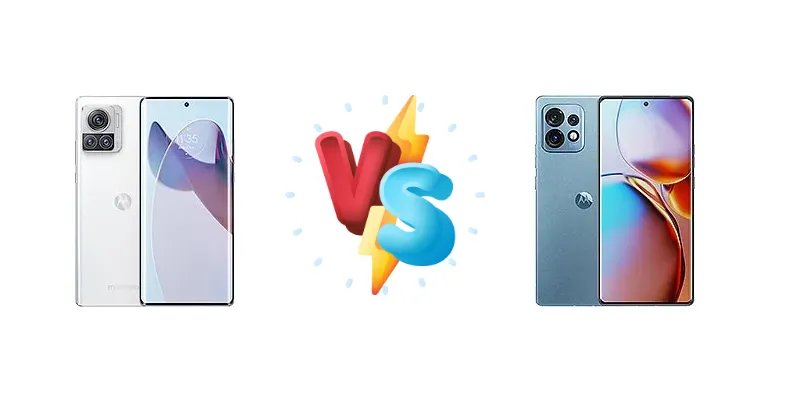
|
🏆 Quick Verdict
The Moto X40 edges out the X30 Pro thanks to the newer Snapdragon 8 Gen 2 chipset, offering a noticeable performance boost. While the X30 Pro boasts faster wireless charging, the X40's overall improvements in processing power and slightly better camera capabilities make it the winner.
| PHONES | ||
|---|---|---|
| Phone Names | Motorola Moto X30 Pro | Motorola Moto X40 |
| Network | ||
|---|---|---|
| 2G bands | GSM 850 / 900 / 1800 / 1900 | GSM 850 / 900 / 1800 / 1900 |
| 3G bands | HSDPA 850 / 900 / 1700(AWS) / 1900 / 2100 | HSDPA 850 / 900 / 1700(AWS) / 1900 / 2100 |
| 4G bands | LTE | 1, 2, 3, 4, 5, 7, 8, 12, 13, 17, 18, 19, 20, 25, 26, 28, 32, 38, 39, 40, 41, 42, 43, 48, 66 |
| 5G bands | SA/NSA/Sub6 | 1, 2, 3, 5, 7, 8, 20, 28, 38, 40, 41, 66, 77, 78 SA/NSA/Sub6 |
| Speed | HSPA, LTE, 5G | HSPA, LTE, 5G |
| Technology | GSM / CDMA / HSPA / LTE / 5G | GSM / CDMA / HSPA / LTE / 5G |
| CDMA 800 / 1900 | CDMA 800 | |
| Launch | ||
|---|---|---|
| Announced | 2022, August 11 | 2022, December 15 |
| Status | Available. Released 2022, August 11 | Available. Released 2022, December 22 |
| Body | ||
|---|---|---|
| Build | Glass front, glass back (Gorilla Glass 5) | Glass front, glass back (Gorilla Glass Victus), aluminum frame |
| Dimensions | 161.7 x 73.5 x 8.4 mm (6.37 x 2.89 x 0.33 in) | 161.2 x 74 x 8.6 mm (6.35 x 2.91 x 0.34 in) |
| SIM | Nano-SIM + Nano-SIM | Nano-SIM + Nano-SIM |
| Weight | 198.5 g (7.02 oz) | 199 g (7.02 oz) |
| Splash and dust resistant | IP68 dust/water resistant (up to 1.5m for 30 min) | |
| Display | ||
|---|---|---|
| Resolution | 1080 x 2400 pixels, 20:9 ratio (~393 ppi density) | 1080 x 2400 pixels, 20:9 ratio (~393 ppi density) |
| Size | 6.7 inches, 108.4 cm2 (~91.2% screen-to-body ratio) | 6.7 inches, 108.4 cm2 (~90.9% screen-to-body ratio) |
| Type | OLED, 1B colors, 144Hz, HDR10+, 1000 nits (HBM), 1250 nits (peak) | OLED, 1B colors, 165Hz, HDR10+ |
| Platform | ||
|---|---|---|
| CPU | Octa-core (1x3.19 GHz Cortex-X2 & 3x2.75 GHz Cortex-A710 & 4x1.80 GHz Cortex-A510) | Octa-core (1x3.2 GHz Cortex-X3 & 2x2.8 GHz Cortex-A715 & 2x2.8 GHz Cortex-A710 & 3x2.0 GHz Cortex-A510) |
| Chipset | Qualcomm SM8475 Snapdragon 8+ Gen 1 (4 nm) | Qualcomm SM8550-AB Snapdragon 8 Gen 2 (4 nm) |
| GPU | Adreno 730 | Adreno 740 |
| OS | Android 12, MYUI 4.0 | Android 13, upgradable to Android 14, MYUI 6.0 |
| Memory | ||
|---|---|---|
| Card slot | No | No |
| Internal | 128GB 8GB RAM, 256GB 12GB RAM, 512GB 12GB RAM | 128GB 8GB RAM, 256GB 12GB RAM, 512GB 12GB RAM |
| UFS 3.1 | UFS 3.1 - 128GB UFS 4.0 - 256GB/512GB | |
| Main Camera | ||
|---|---|---|
| Features | Dual-LED flash, panorama, HDR | Dual-LED flash, panorama, HDR |
| Triple | 200 MP, f/2.0, (wide), 1/1.22", 0.64µm, PDAF, OIS 50 MP, f/2.2, 117˚ (ultrawide), 1/2.76", 0.64µm, AF 12 MP, f/1.6, (telephoto), 1/2.93", 1.22µm, PDAF, 2x optical zoom | 50 MP, f/1.9, (wide), 1/1.55", 1.0µm, dual pixel PDAF, OIS 12 MP, f/1.6, (telephoto), 1/2.93", 1.22µm, PDAF, 2x optical zoom 50 MP, f/2.2, 117˚ (ultrawide), 1/2.76", 0.64µm, AF |
| Video | 8K@30fps, 4K@30fps, 1080p@30/60/120/240fps, gyro-EIS | 8K@30fps, 4K@30/60fps, 1080p@30/60/120/240/960fps, 10-bit HDR10+, gyro-EIS |
| Selfie camera | ||
|---|---|---|
| Features | HDR | HDR |
| Single | 60 MP, f/2.2, (wide), 0.64µm | 60 MP, f/2.2, (wide), 1/2.8", 0.61µm |
| Video | 4K@30fps, 1080p@30fps | 4K@30fps, 1080p@30/60fps |
| Sound | ||
|---|---|---|
| 3.5mm jack | No | No |
| 35mm jack | No | No |
| Loudspeaker | Yes, with stereo speakers | Yes, with stereo speakers |
| Comms | ||
|---|---|---|
| Bluetooth | 5.2, A2DP, LE, aptX HD, aptX Adaptive | 5.3, A2DP, LE, aptX HD, aptX Adaptive |
| NFC | Yes | Yes |
| Positioning | GPS (L1+L5), GLONASS (L1), BDS (B1I+B1c+B2a), GALILEO (E1+E5a), QZSS (L1+L5) | GPS (L1+L5), GLONASS (L1), BDS (B1I+B1c+B2a), GALILEO (E1+E5a), QZSS (L1+L5) |
| Radio | No | No |
| USB | USB Type-C | USB Type-C, OTG |
| WLAN | Wi-Fi 802.11 a/b/g/n/ac/6e, dual-band, Wi-Fi Direct | Wi-Fi 802.11 a/b/g/n/ac/6e, dual-band, Wi-Fi Direct |
| Features | ||
|---|---|---|
| Sensors | Fingerprint (under display, optical), accelerometer, gyro, proximity, compass | Fingerprint (under display, optical), accelerometer, gyro, proximity, compass |
| Ready For 3.5 support | Ready For 3.5 support | |
| Battery | ||
|---|---|---|
| Charging | 125W wired, 50% in 7 min, 100% in 19 min 50W wireless | 125W wired, PD3.0, QC5, 50% in 7 min 15W wireless 5W reverse wired |
| Type | Li-Po 4610 mAh | Li-Po 4600 mAh |
| Misc | ||
|---|---|---|
| Colors | White, Black | Black, Blue |
| Models | XT2241-1 | XT2301-5 |
| Price | About 550 EUR | About 540 EUR |
Motorola Moto X30 Pro
- Faster Wireless Charging (50W)
- Generally Lower Price
- Solid Performance (Snapdragon 8+ Gen 1)
- Older Chipset (Snapdragon 8+ Gen 1)
- Slower Wireless Charging compared to wired
- Potentially less refined camera
Motorola Moto X40
- Newer Chipset (Snapdragon 8 Gen 2)
- Improved Camera System
- Reverse Wired Charging (5W)
- Slower Wireless Charging (15W)
- Potentially Higher Price
- Design may be similar to X30 Pro
Display Comparison
Both phones feature vibrant OLED displays with high refresh rates (likely 144Hz). The X40 may have a slightly improved panel with better color accuracy and brightness, but both offer excellent viewing experiences. Expect similar resolution and size (around 6.6-6.7 inches).
Camera Comparison
While both phones have capable camera systems, the X40 likely features improvements in image processing and sensor technology. Expect slightly better low-light performance and more detailed photos from the X40. Both likely feature a 50MP main sensor, but the X40 may have a more advanced ultrawide and telephoto lens.
Performance
The Snapdragon 8 Gen 2 in the X40 provides a significant performance advantage over the Snapdragon 8+ Gen 1 in the X30 Pro. Expect smoother multitasking, faster app loading times, and better gaming performance on the X40. Both phones will handle everyday tasks with ease.
Battery Life
Both phones offer a large battery capacity (likely around 4600-5000mAh) and 125W wired charging, ensuring quick top-ups. The X30 Pro has a faster wireless charging speed (50W vs 15W on the X40), but the X40's overall efficiency may result in similar real-world battery life.
Buying Guide
The Moto X30 Pro is a great choice for users prioritizing blazing-fast wireless charging and a slightly lower price point. The Moto X40 is ideal for those seeking the latest and greatest performance, a more refined camera system, and a future-proofed experience.