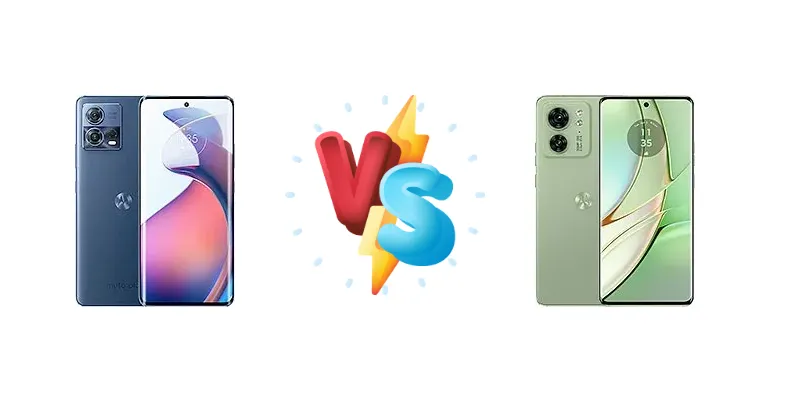
Motorola continues to deliver compelling mid-range and upper-mid-range smartphones. The Moto S30 Pro and Edge 40 both offer a lot of value, but cater to slightly different priorities. This comparison will break down their key differences to help you decide which one is right for you.
🏆 Quick Verdict
The Moto S30 Pro boasts a significantly more powerful Snapdragon 888+ chipset, making it the clear winner for performance-focused users. However, the Edge 40 shines with its exceptional display brightness, wireless charging, and impressive battery endurance. It's a close call, but the S30 Pro edges ahead for raw power.
| Network |
|---|
| 2G bands | GSM 850 / 900 / 1800 / 1900 | GSM 850 / 900 / 1800 / 1900 |
| 3G bands | HSDPA 850 / 900 / 1800 / 1900 / 2100 | HSDPA 850 / 900 / 1700(AWS) / 1900 / 2100 |
| 4G bands | LTE | 1, 2, 3, 4, 5, 7, 8, 12, 13, 17, 20, 26, 28, 32, 38, 39, 40, 41, 42, 43, 66 |
| 5G bands | SA/NSA/Sub6 | 1, 2, 3, 5, 7, 8, 20, 28, 38, 40, 41, 66, 77, 78 SA/NSA/Sub6 |
| Speed | HSPA, LTE, 5G | HSPA, LTE, 5G |
| Technology | GSM / CDMA / HSPA / LTE / 5G | GSM / HSPA / LTE / 5G |
| | CDMA 800 / 1900 | - |
| Launch |
|---|
| Announced | 2022, August 11 | 2023, May 04 |
| Status | Available. Released 2022, August 11 | Available. Released 2023, May 04 |
| Body |
|---|
| Build | Glass front, glass back (Gorilla Glass 5) | Glass front, aluminum frame, plastic back or eco leather back |
| Dimensions | 158.5 x 71.2 x 7.5 mm or 7.7 mm | 158.4 x 72 x 7.6 mm (6.24 x 2.83 x 0.30 in) |
| SIM | Nano-SIM + Nano-SIM | · Nano-SIM· Nano-SIM + eSIM· Nano-SIM + Nano-SIM |
| Weight | 172 g / 167 g (5.89 oz) | 167 g or 171 g (5.89 oz) |
| | Splash and dust resistant | IP68 dust/water resistant (up to 1.5m for 30 min) |
| Display |
|---|
| Resolution | 1080 x 2400 pixels, 20:9 ratio (~402 ppi density) | 1080 x 2400 pixels, 20:9 ratio (~402 ppi density) |
| Size | 6.55 inches, 103.6 cm2 (~91.8% screen-to-body ratio) | 6.55 inches, 103.6 cm2 (~90.8% screen-to-body ratio) |
| Type | P-OLED, 1B colors, 144Hz, HDR10+ | P-OLED, 144Hz, HDR10+, 1200 nits (peak) |
| Platform |
|---|
| CPU | Octa-core (1x2.99 GHz Cortex-X1 & 3x2.42 GHz Cortex-A78 & 4x1.80 GHz Cortex-A55) | Octa-core (4x2.6 GHz Cortex-A78 & 4x2.0 GHz Cortex-A55) |
| Chipset | Qualcomm SM8350 Snapdragon 888+ 5G (5 nm) | Mediatek Dimensity 8020 (6 nm) |
| GPU | Adreno 660 | Mali-G77 MC9 |
| OS | Android 12, MYUI 4.0 | Android 13, up to 2 major Android upgrades |
| Memory |
|---|
| Card slot | No | No |
| Internal | 128GB 8GB RAM, 256GB 8GB RAM, 256GB 12GB RAM, 512GB 12GB RAM | 128GB 8GB RAM, 256GB 8GB RAM |
| | UFS 3.1 | UFS 3.1 |
| Main Camera |
|---|
| Dual | - | 50 MP, f/1.4, (wide), 1/1.55", 1.0µm, multi-directional PDAF, OIS
13 MP, f/2.2, 120˚ (ultrawide), 1/3.0", 1.12µm, AF |
| Features | LED flash, panorama, HDR | Dual-LED flash, HDR, panorama |
| Triple | 50 MP, f/1.8, (wide), 1/1.55", 1.0µm, PDAF, OIS
13 MP, f/2.2, 123˚ (ultrawide), 1.12µm
Auxiliary lens | - |
| Video | 4K@30fps, 1080p@30ps, gyro-EIS | 4K@30fps, 1080p@30/60/120fps, 720p@960fps, HDR10, gyro-EIS |
| Selfie camera |
|---|
| Features | - | HDR |
| Single | 32 MP, f/2.2, (wide), 1/2.8", AF | 32 MP, f/2.4, (wide), 1/3.0", 0.7µm |
| Video | 1080p@30fps | 4K@30fps, 1080p@30/120fps |
| Sound |
|---|
| 3.5mm jack | No | No |
| 35mm jack | No | No |
| Loudspeaker | Yes | Yes, with stereo speakers |
| Comms |
|---|
| Bluetooth | 5.2, A2DP, LE, aptX HD, aptX Adaptive | 5.2, A2DP, LE |
| NFC | Yes | Yes |
| Positioning | GPS (L1+L5), GLONASS, BDS (B1I+B1c), GALILEO | GPS, GLONASS, GALILEO, BDS |
| Radio | No | No |
| USB | USB Type-C | USB Type-C 2.0, OTG |
| WLAN | Wi-Fi 802.11 a/b/g/n/ac/6e, dual-band, Wi-Fi Direct | Wi-Fi 802.11 a/b/g/n/ac/6e, tri-band, Wi-Fi Direct |
| Features |
|---|
| Sensors | Fingerprint (under display, optical), accelerometer, gyro, proximity, compass | Fingerprint (under display, optical), accelerometer, gyro, proximity, compass |
| | Ready For 3.5 support | Moto Ready For support |
| Battery |
|---|
| Charging | 68W wired, 50% in 10 min | 68W wired
15W wireless |
| Type | Li-Po 4400 mAh | Li-Po 4400 mAh |
| Misc |
|---|
| Colors | Blue, Black | Nebula Green, Lunar Blue, Eclipse Black, Viva Magenta |
| Models | XT2243-2 | XT2303-2 |
| Price | About 330 EUR | € 202.03 / $ 419.99 / £ 199.00 / ₹ 29,999 |
| Tests |
|---|
| Battery life | - |
Endurance rating 98h
|
| Camera | - |
Photo / Video |
| Display | - |
Contrast ratio: Infinite (nominal) |
| Loudspeaker | - |
-24.2 LUFS (Very good)
|
| Performance | - |
AnTuTu: 688347 (v9)
GeekBench: 3320 (v5.1), 3603 (v6)
GFXBench: 33fps (ES 3.1 onscreen) |
Motorola Moto S30 Pro
- Powerful Snapdragon 888+ chipset
- Fast 68W wired charging
- Good display quality
- Generally sleek design
- Battery life not as impressive as Edge 40
- No wireless charging
- Camera performance details are limited
Motorola Edge 40
- Exceptional display brightness (1043 nits)
- Outstanding battery life (98h endurance)
- Wireless charging support
- Sleek and modern design
- Less powerful chipset than S30 Pro
- 68W wired charging only
- Camera details are limited
Display Comparison
The Motorola Edge 40 takes a clear lead in the display department. Its measured 1043 nits peak brightness is significantly higher than what's typically seen on the S30 Pro, offering better visibility in direct sunlight. While the S30 Pro has a good display, the Edge 40's infinite contrast ratio (nominal) suggests excellent black levels and overall image quality. Both likely feature OLED panels with smooth refresh rates.
Camera Comparison
Both phones are advertised as having good camera systems, but detailed camera comparisons are needed. The Edge 40 likely focuses on computational photography and pleasing color science. The S30 Pro might offer slightly better detail in well-lit conditions due to the Snapdragon's image processing capabilities. Video recording quality should be comparable on both.
Performance
Here, the Moto S30 Pro dominates. The Snapdragon 888+ is a considerably more powerful chipset than the Dimensity 8020. Expect noticeably faster app loading times, smoother multitasking, and significantly better gaming performance on the S30 Pro. The Edge 40 is still capable, but it won't match the S30 Pro's raw processing power.
Battery Life
The Motorola Edge 40 demonstrates exceptional battery life, boasting an endurance rating of 98 hours. While the S30 Pro's 68W charging is fast (50% in 10 minutes), the Edge 40's longer battery life combined with wireless charging provides a more convenient overall experience.
Buying Guide
Who should buy the Motorola Moto S30 Pro? Gamers and power users who prioritize speed and responsiveness will appreciate the Snapdragon 888+. Who should buy the Motorola Edge 40? Users who value a vibrant display, long battery life, and the convenience of wireless charging will find the Edge 40 a great choice.
Frequently Asked Questions
❓ Is the Motorola S30 Pro good for gaming?
Yes, the Snapdragon 888+ in the S30 Pro makes it a capable gaming phone, handling most titles with ease.
❓ Does the Motorola Edge 40 support fast charging?
Yes, it supports 68W wired charging, but lacks wireless charging capabilities.
❓ Which phone has better camera quality?
It's difficult to say definitively without detailed camera comparisons. Both offer good cameras, but the Edge 40 might prioritize pleasing colors, while the S30 Pro could offer slightly more detail.
❓ Which Motorola phone is more durable?
Durability information is limited for both models. Check for specific IP ratings for water and dust resistance.