
Motorola Showdown: Moto S30 Pro vs. Edge 30 Fusion – Which One to Choose?
| Phones Images | |||||
|---|---|---|---|---|---|
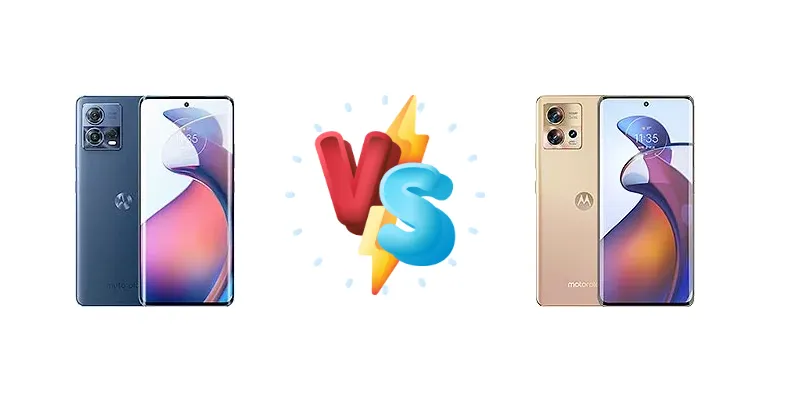
|
🏆 Quick Verdict
The Edge 30 Fusion edges out the S30 Pro thanks to its exceptional battery life and impressive display brightness. While both share the Snapdragon 888+, the Fusion's endurance and screen quality provide a more well-rounded experience, making it the slightly better overall choice.
| PHONES | ||
|---|---|---|
| Phone Names | Motorola Moto S30 Pro | Motorola Edge 30 Fusion |
| Network | ||
|---|---|---|
| 2G bands | GSM 850 / 900 / 1800 / 1900 | GSM 850 / 900 / 1800 / 1900 |
| 3G bands | HSDPA 850 / 900 / 1800 / 1900 / 2100 | HSDPA 850 / 900 / 1700(AWS) / 1900 / 2100 - International |
| 4G bands | LTE | 1, 2, 3, 4, 5, 7, 8, 12, 13, 17, 18, 19, 20, 25, 26, 28, 32, 38, 39, 40, 41, 42, 43, 66 - International |
| 5G bands | SA/NSA/Sub6 | 1, 3, 5, 7, 8, 20, 28, 38, 40, 41, 66, 77, 78 SA/NSA - International |
| Speed | HSPA, LTE, 5G | HSPA, LTE, 5G |
| Technology | GSM / CDMA / HSPA / LTE / 5G | GSM / CDMA / HSPA / CDMA2000 / LTE / 5G |
| CDMA 800 / 1900 | 1, 2, 3, 5, 7, 8, 20, 28, 38, 41, 77, 78 SA/NSA - PRC | |
| Launch | ||
|---|---|---|
| Announced | 2022, August 11 | 2022, September 08 |
| Status | Available. Released 2022, August 11 | Available. Released 2022, September 08 |
| Body | ||
|---|---|---|
| Build | Glass front, glass back (Gorilla Glass 5) | Glass front (Gorilla Glass 5), glass back (Gorilla Glass 5), aluminum frame |
| Dimensions | 158.5 x 71.2 x 7.5 mm or 7.7 mm | 158.5 x 72 x 7.5 mm or 7.7 mm |
| SIM | Nano-SIM + Nano-SIM | · Nano-SIM· Nano-SIM + Nano-SIM |
| Weight | 172 g / 167 g (5.89 oz) | 168 g / 175 g (5.93 oz) |
| Splash and dust resistant | Splash and dust resistant | |
| Display | ||
|---|---|---|
| Protection | - | Corning Gorilla Glass 5 |
| Resolution | 1080 x 2400 pixels, 20:9 ratio (~402 ppi density) | 1080 x 2400 pixels, 20:9 ratio (~402 ppi density) |
| Size | 6.55 inches, 103.6 cm2 (~91.8% screen-to-body ratio) | 6.55 inches, 103.6 cm2 (~90.8% screen-to-body ratio) |
| Type | P-OLED, 1B colors, 144Hz, HDR10+ | P-OLED, 1B colors, 144Hz, HDR10+, 1100 nits (peak) |
| Platform | ||
|---|---|---|
| CPU | Octa-core (1x2.99 GHz Cortex-X1 & 3x2.42 GHz Cortex-A78 & 4x1.80 GHz Cortex-A55) | Octa-core (1x2.99 GHz Cortex-X1 & 3x2.42 GHz Cortex-A78 & 4x1.80 GHz Cortex-A55) |
| Chipset | Qualcomm SM8350 Snapdragon 888+ 5G (5 nm) | Qualcomm SM8350 Snapdragon 888+ 5G (5 nm) |
| GPU | Adreno 660 | Adreno 660 |
| OS | Android 12, MYUI 4.0 | Android 12, upgradable to Android 14 |
| Memory | ||
|---|---|---|
| Card slot | No | No |
| Internal | 128GB 8GB RAM, 256GB 8GB RAM, 256GB 12GB RAM, 512GB 12GB RAM | 128GB 8GB RAM, 256GB 6GB RAM, 256GB 8GB RAM, 256GB 12GB RAM, 512GB 12GB RAM |
| UFS 3.1 | UFS 3.1 | |
| Main Camera | ||
|---|---|---|
| Features | LED flash, panorama, HDR | LED flash, panorama, HDR |
| Triple | 50 MP, f/1.8, (wide), 1/1.55", 1.0µm, PDAF, OIS 13 MP, f/2.2, 123˚ (ultrawide), 1.12µm Auxiliary lens | 50 MP, f/1.8, (wide), 1/1.55", 1.0µm, multi-directional PDAF, OIS 13 MP, f/2.2, 120˚ (ultrawide), 1.12µm, AF Auxiliary lens |
| Video | 4K@30fps, 1080p@30ps, gyro-EIS | 8K@30fps, 4K@30fps, 1080p@30/60/120fps, 720p@960fps, gyro-EIS |
| Selfie camera | ||
|---|---|---|
| Features | - | HDR |
| Single | 32 MP, f/2.2, (wide), 1/2.8", AF | 32 MP, f/2.5, (wide), 1/2.8", 0.8µm, AF |
| Video | 1080p@30fps | 4K@30fps, 1080p@30fps |
| Sound | ||
|---|---|---|
| 3.5mm jack | No | No |
| 35mm jack | No | No |
| Loudspeaker | Yes | Yes, with stereo speakers |
| Comms | ||
|---|---|---|
| Bluetooth | 5.2, A2DP, LE, aptX HD, aptX Adaptive | 5.2, A2DP, LE, aptX HD, aptX Adaptive |
| NFC | Yes | Yes |
| Positioning | GPS (L1+L5), GLONASS, BDS (B1I+B1c), GALILEO | GPS (L1+L5), GLONASS, BDS (B1I+B1c), GALILEO |
| Radio | No | No |
| USB | USB Type-C | USB Type-C 3.1, OTG |
| WLAN | Wi-Fi 802.11 a/b/g/n/ac/6e, dual-band, Wi-Fi Direct | Wi-Fi 802.11 a/b/g/n/ac/6e, tri-band, Wi-Fi Direct |
| Features | ||
|---|---|---|
| Sensors | Fingerprint (under display, optical), accelerometer, gyro, proximity, compass | Fingerprint (under display, optical), accelerometer, gyro, proximity, compass |
| Ready For 3.5 support | Ready For 3.5 support | |
| Battery | ||
|---|---|---|
| Charging | 68W wired, 50% in 10 min | 68W wired, 50% in 10 min |
| Type | Li-Po 4400 mAh | Li-Po 4400 mAh |
| Misc | ||
|---|---|---|
| Colors | Blue, Black | Neptune Blue, Cosmic Grey, Solar Gold, Aurora White, Viva Magenta |
| Models | XT2243-2 | XT2243-1 |
| Price | About 330 EUR | About 150 EUR |
| Tests | ||
|---|---|---|
| Battery life | - | Endurance rating 101h |
| Camera | - | Photo / Video |
| Display | - | Contrast ratio: Infinite (nominal) |
| Loudspeaker | - | -24.6 LUFS (Very good) |
| Performance | - | AnTuTu: 827929 (v9) GeekBench: 3458 (v5.1) GFXBench: 62fps (ES 3.1 onscreen) |
Motorola Moto S30 Pro
- Potentially more compact design
- Fast 68W charging
- Snapdragon 888+ chipset
- Unknown battery capacity
- Unspecified display brightness
- Potentially less impressive battery life
Motorola Edge 30 Fusion
- Exceptional battery life (101h endurance rating)
- High peak display brightness (946 nits)
- Fast 68W charging
- Infinite contrast ratio (nominal)
- Chipset is a few generations old
- Design might be less premium than some competitors
Display Comparison
Both phones feature OLED displays, but the Edge 30 Fusion boasts a significantly higher peak brightness of 946 nits (measured) compared to the S30 Pro's unspecified brightness. The Fusion's 'infinite' contrast ratio (nominal) suggests excellent blacks and vibrant colors. The S30 Pro might have a slightly more compact form factor, which some users may prefer.
Camera Comparison
Camera details are limited in the provided specs. However, both phones are advertised as having 'Photo / Video' capabilities. Expect decent image quality in good lighting conditions, but low-light performance might be a weakness. The Edge 30 Fusion may have slightly better image processing due to potential software optimizations.
Performance
Both devices are powered by the Snapdragon 888+ chipset, ensuring smooth performance for everyday tasks and demanding games. While the chipset is powerful, it's a few generations old, so don't expect flagship-level performance from newer devices. Thermal management could be a factor under sustained load.
Battery Life
The Edge 30 Fusion shines here with an impressive endurance rating of 101 hours. This significantly surpasses what we'd typically expect. The S30 Pro's battery capacity is unknown, but its 68W charging speed is comparable to the Fusion's, allowing for quick top-ups.
Buying Guide
The Motorola Moto S30 Pro is ideal for users prioritizing a slightly more compact design and potentially a more refined software experience (depending on region). The Motorola Edge 30 Fusion is perfect for those who demand all-day (or longer) battery life and a vibrant, bright display for media consumption and outdoor use.