
Motorola G86 Power vs. G Power (2024): A Deep Dive into Dimensity Performance and Battery Endurance
| Phones Images | |||||
|---|---|---|---|---|---|
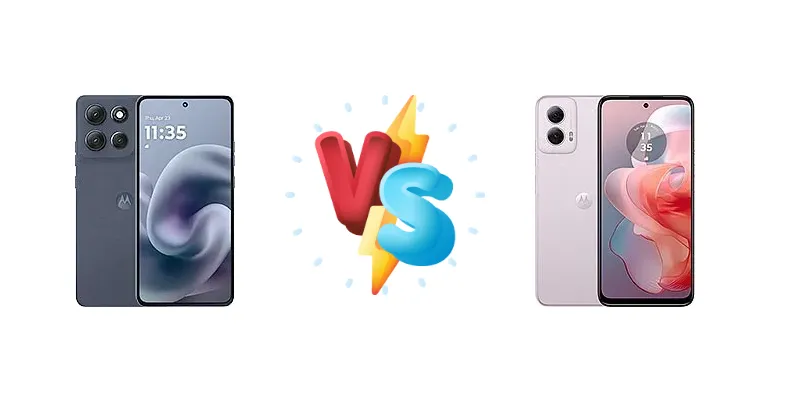
|
🏆 Quick Verdict
For most users prioritizing sustained performance and potentially longer battery life, the Motorola G86 Power emerges as the winner. Its Dimensity 7300 (or 7400 in India) offers a more efficient and powerful core configuration than the G Power (2024)'s Dimensity 7020, despite the latter's wireless charging capability.
| PHONES | ||
|---|---|---|
| Phone Names | Motorola Moto G86 Power | Motorola Moto G Power (2024) |
| Network | ||
|---|---|---|
| 2G bands | GSM 850 / 900 / 1800 / 1900 | GSM 850 / 900 / 1800 / 1900 |
| 3G bands | HSDPA 850 / 900 / 1900 / 2100 - International | HSDPA 850 / 900 / 1700(AWS) / 1900 / 2100 |
| 4G bands | 1, 2, 3, 5, 7, 8, 20, 26, 28, 32, 38, 40, 41, 42, 71 - EMEA & AP | 1, 2, 3, 4, 5, 7, 8, 12, 13, 14, 17, 18, 20, 25, 26, 28, 29, 30, 38, 39, 40, 41, 48, 66, 71 |
| 5G bands | 1, 3, 5, 7, 8, 20, 26, 28, 38, 40, 41, 71, 77, 78 SA/NSA/Sub6 - EMEA & AP | 2, 5, 7, 12, 14, 25, 26, 29, 30, 41, 48, 66, 70, 71, 77, 78 SA/NSA |
| Speed | HSPA, LTE, 5G | HSPA, LTE, 5G |
| Technology | GSM / HSPA / LTE / 5G | GSM / HSPA / LTE / 5G |
| Launch | ||
|---|---|---|
| Announced | 2025, May 29 | 2024, March 12 |
| Status | Available. Released 2025, July 30 | Available. Released 2024, March 22 |
| Body | ||
|---|---|---|
| Build | Glass front (Gorilla Glass 7i), plastic frame, silicone polymer (eco leather) back | Glass front, silicone polymer back (eco leather), plastic frame |
| Dimensions | 161.2 x 74.7 x 8.7 mm (6.35 x 2.94 x 0.34 in) | 167.2 x 76.4 x 8.5 mm (6.58 x 3.01 x 0.33 in) |
| SIM | · Nano-SIM + eSIM· Nano-SIM + Nano-SIM | Nano-SIM + eSIM |
| Weight | 195 or 198 g (6.98 oz) | 201 g (7.09 oz) |
| Display | ||
|---|---|---|
| Protection | Corning Gorilla Glass 7i, Mohs level 4 | - |
| Resolution | 1220 x 2712 pixels, 20:9 ratio (~446 ppi density) | 1080 x 2400 pixels, 20:9 ratio (~393 ppi density) |
| Size | 6.67 inches, 107.4 cm2 (~89.2% screen-to-body ratio) | 6.7 inches, 108.4 cm2 (~84.8% screen-to-body ratio) |
| Type | P-OLED, 1B colors, 120Hz, HDR10+, 4500 nits peak | IPS LCD, 120Hz |
| Platform | ||
|---|---|---|
| CPU | Octa-core (4x2.5 GHz Cortex-A78 & 4x2.0 GHz Cortex-A55) - GlobalOcta-core (4x2.6 GHz Cortex-A78 & 4x2.0 GHz Cortex-A55) - India | Octa-core (2x2.2 GHz Cortex-A78 & 6x2.0 GHz Cortex-A55) |
| Chipset | Mediatek Dimensity 7300 (4 nm) - GlobalMediatek Dimensity 7400 (4 nm) - India | Mediatek Dimensity 7020 (6 nm) |
| GPU | Mali-G615 MC2 | IMG BXM-8-256 |
| OS | Android 15, up to 2 major Android upgrades | Android 14 |
| Memory | ||
|---|---|---|
| Card slot | microSDXC (dedicated slot) | microSDXC (dedicated slot) |
| Internal | 128GB 8GB RAM, 256GB 8GB RAM, 256GB 12GB RAM, 512GB 8GB RAM, 512GB 12GB RAM | 128GB 8GB RAM |
| Main Camera | ||
|---|---|---|
| Dual | 50 MP, f/1.9, 25mm (wide), 1/1.95", 0.8µm, dual pixel PDAF, OIS 8 MP, f/2.2, 12mm, 118˚ (ultrawide), 1.12µm, AF | 50 MP, f/1.8, (wide), 0.64µm, PDAF, OIS 8 MP, f/2.2, 118˚ (ultrawide), 1.12µm, AF |
| Features | LED flash, HDR, panorama | LED flash, HDR, panorama |
| Video | 4K@30/60fps, 1080p@30/60/120fps, gyro-EIS | 1080p@30fps, gyro-EIS |
| Selfie camera | ||
|---|---|---|
| Features | HDR | HDR |
| Single | 32 MP, f/2.2, (wide), 0.7µm | 16 MP, f/2.4, (wide), 1.0µm |
| Video | 4K@30fps, 1080p@30fps, gyro-EIS | 1080p@30fps |
| Sound | ||
|---|---|---|
| 35mm jack | No | Yes |
| Loudspeaker | Yes, with stereo speakers (with Dolby Atmos) | Yes, with stereo speakers |
| Comms | ||
|---|---|---|
| Bluetooth | 5.4, A2DP, LE | 5.3, A2DP, LE |
| NFC | Yes | Yes |
| Positioning | GPS, GLONASS, GALILEO, BDS, QZSS | GPS, GLONASS, GALILEO |
| Radio | No | No |
| USB | USB Type-C 2.0 | USB Type-C 2.0 |
| WLAN | Wi-Fi 802.11 a/b/g/n/ac/6, dual-band | Wi-Fi 802.11 a/b/g/n/ac, dual-band |
| Features | ||
|---|---|---|
| Sensors | Fingerprint (under display, optical), accelerometer, gyro, proximity, compass | Fingerprint (side-mounted), accelerometer, gyro, proximity, compass, barometer |
| Battery | ||
|---|---|---|
| Charging | 30W wired | 30W wired 15W wireless |
| Type | 6720 mAh | 5000 mAh |
| Misc | ||
|---|---|---|
| Colors | Pantone: Spellbound, Golden Cypress, Cosmic Sky, Chrysanthemum | Midnight Blue, Pale Lilac |
| Models | XT2527-7 | XT2415-3, XT2415V |
| Price | $ 472.00 / € 269.90 / ₹ 17,000 | $ 75.00 / C$ 209.97 / £ 149.00 |
| EU LABEL | ||
|---|---|---|
| Battery | 67:39h endurance, 1000 cycles | - |
| Energy | Class A | - |
| Free fall | Class B (180 falls) | - |
| Repairability | Class B | - |
Motorola Moto G86 Power
- More powerful Dimensity 7300/7400 chipset
- Superior power efficiency (4nm process)
- Longer battery endurance (67:39h)
- Lacks wireless charging
- Display specs unknown
Motorola Moto G Power (2024)
- Convenient 15W wireless charging
- Solid performance for everyday tasks
- Competitive price point
- Less powerful Dimensity 7020 chipset
- Less efficient 6nm process
- Shorter expected battery life
Display Comparison
Both phones lack detailed display specifications in the provided data, but given their price points, we can expect 6.6-inch LCD panels with FHD+ resolution. The key difference will likely be brightness and color accuracy. Motorola typically optimizes displays for power efficiency in the G-series, so expect similar viewing experiences. Without specific data, it's difficult to determine a clear winner, but the G86 Power's more powerful chipset *could* allow for more sophisticated display processing.
Camera Comparison
The provided data doesn’t detail camera specifications beyond the chipsets. However, Motorola’s G-series typically features a primary camera around 50MP. The image signal processor (ISP) within the Dimensity 7300/7400 likely offers more advanced features and faster processing speeds than the ISP in the Dimensity 7020, potentially resulting in better image quality, especially in low-light conditions. Expect similar front-facing camera performance on both devices. The absence of details prevents a definitive camera comparison.
Performance
The performance gap is the most significant differentiator. The G86 Power, equipped with the Mediatek Dimensity 7300 (4nm) globally or the 7400 (4nm) in India, boasts a more potent CPU configuration: four Cortex-A78 cores clocked up to 2.5/2.6 GHz, paired with four Cortex-A55 cores. This contrasts with the G Power (2024)'s Dimensity 7020 (6nm), which uses two Cortex-A78 cores at 2.2 GHz and six Cortex-A55 cores. The 4nm process node of the Dimensity 7300/7400 provides superior power efficiency compared to the 6nm Dimensity 7020, translating to less heat generation and potentially sustained performance during intensive tasks. The G86 Power’s CPU architecture is geared towards faster single-core and multi-core performance, benefiting gaming and app responsiveness.
Battery Life
The Motorola G86 Power claims an impressive 67:39h endurance, suggesting a larger battery capacity optimized by the efficient Dimensity 7300 chipset. While both phones support 30W wired charging, the G Power (2024) adds 15W wireless charging, a convenience factor for users who prefer cable-free charging. The G86 Power’s longer endurance suggests it can go longer between charges, even with moderate to heavy use. The 1000 charge cycle rating for the G86 Power also indicates a focus on long-term battery health.
Buying Guide
Buy the Motorola Moto G86 Power if you need a phone that can handle demanding tasks like gaming and multitasking for extended periods, and you value the potential for longer battery endurance. Buy the Motorola Moto G Power (2024) if you prioritize the convenience of wireless charging and are a lighter user who doesn’t push the processor to its limits frequently.