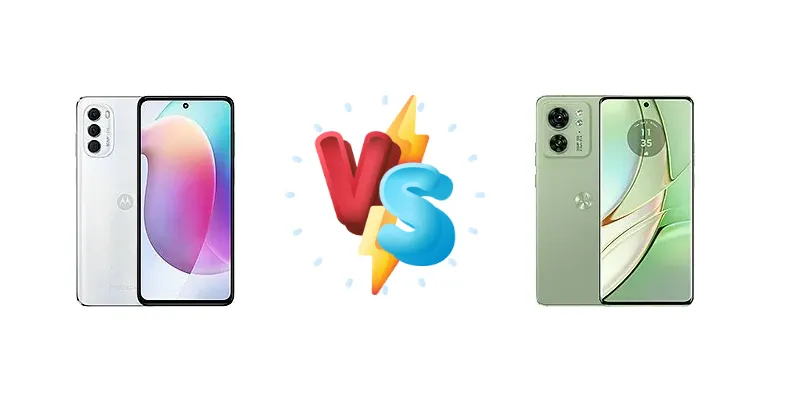
Motorola offers a diverse range of smartphones, catering to different budgets and needs. The Moto G71s provides a solid mid-range experience, while the Edge 40 aims for a premium feel. But which one is right for you? Let's dive into a detailed comparison.
🏆 Quick Verdict
The Motorola Edge 40 is the clear winner, offering significantly better performance, a brighter display, faster charging, and a more premium design. While the Moto G71s is a more budget-friendly option, the Edge 40's upgrades justify the price difference for most users.
| Network |
|---|
| 2G bands | GSM 850 / 900 / 1800 / 1900 | GSM 850 / 900 / 1800 / 1900 |
| 3G bands | HSDPA 850 / 900 / 1700(AWS) / 1900 / 2100 | HSDPA 850 / 900 / 1700(AWS) / 1900 / 2100 |
| 4G bands | LTE | 1, 2, 3, 4, 5, 7, 8, 12, 13, 17, 20, 26, 28, 32, 38, 39, 40, 41, 42, 43, 66 |
| 5G bands | SA/NSA | 1, 2, 3, 5, 7, 8, 20, 28, 38, 40, 41, 66, 77, 78 SA/NSA/Sub6 |
| Speed | HSPA, LTE, 5G | HSPA, LTE, 5G |
| Technology | GSM / CDMA / HSPA / CDMA2000 / LTE / 5G | GSM / HSPA / LTE / 5G |
| | CDMA2000 1x | - |
| Launch |
|---|
| Announced | 2022, May 17 | 2023, May 04 |
| Status | Available. Released 2022, June 20 | Available. Released 2023, May 04 |
| Body |
|---|
| Build | Glass front, plastic frame, plastic back | Glass front, aluminum frame, plastic back or eco leather back |
| Dimensions | 160.9 x 74.5 x 8 mm (6.33 x 2.93 x 0.31 in) | 158.4 x 72 x 7.6 mm (6.24 x 2.83 x 0.30 in) |
| SIM | Nano-SIM + Nano-SIM | · Nano-SIM· Nano-SIM + eSIM· Nano-SIM + Nano-SIM |
| Weight | 173 g (6.10 oz) | 167 g or 171 g (5.89 oz) |
| | Water-repellent design | IP68 dust/water resistant (up to 1.5m for 30 min) |
| Display |
|---|
| Resolution | 1080 x 2440 pixels (~404 ppi density) | 1080 x 2400 pixels, 20:9 ratio (~402 ppi density) |
| Size | 6.6 inches, 104.0 cm2 (~86.8% screen-to-body ratio) | 6.55 inches, 103.6 cm2 (~90.8% screen-to-body ratio) |
| Type | AMOLED, 1B colors, 120Hz | P-OLED, 144Hz, HDR10+, 1200 nits (peak) |
| Platform |
|---|
| CPU | Octa-core (2x2.2 GHz Kryo 660 Gold & 6x1.7 GHz Kryo 660 Silver) | Octa-core (4x2.6 GHz Cortex-A78 & 4x2.0 GHz Cortex-A55) |
| Chipset | Qualcomm SM6375 Snapdragon 695 5G (6 nm) | Mediatek Dimensity 8020 (6 nm) |
| GPU | Adreno 619 | Mali-G77 MC9 |
| OS | Android 12 | Android 13, up to 2 major Android upgrades |
| Memory |
|---|
| Card slot | microSDXC (dedicated slot) | No |
| Internal | 128GB 8GB RAM | 128GB 8GB RAM, 256GB 8GB RAM |
| | UFS | UFS 3.1 |
| Main Camera |
|---|
| Dual | - | 50 MP, f/1.4, (wide), 1/1.55", 1.0µm, multi-directional PDAF, OIS
13 MP, f/2.2, 120˚ (ultrawide), 1/3.0", 1.12µm, AF |
| Features | LED flash, HDR, panorama | Dual-LED flash, HDR, panorama |
| Triple | 50 MP, f/1.8 (wide), 1/2.76", 0.64µm, PDAF, OIS
8 MP, f/2.2, 121˚ (ultrawide), 1/4.0", 1.12µm
2 MP (macro) | - |
| Video | 1080p@30fps | 4K@30fps, 1080p@30/60/120fps, 720p@960fps, HDR10, gyro-EIS |
| Selfie camera |
|---|
| Features | - | HDR |
| Single | 16 MP, f/2.2, 17mm (ultrawide), 1.0µm | 32 MP, f/2.4, (wide), 1/3.0", 0.7µm |
| Video | 1080p@30fps | 4K@30fps, 1080p@30/120fps |
| Sound |
|---|
| 3.5mm jack | Yes | No |
| 35mm jack | Yes | No |
| Loudspeaker | Yes, with stereo speakers | Yes, with stereo speakers |
| Comms |
|---|
| Bluetooth | 5.1, A2DP, LE | 5.2, A2DP, LE |
| NFC | No | Yes |
| Positioning | GPS, GLONASS, GALILEO | GPS, GLONASS, GALILEO, BDS |
| Radio | No | No |
| USB | USB Type-C 2.0 | USB Type-C 2.0, OTG |
| WLAN | Wi-Fi 802.11 a/b/g/n/ac, dual-band, Wi-Fi Direct | Wi-Fi 802.11 a/b/g/n/ac/6e, tri-band, Wi-Fi Direct |
| Features |
|---|
| Sensors | Fingerprint (side-mounted), accelerometer, gyro, proximity, compass | Fingerprint (under display, optical), accelerometer, gyro, proximity, compass |
| | - | Moto Ready For support |
| Battery |
|---|
| Charging | 33W wired | 68W wired
15W wireless |
| Type | Li-Po 5000 mAh | Li-Po 4400 mAh |
| Misc |
|---|
| Colors | Black, White | Nebula Green, Lunar Blue, Eclipse Black, Viva Magenta |
| Models | - | XT2303-2 |
| Price | About 240 EUR | € 202.03 / $ 419.99 / £ 199.00 / ₹ 29,999 |
| Tests |
|---|
| Battery life | - |
Endurance rating 98h
|
| Camera | - |
Photo / Video |
| Display | - |
Contrast ratio: Infinite (nominal) |
| Loudspeaker | - |
-24.2 LUFS (Very good)
|
| Performance | - |
AnTuTu: 688347 (v9)
GeekBench: 3320 (v5.1), 3603 (v6)
GFXBench: 33fps (ES 3.1 onscreen) |
Motorola Moto G71s
- Affordable
- Decent all-around performance
- 5G connectivity
- Good battery life
- Slower performance compared to Edge 40
- Less bright display
- Slower charging
- Less premium design
Motorola Edge 40
- Excellent performance
- Bright and vibrant display
- Fast charging (wired & wireless)
- Premium design
- Good camera
- More expensive
- Potentially less durable than some rugged phones
Display Comparison
The Edge 40 boasts a significantly brighter display (1043 nits peak) compared to the G71s, offering better outdoor visibility and a more immersive viewing experience. Its 'Infinite' contrast ratio suggests excellent blacks and vibrant colors. The G71s has a good display, but it can't compete with the Edge 40's brightness and contrast.
Camera Comparison
While both phones offer capable cameras, the Edge 40 likely has an edge in image quality, especially in low light, due to its more advanced processing capabilities and potentially better sensors. Both offer Photo/Video capabilities, but the Edge 40's image processing is expected to be superior.
Performance
The Edge 40's Dimensity 8020 chipset provides a substantial performance boost over the G71s' Snapdragon 695. Expect smoother multitasking, faster app loading times, and better gaming performance on the Edge 40. The Cortex-A78 cores in the Edge 40 are a significant upgrade.
Battery Life
Both phones boast an impressive endurance rating of 98h. However, the Edge 40's 68W wired charging and 15W wireless charging offer significantly faster charging speeds compared to the G71s' 33W wired charging.
Buying Guide
Who should buy the Motorola Moto G71s? Users on a tighter budget who prioritize affordability and a decent all-around experience. Who should buy the Motorola Edge 40? Those seeking a premium design, faster performance, a vibrant display, and faster charging capabilities, and are willing to spend more.
Frequently Asked Questions
❓ Is the Motorola Edge 40 worth the extra money?
If you prioritize performance, a better display, and faster charging, then yes, the Edge 40 is worth the investment. However, if you're on a strict budget, the G71s offers a solid experience for the price.
❓ Which phone has better battery life?
Both phones have an endurance rating of 98h, indicating similar battery life. The Edge 40 charges much faster, though.