
Motorola Moto G60S vs Motorola Edge 20 Lite: The Ultimate Showdown
| Phones Images | |||||
|---|---|---|---|---|---|
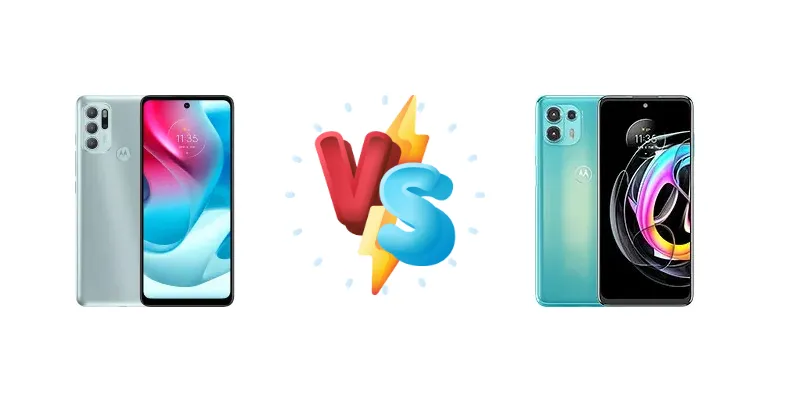
|
🏆 Quick Verdict
The Moto G60S takes the crown for raw performance and charging speed thanks to its Helio G95 chipset and 50W charging. However, the Edge 20 Lite offers a smoother display and potentially better camera processing. It depends on your priorities: speed vs. refinement.
| PHONES | ||
|---|---|---|
| Phone Names | Motorola Moto G60S | Motorola Edge 20 Lite |
| Network | ||
|---|---|---|
| 2G bands | GSM 850 / 900 / 1800 / 1900 | GSM 850 / 900 / 1800 / 1900 |
| 3G bands | HSDPA 850 / 900 / 1700(AWS) / 1900 / 2100 | HSDPA 850 / 900 / 1700(AWS) / 1900 / 2100 |
| 4G bands | 1, 2, 3, 4, 5, 7, 8, 12, 13, 17, 28, 40, 66 | 1, 2, 3, 4, 5, 7, 8, 12, 13, 17, 18, 19, 20, 26, 28, 32, 34, 38, 39, 40, 41, 42, 43, 66 |
| 5G bands | - | 1, 3, 5, 7, 8, 20, 28, 38, 40, 41, 77, 78, 66 SA/NSA/Sub6 |
| Speed | HSPA, LTE | HSPA 42.2/5.76 Mbps, LTE Cat18 1200/150 Mbps, 5G |
| Technology | GSM / HSPA / LTE | GSM / HSPA / LTE / 5G |
| Launch | ||
|---|---|---|
| Announced | 2021, August 12 | 2021, July 29 |
| Status | Available. Released 2021, August 12 | Available. Released 2021, August 16 |
| Body | ||
|---|---|---|
| Build | Glass front, plastic frame, plastic back | Glass front, plastic frame, plastic back |
| Dimensions | 169.7 x 75.9 x 9.6 mm (6.68 x 2.99 x 0.38 in) | 165.9 x 76 x 8.3 mm (6.53 x 2.99 x 0.33 in) |
| SIM | Nano-SIM + Nano-SIM | Nano-SIM + Nano-SIM |
| Weight | 212 g (7.48 oz) | 185 g (6.53 oz) |
| Water repellent design | Water-repellent design | |
| Display | ||
|---|---|---|
| Resolution | 1080 x 2460 pixels (~395 ppi density) | 1080 x 2400 pixels, 19.5:9 ratio (~385 ppi density) |
| Size | 6.8 inches, 109.8 cm2 (~85.3% screen-to-body ratio) | 6.7 inches, 110.2 cm2 (~87.4% screen-to-body ratio) |
| Type | IPS LCD, 120Hz, HDR10, 450 nits (typ), 562 nits (HBM) | OLED, 1B colors, 90Hz, HDR10+ |
| Platform | ||
|---|---|---|
| CPU | Octa-core (2x2.05 GHz Cortex-A76 & 6x2.0 GHz Cortex-A55) | Octa-core (2x2.0 GHz Cortex-A76 & 6x2.0 GHz Cortex-A55) |
| Chipset | Mediatek MT6785V/CD Helio G95 (12 nm) | Mediatek Dimensity 720 (7 nm) |
| GPU | Mali-G76 MC4 | Mali-G57 MC3 |
| OS | Android 11 | Android 11, planned upgrade to Android 13 |
| Memory | ||
|---|---|---|
| Card slot | microSDXC (uses shared SIM slot) | microSDXC |
| Internal | 128GB 4GB RAM, 128GB 6GB RAM | 128GB 6GB RAM, 128GB 8GB RAM |
| UFS 2.1 | - | |
| Main Camera | ||
|---|---|---|
| Features | LED flash, HDR, panorama | LED flash, HDR, panorama |
| Quad | 64 MP, f/1.7, 26mm (wide), PDAF 8 MP, f/2.2, 119˚, (ultrawide) 5 MP (macro) Auxiliary lens | - |
| Triple | - | 108 MP, f/1.9, (wide), 1/1.52", 0.7µm, PDAF 8 MP, f/2.2, 118˚ (ultrawide), 1/4.0", 1.12µm Auxiliary lens |
| Video | 4K@30/120fps, 1080p@30/60/240fps | 4K@30fps, 1080p@30/60/120fps, gyro-EIS |
| Selfie camera | ||
|---|---|---|
| Features | LED flash, HDR | HDR |
| Single | 16 MP, f/2.2, (wide) | 32 MP, f/2.3, (wide), 0.7µm |
| Video | 4K@30fps, 1080p@30/60/240fps | 1080p@30fps |
| Sound | ||
|---|---|---|
| 3.5mm jack | Yes | Yes |
| 35mm jack | Yes | Yes |
| Loudspeaker | Yes | Yes |
| Comms | ||
|---|---|---|
| Bluetooth | 5.0, A2DP, LE | 5.0, A2DP, LE |
| NFC | Yes | Yes |
| Positioning | GPS, GLONASS, GALILEO | GPS, GLONASS, BDS, GALILEO |
| Radio | FM radio | FM radio |
| USB | USB Type-C 2.0, OTG | USB Type-C 2.0 |
| WLAN | Wi-Fi 802.11 a/b/g/n/ac, dual-band, Wi-Fi Direct | Wi-Fi 802.11 a/b/g/n/ac, dual-band, Wi-Fi Direct |
| Features | ||
|---|---|---|
| Sensors | Fingerprint (rear-mounted), accelerometer, gyro, proximity | Fingerprint (side-mounted), accelerometer, gyro, proximity, compass |
| Battery | ||
|---|---|---|
| Charging | 50W wired, QC4 | 30W wired |
| Type | Li-Po 5000 mAh | Li-Po 5000 mAh |
| Misc | ||
|---|---|---|
| Colors | Green, Blue | Electric Graphite, Lagoon Green |
| Models | XT2133-2, XT2133-1 | XT2139-1 |
| Price | About 200 EUR | About 160 EUR |
Motorola Moto G60S
- Excellent performance for the price
- Fast 50W charging
- Large 5000mAh battery
- 120Hz refresh rate display
- Expandable storage
- IPS LCD display (less vibrant than OLED)
- Camera processing can be inconsistent
- Larger and heavier design
Motorola Edge 20 Lite
- Vibrant OLED display with 90Hz refresh rate
- Sleeker and more premium design
- Potentially better camera processing
- 5G connectivity
- Slower 30W charging
- Smaller battery capacity
- Performance slightly lower than G60S
- No expandable storage
Display Comparison
The Edge 20 Lite features a 6.7-inch OLED display with a 90Hz refresh rate, offering vibrant colors and smooth scrolling. The Moto G60S has a 6.8-inch IPS LCD display with a 120Hz refresh rate. While the G60S has a higher refresh rate, the OLED panel on the Edge 20 Lite generally provides better contrast and color accuracy. The G60S is slightly larger, which some may prefer.
Camera Comparison
Both phones offer versatile camera setups. The Edge 20 Lite often produces slightly more consistent and processed images, particularly in challenging lighting conditions. The G60S's camera can sometimes appear a bit more natural, but may require more manual adjustments. Both offer decent video recording capabilities.
Performance
The Moto G60S's Helio G95 chipset generally outperforms the Edge 20 Lite's Dimensity 720 in gaming and demanding tasks. While both have octa-core CPUs with similar core configurations, the G95's GPU is typically more powerful. The Edge 20 Lite's Dimensity 720 is still capable for everyday use, but the G60S offers a noticeable performance boost.
Battery Life
The Moto G60S boasts a larger 5000mAh battery, providing excellent battery life. Its 50W fast charging is a significant advantage, allowing for quicker top-ups. The Edge 20 Lite has a 4500mAh battery and 30W charging, which is still respectable but falls short of the G60S's charging speed.
Buying Guide
The Motorola Moto G60S is ideal for users prioritizing performance, fast charging, and a larger battery on a budget. The Motorola Edge 20 Lite is a better choice for those seeking a smoother display, a more premium design, and a slightly more refined camera experience, even if it means sacrificing some charging speed.