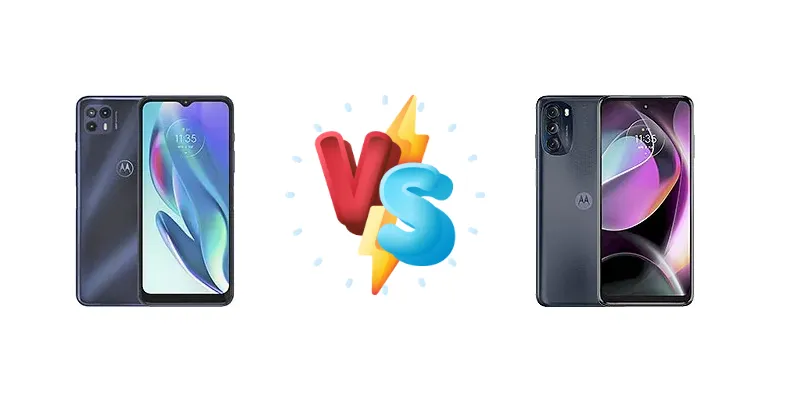
Motorola consistently delivers reliable budget smartphones, and the Moto G50 5G and Moto G (2022) are prime examples. Both offer compelling features at an affordable price, but which one reigns supreme? This comprehensive comparison will break down their strengths and weaknesses to help you make the right choice.
🏆 Quick Verdict
The Moto G50 5G edges out the Moto G (2022) thanks to its 5G connectivity and slightly faster charging. However, the Moto G (2022) might offer a better overall value depending on current pricing and specific needs. Both are solid budget contenders.
| Network |
|---|
| 2G bands | GSM 850 / 900 / 1800 / 1900 | GSM 850 / 900 / 1800 / 1900 |
| 3G bands | HSDPA 850 / 900 / 1700(AWS) / 1900 / 2100 - Australia | HSDPA 850 / 900 / 1700(AWS) / 1900 / 2100 |
| 4G bands | 1, 2, 3, 4, 5, 7, 8, 12, 13, 17, 18, 19, 20, 26, 28, 38, 40, 41, 42, 43, 66 - Australia | LTE |
| 5G bands | 1, 3, 5, 7, 8, 20, 28, 38, 40, 41, 77, 78 SA/NSA - Australia | SA/NSA |
| Speed | HSPA, LTE, 5G | HSPA, LTE, 5G |
| Technology | GSM / HSPA / LTE / 5G | GSM / HSPA / LTE / 5G |
| Launch |
|---|
| Announced | 2021, August 25 | 2022, April 22 |
| Status | Available. Released 2021, August 25 | Available. Released 2022, May 19 |
| Body |
|---|
| Build | Glass front, plastic back, plastic frame | Glass front, plastic frame, plastic back |
| Dimensions | 167 x 76.4 x 9.3 mm (6.57 x 3.01 x 0.37 in) | 165.4 x 75.8 x 9.4 mm (6.51 x 2.98 x 0.37 in) |
| SIM | Nano-SIM + Nano-SIM | Nano-SIM |
| Weight | 206 g (7.27 oz) | 204 g (7.20 oz) |
| | Water-repellent design | Water-repellent design |
| Display |
|---|
| Resolution | 720 x 1600 pixels, 20:9 ratio (~269 ppi density) | 720 x 1600 pixels, 20:9 ratio (~270 ppi density) |
| Size | 6.5 inches, 102.8 cm2 (~80.5% screen-to-body ratio) | 6.5 inches, 102.0 cm2 (~81.4% screen-to-body ratio) |
| Type | IPS LCD, 90Hz | IPS LCD, 90Hz |
| Platform |
|---|
| CPU | Octa-core (2x2.2 GHz Cortex-A76 & 6x2.0 GHz Cortex-A55) | Octa-core (2x2.2 GHz Cortex-A76 & 6x2.0 GHz Cortex-A55) |
| Chipset | Mediatek Dimensity 700 (7 nm) | Mediatek Dimensity 700 (7 nm) |
| GPU | Mali-G57 MC2 | Mali-G57 MC2 |
| OS | Android 11 | Android 12, planned upgrade to Android 13 |
| Memory |
|---|
| Card slot | microSDXC (uses shared SIM slot) | microSDXC (dedicated slot) |
| Internal | 64GB 4GB RAM, 128GB 4GB RAM | 64GB 4GB RAM, 256GB 6GB RAM |
| Main Camera |
|---|
| Features | LED flash, HDR, panorama | LED flash, HDR, panorama |
| Triple | 48 MP, f/1.7, 26mm (wide), 1/2.0", 0.8µm, PDAF
2 MP (macro)
Auxiliary lens | 50 MP, f/1.8, 26mm (wide), 0.64µm, PDAF
2 MP (macro)
Auxiliary lens |
| Video | 1080p@30/60fps | 1080p@30fps |
| Selfie camera |
|---|
| Features | HDR | HDR |
| Single | 13 MP, f/2.0, (wide), 1/3.1", 1.12µm | 13 MP, f/2.2, (wide), 1.12µm |
| Video | 1080p@30/60fps | 1080p@30fps |
| Sound |
|---|
| 3.5mm jack | Yes | Yes |
| 35mm jack | Yes | Yes |
| Loudspeaker | Yes | Yes |
| Comms |
|---|
| Bluetooth | 5.0, A2DP, LE | 5.1, A2DP, LE |
| NFC | Yes | No |
| Positioning | GPS | GPS, GLONASS |
| Radio | Unspecified | No |
| USB | USB Type-C 2.0, OTG | USB Type-C 2.0 |
| WLAN | Wi-Fi 802.11 a/b/g/n/ac, dual-band, Wi-Fi Direct | Wi-Fi 802.11 a/b/g/n/ac, dual-band, Wi-Fi Direct |
| Features |
|---|
| Sensors | Fingerprint (side-mounted), accelerometer, gyro, proximity | Fingerprint (side-mounted), accelerometer, gyro, proximity, compass, barometer |
| Battery |
|---|
| Charging | 15W wired | 10W wired |
| Type | Li-Po 5000 mAh | Li-Po 5000 mAh |
| Misc |
|---|
| Colors | Meteorite Grey | Moonlight Gray |
| Models | XT2149-1 | XT2213, XT2213-3 |
| Price | About 170 EUR | $ 65.00 |
Motorola Moto G50 5G
- 5G Connectivity
- Faster 15W Charging
- Potentially brighter display
- Decent Camera System
- May have slightly less refined design
- Software updates can be slow
Motorola Moto G (2022)
- Potentially lower price
- Slightly more refined design (subjective)
- Reliable Motorola experience
- Slower 10W Charging
- No 5G connectivity
- Camera may be slightly less capable
Display Comparison
Both phones feature a 6.5-inch display, likely with an HD+ resolution. While both offer decent viewing experiences for everyday use, the Moto G50 5G might have a slightly brighter panel. Expect similar color accuracy and viewing angles on both.
Camera Comparison
The Moto G50 5G typically features a triple-camera setup with a 50MP main sensor, an 8MP ultrawide, and a 2MP macro lens. The Moto G (2022) often has a similar configuration, but sensor sizes and image processing algorithms can differ. Expect the Moto G50 5G to potentially capture slightly more detailed images in good lighting conditions.
Performance
Powered by the Mediatek Dimensity 700 chipset, both phones offer similar performance for everyday tasks like browsing, social media, and light gaming. However, the Moto G50 5G's 5G modem could provide a slightly snappier experience in areas with good 5G coverage. Real-world performance will largely depend on software optimization.
Battery Life
Both phones are expected to have a 5000mAh battery, providing all-day battery life for moderate users. However, the Moto G50 5G supports 15W charging, while the Moto G (2022) is limited to 10W charging. This means the G50 5G will charge significantly faster.
Buying Guide
The Motorola Moto G50 5G is ideal for users who want 5G connectivity and faster charging speeds. The Moto G (2022) is a great choice for those prioritizing a slightly more refined design and potentially a lower price point, especially if 5G isn't a necessity.
Frequently Asked Questions
❓ Is the Moto G50 5G worth the extra money for 5G?
If you live in an area with good 5G coverage and plan to utilize it, then yes. Otherwise, the Moto G (2022) offers excellent value without 5G.
❓ Which phone has better software support?
Motorola is generally reliable with software updates, but neither phone is guaranteed long-term support. Check Motorola's website for the latest update information.