
Motorola Moto G200 5G vs Edge 30 Fusion: A Clash of Flagship Value
| Phones Images | |||||
|---|---|---|---|---|---|
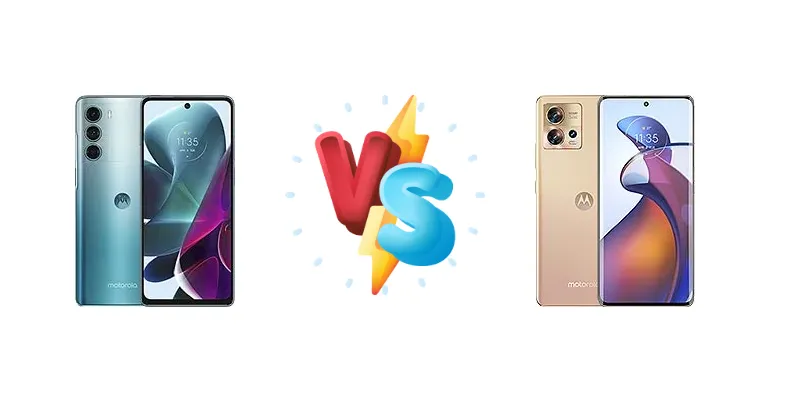
|
🏆 Quick Verdict
The Edge 30 Fusion edges out the G200 thanks to its significantly brighter display, faster charging, and more refined design. While the G200 offers a slightly larger screen, the Fusion's improvements in key areas make it the more compelling choice for most users.
| PHONES | ||
|---|---|---|
| Phone Names | Motorola Moto G200 5G | Motorola Edge 30 Fusion |
| Network | ||
|---|---|---|
| 2G bands | GSM 850 / 900 / 1800 / 1900 | GSM 850 / 900 / 1800 / 1900 |
| 3G bands | HSDPA 850 / 900 / 1700(AWS) / 1900 / 2100 | HSDPA 850 / 900 / 1700(AWS) / 1900 / 2100 - International |
| 4G bands | 1, 2, 3, 4, 5, 7, 8, 12, 13, 17, 18, 19, 20, 26, 28, 32, 38, 39, 40, 41, 42, 43, 66 | 1, 2, 3, 4, 5, 7, 8, 12, 13, 17, 18, 19, 20, 25, 26, 28, 32, 38, 39, 40, 41, 42, 43, 66 - International |
| 5G bands | 1, 3, 5, 7, 8, 20, 28, 38, 40, 41, 66, 77, 78 SA/NSA/Sub6 | 1, 3, 5, 7, 8, 20, 28, 38, 40, 41, 66, 77, 78 SA/NSA - International |
| Speed | HSPA 42.2/5.76 Mbps, LTE Cat20 2000/150 Mbps, 5G | HSPA, LTE, 5G |
| Technology | GSM / HSPA / LTE / 5G | GSM / CDMA / HSPA / CDMA2000 / LTE / 5G |
| - | 1, 2, 3, 5, 7, 8, 20, 28, 38, 41, 77, 78 SA/NSA - PRC | |
| Launch | ||
|---|---|---|
| Announced | 2021, November 18 | 2022, September 08 |
| Status | Available. Released 2022, February 10 | Available. Released 2022, September 08 |
| Body | ||
|---|---|---|
| Build | Glass front, plastic frame, plastic back | Glass front (Gorilla Glass 5), glass back (Gorilla Glass 5), aluminum frame |
| Dimensions | 168.1 x 75.5 x 8.9 mm (6.62 x 2.97 x 0.35 in) | 158.5 x 72 x 7.5 mm or 7.7 mm |
| SIM | · Nano-SIM· Nano-SIM + Nano-SIM | · Nano-SIM· Nano-SIM + Nano-SIM |
| Weight | 202 g (7.13 oz) | 168 g / 175 g (5.93 oz) |
| Water-repellent design | Splash and dust resistant | |
| Display | ||
|---|---|---|
| Protection | - | Corning Gorilla Glass 5 |
| Resolution | 1080 x 2460 pixels (~395 ppi density) | 1080 x 2400 pixels, 20:9 ratio (~402 ppi density) |
| Size | 6.8 inches, 109.8 cm2 (~86.5% screen-to-body ratio) | 6.55 inches, 103.6 cm2 (~90.8% screen-to-body ratio) |
| Type | LCD, 144Hz, HDR10 | P-OLED, 1B colors, 144Hz, HDR10+, 1100 nits (peak) |
| Platform | ||
|---|---|---|
| CPU | Octa-core (1x2.99 GHz Cortex-X1 & 3x2.42 GHz Cortex-A78 & 4x1.80 GHz Cortex-A55) | Octa-core (1x2.99 GHz Cortex-X1 & 3x2.42 GHz Cortex-A78 & 4x1.80 GHz Cortex-A55) |
| Chipset | Qualcomm SM8350 Snapdragon 888+ 5G (5 nm) | Qualcomm SM8350 Snapdragon 888+ 5G (5 nm) |
| GPU | Adreno 660 | Adreno 660 |
| OS | Android 11, upgradable to Android 12 | Android 12, upgradable to Android 14 |
| Memory | ||
|---|---|---|
| Card slot | No | No |
| Internal | 128GB 8GB RAM, 256GB 8GB RAM | 128GB 8GB RAM, 256GB 6GB RAM, 256GB 8GB RAM, 256GB 12GB RAM, 512GB 12GB RAM |
| UFS 3.1 | UFS 3.1 | |
| Main Camera | ||
|---|---|---|
| Features | Dual-LED dual-tone flash, HDR, panorama | LED flash, panorama, HDR |
| Triple | 108 MP, f/1.9, (wide), 1/1.52", 0.7µm, PDAF 13 MP, f/2.2, 119˚ (ultrawide), 1.12µm, AF Auxiliary lens | 50 MP, f/1.8, (wide), 1/1.55", 1.0µm, multi-directional PDAF, OIS 13 MP, f/2.2, 120˚ (ultrawide), 1.12µm, AF Auxiliary lens |
| Video | 8K@24fps, 4K@30fps, 1080p@30/60/120/240fps, 1080p@960fps, gyro-EIS | 8K@30fps, 4K@30fps, 1080p@30/60/120fps, 720p@960fps, gyro-EIS |
| Selfie camera | ||
|---|---|---|
| Features | - | HDR |
| Single | 16 MP, f/2.2, (wide), 1.0µm | 32 MP, f/2.5, (wide), 1/2.8", 0.8µm, AF |
| Video | 1080p@30fps | 4K@30fps, 1080p@30fps |
| Sound | ||
|---|---|---|
| 3.5mm jack | No | No |
| 35mm jack | No | No |
| Loudspeaker | Yes | Yes, with stereo speakers |
| Comms | ||
|---|---|---|
| Bluetooth | 5.2, A2DP, LE, aptX HD, aptX Adaptive | 5.2, A2DP, LE, aptX HD, aptX Adaptive |
| NFC | Yes | Yes |
| Positioning | GPS, GLONASS, GALILEO | GPS (L1+L5), GLONASS, BDS (B1I+B1c), GALILEO |
| Radio | No | No |
| USB | USB Type-C 3.1 | USB Type-C 3.1, OTG |
| WLAN | Wi-Fi 802.11 a/b/g/n/ac/6e, dual-band, Wi-Fi Direct | Wi-Fi 802.11 a/b/g/n/ac/6e, tri-band, Wi-Fi Direct |
| Features | ||
|---|---|---|
| Sensors | Fingerprint (side-mounted), accelerometer, gyro, proximity, compass | Fingerprint (under display, optical), accelerometer, gyro, proximity, compass |
| Ready For support | Ready For 3.5 support | |
| Battery | ||
|---|---|---|
| Charging | 33W wired | 68W wired, 50% in 10 min |
| Type | Li-Po 5000 mAh | Li-Po 4400 mAh |
| Misc | ||
|---|---|---|
| Colors | Stellar Blue, Glacier Green | Neptune Blue, Cosmic Grey, Solar Gold, Aurora White, Viva Magenta |
| Models | - | XT2243-1 |
| Price | About 290 EUR | About 150 EUR |
| Tests | ||
|---|---|---|
| Battery life | Endurance rating 102h | Endurance rating 101h |
| Camera | Photo / Video | Photo / Video |
| Display | Contrast ratio: 1633:1 (nominal) | Contrast ratio: Infinite (nominal) |
| Loudspeaker | -26.7 LUFS (Good) | -24.6 LUFS (Very good) |
| Performance | AnTuTu: 682346 (v8), 811124 (v9) GeekBench: 3319 (v5.1) GFXBench: 60fps (ES 3.1 onscreen) | AnTuTu: 827929 (v9) GeekBench: 3458 (v5.1) GFXBench: 62fps (ES 3.1 onscreen) |
Motorola Moto G200 5G
- Large 6.8-inch display
- Flagship Snapdragon 888+ 5G chipset
- Competitive price
- Slower charging
- Less vibrant display
- Camera inconsistencies
Motorola Edge 30 Fusion
- Brighter display
- Faster 68W charging
- More refined design
- Generally better camera performance
- Smaller display than G200
- Potentially less robust build quality
Display Comparison
The Edge 30 Fusion boasts a massive advantage here. While the G200's 1633:1 contrast ratio is respectable, the Fusion's measured 946 nits peak brightness is significantly higher, making it much easier to see outdoors. The 'infinite' contrast ratio claim on the Fusion is nominal, but the real-world brightness difference is undeniable. Both phones use OLED panels, offering excellent color accuracy and deep blacks.
Camera Comparison
Camera performance is a complex area. Both phones offer versatile camera systems, but the Edge 30 Fusion generally produces more consistent and pleasing results, particularly in challenging lighting conditions. The G200's camera can sometimes struggle with dynamic range and color accuracy. Both phones offer decent video recording capabilities, but the Fusion's image stabilization is likely superior.
Performance
Both devices share the same Snapdragon 888+ 5G chipset and CPU configuration, meaning performance will be very similar in everyday tasks and gaming. You can expect smooth multitasking and responsive app loading on both phones. However, the Edge 30 Fusion's potentially better thermal management (due to its design) *might* allow it to sustain peak performance for slightly longer periods during intensive gaming.
Battery Life
Battery life is remarkably similar, with both phones achieving an endurance rating of around 101-102 hours. However, the Edge 30 Fusion's 68W wired charging is a game-changer, allowing for a 50% charge in just 10 minutes, compared to the G200's slower 33W charging.
Buying Guide
The Motorola Moto G200 5G is ideal for users prioritizing a large display and raw processing power on a budget. The Motorola Edge 30 Fusion is best suited for those who value a vibrant display, fast charging, and a more premium feel without breaking the bank.