
Moto G15 Power vs. Moto G Power (2024): A Deep Dive into Battery and Performance
| Phones Images | |||||
|---|---|---|---|---|---|
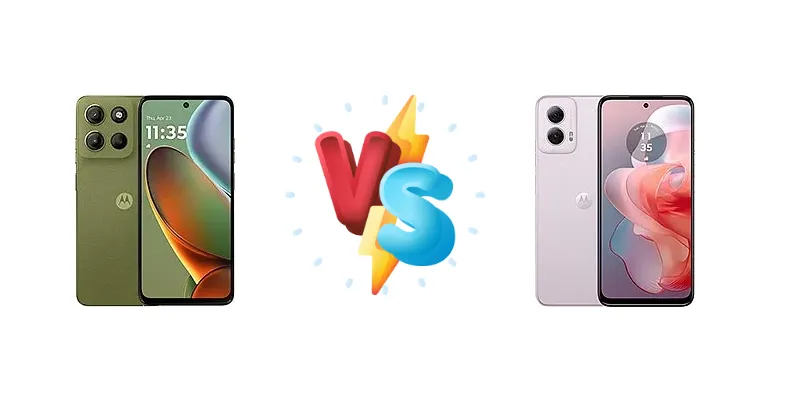
|
🏆 Quick Verdict
For users prioritizing maximum battery life and proven endurance, the Motorola Moto G15 Power is the clear winner. However, the Moto G Power (2024) offers a substantial performance boost thanks to the Dimensity 7020, making it the better choice for multitasking and gaming, despite a slightly shorter battery runtime.
| PHONES | ||
|---|---|---|
| Phone Names | Motorola Moto G15 Power | Motorola Moto G Power (2024) |
| Network | ||
|---|---|---|
| 2G bands | GSM 850 / 900 / 1800 / 1900 | GSM 850 / 900 / 1800 / 1900 |
| 3G bands | HSDPA 850 / 900 / 1900 / 2100 | HSDPA 850 / 900 / 1700(AWS) / 1900 / 2100 |
| 4G bands | 1, 2, 3, 5, 7, 8, 20, 28, 38, 40, 41 | 1, 2, 3, 4, 5, 7, 8, 12, 13, 14, 17, 18, 20, 25, 26, 28, 29, 30, 38, 39, 40, 41, 48, 66, 71 |
| 5G bands | - | 2, 5, 7, 12, 14, 25, 26, 29, 30, 41, 48, 66, 70, 71, 77, 78 SA/NSA |
| Speed | HSPA, LTE | HSPA, LTE, 5G |
| Technology | GSM / HSPA / LTE | GSM / HSPA / LTE / 5G |
| Launch | ||
|---|---|---|
| Announced | 2024, December 17 | 2024, March 12 |
| Status | Available. Released 2025, February 12 | Available. Released 2024, March 22 |
| Body | ||
|---|---|---|
| Build | Glass front (Gorilla Glass 3), plastic frame, silicone polymer back (eco leather) | Glass front, silicone polymer back (eco leather), plastic frame |
| Dimensions | 165.7 x 76 x 8.8 mm (6.52 x 2.99 x 0.35 in) | 167.2 x 76.4 x 8.5 mm (6.58 x 3.01 x 0.33 in) |
| SIM | Nano-SIM + Nano-SIM | Nano-SIM + eSIM |
| Weight | 203 g (7.16 oz) | 201 g (7.09 oz) |
| Display | ||
|---|---|---|
| Protection | Corning Gorilla Glass 3, Mohs level 5 | - |
| Resolution | 1080 x 2400 pixels, 20:9 ratio (~392 ppi density) | 1080 x 2400 pixels, 20:9 ratio (~393 ppi density) |
| Size | 6.72 inches, 109.0 cm2 (~86.6% screen-to-body ratio) | 6.7 inches, 108.4 cm2 (~84.8% screen-to-body ratio) |
| Type | IPS LCD | IPS LCD, 120Hz |
| Platform | ||
|---|---|---|
| CPU | Octa-core (2x2.0 GHz Cortex-A75 & 6x1.7 GHz Cortex-A55) | Octa-core (2x2.2 GHz Cortex-A78 & 6x2.0 GHz Cortex-A55) |
| Chipset | Mediatek Helio G81 Extreme (12 nm) | Mediatek Dimensity 7020 (6 nm) |
| GPU | Mali-G52 MC2 | IMG BXM-8-256 |
| OS | Android 15 | Android 14 |
| Memory | ||
|---|---|---|
| Card slot | microSDXC | microSDXC (dedicated slot) |
| Internal | 256GB 8GB RAM, 512GB 8GB RAM | 128GB 8GB RAM |
| Main Camera | ||
|---|---|---|
| Dual | 50 MP, f/1.8, (wide), 0.64µm, PDAF 5 MP, f/2.4, (ultrawide) | 50 MP, f/1.8, (wide), 0.64µm, PDAF, OIS 8 MP, f/2.2, 118˚ (ultrawide), 1.12µm, AF |
| Features | Dual-LED flash, HDR, panorama | LED flash, HDR, panorama |
| Video | 1080p@30fps | 1080p@30fps, gyro-EIS |
| Selfie camera | ||
|---|---|---|
| Features | - | HDR |
| Single | 8 MP, f/2.0, (wide), 1.12µm | 16 MP, f/2.4, (wide), 1.0µm |
| Video | 1080p@30fps | 1080p@30fps |
| Sound | ||
|---|---|---|
| 35mm jack | Yes | Yes |
| Loudspeaker | Yes, with stereo speakers | Yes, with stereo speakers |
| Comms | ||
|---|---|---|
| Bluetooth | 5.0, A2DP, LE | 5.3, A2DP, LE |
| NFC | Yes (market/region dependent) | Yes |
| Positioning | GPS, GALILEO, GLONASS, BDS, QZSS | GPS, GLONASS, GALILEO |
| Radio | FM radio | No |
| USB | USB Type-C 2.0 | USB Type-C 2.0 |
| WLAN | Wi-Fi 802.11 a/b/g/n/ac, dual-band | Wi-Fi 802.11 a/b/g/n/ac, dual-band |
| Features | ||
|---|---|---|
| Sensors | Fingerprint (side-mounted), accelerometer, gyro, proximity, compass | Fingerprint (side-mounted), accelerometer, gyro, proximity, compass, barometer |
| Battery | ||
|---|---|---|
| Charging | 30W wired | 30W wired 15W wireless |
| Type | 6000 mAh | 5000 mAh |
| Misc | ||
|---|---|---|
| Colors | Gravity Grey, Iguana Green | Midnight Blue, Pale Lilac |
| Models | XT2521-5 | XT2415-3, XT2415V |
| Price | € 158.46 / $ 350.55 / £ 207.53 | $ 75.00 / C$ 209.97 / £ 149.00 |
| EU LABEL | ||
|---|---|---|
| Battery | 62:07h endurance, 1000 cycles | - |
| Energy | Class A | - |
| Free fall | Class B (180 falls) | - |
| Repairability | Class B | - |
Motorola Moto G15 Power
- Exceptional battery life (62:07h endurance)
- Potentially longer battery lifespan (1000 cycles)
- More affordable price point (likely)
- Less powerful processor for demanding tasks
- May struggle with graphically intensive games
- Likely less refined image processing
Motorola Moto G Power (2024)
- Significantly faster processor (Dimensity 7020)
- Improved gaming and multitasking performance
- Wireless charging support (15W)
- Shorter battery life compared to G15 Power
- Potentially higher price
- May experience more heat under heavy load
Display Comparison
Both devices lack detailed display specifications in the provided data, but given their price points, we can expect 6.5-6.6 inch LCD panels with 1080p+ resolution. The key difference will likely be color accuracy and peak brightness. Motorola typically prioritizes color calibration in the G Power line, potentially giving it an edge. However, without specific nit ratings, it's difficult to definitively state which display is superior.
Camera Comparison
The provided data doesn't detail camera specifications beyond the chipsets. However, Motorola's G Power series often includes a 50MP main sensor, while the G15 Power may opt for a slightly lower resolution. The Dimensity 7020's improved ISP (Image Signal Processor) in the G Power (2024) will likely result in better image processing, particularly in low-light conditions. Expect improved dynamic range and noise reduction. The presence of a 2MP macro camera on either device is largely inconsequential; its image quality will be limited.
Performance
The performance gap is significant. The Moto G15 Power utilizes the Mediatek Helio G81 Extreme, a 12nm chipset with an octa-core configuration featuring two Cortex-A75 cores clocked at 2.0 GHz and six Cortex-A55 cores at 1.7 GHz. This is a capable processor for everyday tasks, but it will struggle with graphically intensive games. Conversely, the Moto G Power (2024) boasts the Mediatek Dimensity 7020, built on a more efficient 6nm process. Its CPU configuration – two Cortex-A78 cores at 2.2 GHz and six Cortex-A55 cores at 2.0 GHz – provides a noticeable performance uplift. The newer architecture and higher clock speeds translate to faster app loading times, smoother multitasking, and improved gaming performance. The 6nm process also contributes to better thermal management, reducing the likelihood of throttling during sustained workloads.
Battery Life
Battery life is a key differentiator. The Moto G15 Power claims an impressive 62:07h endurance, suggesting a large battery capacity optimized for longevity. While the G Power (2024) doesn't have endurance data, the Dimensity 7020's 6nm efficiency helps mitigate the power draw of its increased performance. Both phones support 30W wired charging, but the G Power (2024) adds 15W wireless charging, offering a convenient alternative. The G15 Power's 1000 cycle battery claim suggests a focus on long-term battery health, promising sustained capacity over years of use.
Buying Guide
Buy the Motorola Moto G15 Power if you need a phone that can reliably last for over two days on a single charge, and your primary use cases are communication, light social media, and basic productivity. Buy the Motorola Moto G Power (2024) if you prefer a smoother, more responsive experience for gaming, streaming, and running demanding apps, and you value the convenience of wireless charging.