
Motorola Moto G100 vs Xiaomi Mi 11i: Which Snapdragon Flagship Reigns Supreme?
| Phones Images | |||||
|---|---|---|---|---|---|
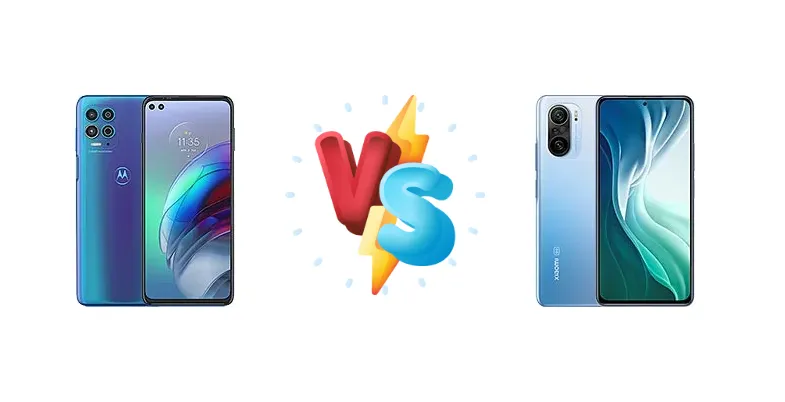
|
🏆 Quick Verdict
For the average user, the Xiaomi Mi 11i is the stronger recommendation. While the Moto G100 offers a larger display, the Mi 11i’s more efficient Snapdragon 888, coupled with its significantly faster 33W charging, provides a smoother, more convenient daily experience. The Mi 11i’s superior thermal management also translates to sustained performance during demanding tasks.
| PHONES | ||
|---|---|---|
| Phone Names | Motorola Moto G100 (2021) | Xiaomi Mi 11i |
| Network | ||
|---|---|---|
| 2G bands | GSM 850 / 900 / 1800 / 1900 | GSM 850 / 900 / 1800 / 1900 |
| 3G bands | HSDPA 850 / 900 / 1700(AWS) / 1900 / 2100 | HSDPA 850 / 900 / 1700(AWS) / 1900 / 2100 |
| 4G bands | 1, 2, 3, 4, 5, 7, 8, 12, 13, 17, 20, 26, 28, 32, 34, 38, 39, 40, 41, 42, 43, 66 | 1, 2, 3, 4, 5, 7, 8, 12, 17, 20, 28, 38, 40, 41, 66 |
| 5G bands | 1, 3, 5, 7, 8, 28, 38, 41, 66, 77, 78 SA/NSA/Sub6 | 1, 3, 5, 7, 8, 20, 28, 38, 41, 77, 78 SA/NSA |
| Speed | HSPA 42.2/5.76 Mbps, LTE Cat20 2000/200 Mbps, 5G | HSPA, LTE, 5G |
| Technology | GSM / HSPA / LTE / 5G | GSM / HSPA / LTE / 5G |
| Launch | ||
|---|---|---|
| Announced | 2021, March 25 | 2021, March 29 |
| Status | Available. Released 2021, April 15 | Available. Released 2021, May 31 |
| Body | ||
|---|---|---|
| Dimensions | 168.4 x 74 x 9.7 mm (6.63 x 2.91 x 0.38 in) | 163.7 x 76.4 x 7.8 mm (6.44 x 3.01 x 0.31 in) |
| SIM | Nano-SIM + Nano-SIM | Nano-SIM + Nano-SIM |
| Weight | 207 g (7.30 oz) | 196 g (6.91 oz) |
| - | IP53, dust and splash resistant | |
| Display | ||
|---|---|---|
| Protection | - | Corning Gorilla Glass 5 |
| Resolution | 1080 x 2520 pixels, 21:9 ratio (~409 ppi density) | 1080 x 2400 pixels, 20:9 ratio (~395 ppi density) |
| Size | 6.7 inches, 104.9 cm2 (~84.1% screen-to-body ratio) | 6.67 inches, 107.4 cm2 (~85.9% screen-to-body ratio) |
| Type | IPS LCD, 90Hz, HDR10, 560 nits (HBM) | Super AMOLED, 120Hz, HDR10+, 900 nits (HBM), 1300 nits (peak) |
| Platform | ||
|---|---|---|
| CPU | Octa-core (1x3.2 GHz Kryo 585 & 3x2.42 GHz Kryo 585 & 4x1.80 GHz Kryo 585) | Octa-core (1x2.84 GHz Cortex-X1 & 3x2.42 GHz Cortex-A78 & 4x1.80 GHz Cortex-A55) |
| Chipset | Qualcomm SM8250-AC Snapdragon 870 5G (7 nm) | Qualcomm SM8350 Snapdragon 888 5G (5 nm) |
| GPU | Adreno 650 | Adreno 660 |
| OS | Android 11, upgradable to Android 12 | Android 11, MIUI 12 |
| Memory | ||
|---|---|---|
| Card slot | microSDXC (uses shared SIM slot) | No |
| Internal | 128GB 8GB RAM, 256GB 12GB RAM | 128GB 8GB RAM, 256GB 8GB RAM |
| - | UFS 3.1 | |
| Main Camera | ||
|---|---|---|
| Features | Laser AF, Dual-LED flash, ring flash (macro mode), panorama, HDR | Color spectrum sensor, LED flash, HDR, panorama |
| Single | - | 20 MP, f/2.5, (wide), 1/3.4", 0.8µm |
| Triple | 64 MP, f/1.7, (wide), 1/2.0", 0.7µm, PDAF 16 MP, f/2.2, 117˚ (ultrawide), 1.0µm, PDAF TOF 3D Auxiliary lens | 108 MP, f/1.8, 26mm (wide), 1/1.52", 0.7µm, PDAF 8 MP, f/2.2, 119˚ (ultrawide) 5 MP, f/2.4, 50mm (telephoto macro), 1/5.0", 1.12µm, AF |
| Video | 6K@30fps, 4K@30/60fps, 1080p@30/60/120fps, gyro-EIS | 8K@30fps, 4K@30/60fps, 1080p@30/60/120/240/960fps, gyro-EIS, HDR10+ |
| Selfie camera | ||
|---|---|---|
| Dual | 16 MP, f/2.2, (wide), 1.0µm 8 MP, f/2.4, 118˚ (ultrawide), 1.12µm | - |
| Features | HDR | HDR |
| Single | - | 20 MP, f/2.5, (wide), 1/3.4", 0.8µm |
| Video | 1080p@30fps | 1080p@30fps, 720p@120fps |
| Sound | ||
|---|---|---|
| 3.5mm jack | - | No |
| 35mm jack | Yes | No |
| Loudspeaker | Yes | Yes, with stereo speakers |
| - | 24-bit/192kHz audio | |
| Comms | ||
|---|---|---|
| Bluetooth | 5.1, A2DP, LE | 5.2, A2DP, LE |
| Infrared port | - | Yes |
| NFC | Yes | Yes (market/region dependent) |
| Positioning | GPS (L1+L5), GLONASS, GALILEO | GPS (L1+L5), GLONASS (L1), BDS (B1I+B1c+B2a), GALILEO (E1+E5a), QZSS (L1+L5), NavIC (L5) |
| Radio | No | No |
| USB | USB Type-C 3.1, OTG | USB Type-C 2.0, OTG |
| WLAN | Wi-Fi 802.11 a/b/g/n/ac/6, dual-band, Wi-Fi Direct | Wi-Fi 802.11 a/b/g/n/ac/6, dual-band, Wi-Fi Direct |
| Features | ||
|---|---|---|
| Sensors | Fingerprint (side-mounted), accelerometer, gyro, proximity, compass | Fingerprint (side-mounted), accelerometer, gyro, proximity, compass, barometer |
| Battery | ||
|---|---|---|
| Charging | 20W wired | 33W wired, PD3.0, QC3, 100% in 52 min |
| Type | Li-Po 5000 mAh | Li-Po 4520 mAh |
| Misc | ||
|---|---|---|
| Colors | Iridescent Sky, Iridescent Ocean, Slate Grey | Celestial Silver, Frosty White, Cosmic Black |
| Models | XT2125, XT2125-4 | M2012K11G |
| Price | About 210 EUR | About 230 EUR |
| SAR | - | 0.95 W/kg (head) 0.74 W/kg (body) |
| SAR EU | - | 0.57 W/kg (head) 0.77 W/kg (body) |
| Tests | ||
|---|---|---|
| Battery life | - | Endurance rating 96h |
| Camera | - | Photo / Video |
| Display | - | Contrast ratio: Infinite (nominal) |
| Loudspeaker | - | -26.0 LUFS (Very good) |
| Performance | - | AnTuTu: 690021 (v8) GeekBench: 3641 (v5.1) |
Motorola Moto G100 (2021)
- Larger display for immersive media consumption
- Potentially expandable storage (microSD slot likely)
- Slightly longer rated battery endurance
- Slower 20W charging
- Less efficient Snapdragon 870 processor
- Lower peak display brightness
Xiaomi Mi 11i
- Faster 33W charging with PD3.0/QC3
- More efficient Snapdragon 888 processor
- Higher peak display brightness and contrast
- More compact and pocketable design
- Slightly shorter rated battery endurance
- No expandable storage (likely)
- Smaller display size
Display Comparison
The Xiaomi Mi 11i boasts a peak brightness of 939 nits, exceeding the Motorola Moto G100’s 613 nits. This translates to significantly better visibility outdoors under direct sunlight. While the Moto G100 offers a 1427:1 contrast ratio, the Mi 11i claims an 'Infinite' contrast ratio, typical of AMOLED panels, suggesting deeper blacks and more vibrant colors. Both devices likely utilize AMOLED technology, but the Mi 11i’s higher brightness and contrast give it a clear advantage for visual clarity and enjoyment. The G100's larger size may appeal to some, but the Mi 11i's panel quality is superior.
Camera Comparison
Both devices offer photo and video capabilities, but detailed sensor information is lacking. Assuming similar image processing pipelines, the Mi 11i likely benefits from the Snapdragon 888’s improved ISP (Image Signal Processor). The 888’s ISP allows for faster image processing and potentially better low-light performance. Without specific sensor size or aperture data, it’s difficult to definitively declare a winner, but the Mi 11i’s chipset advantage suggests a slight edge in image quality and video recording capabilities. We'd expect both to offer competent cameras, but the Mi 11i has the potential for superior results.
Performance
The core difference lies in the chipsets: the Moto G100 features the Snapdragon 870 5G (7nm), while the Mi 11i utilizes the Snapdragon 888 5G (5nm). The 5nm process node of the 888 offers superior transistor density and, crucially, better power efficiency compared to the 870’s 7nm node. While the 870 is a very capable chip, the 888’s Cortex-X1 prime core (2.84 GHz) provides a performance edge, particularly in single-core tasks. The Mi 11i is likely to exhibit less thermal throttling under sustained load, maintaining higher clock speeds for longer periods. Both phones utilize Octa-core CPUs, but the architectural differences favor the Mi 11i.
Battery Life
The Moto G100 boasts an endurance rating of 100 hours, while the Mi 11i achieves 96 hours. However, this doesn’t tell the whole story. The Mi 11i’s 33W wired charging, complete with PD3.0 and QC3 support, allows for a full charge in just 52 minutes. The Moto G100 is limited to 20W charging, resulting in a significantly slower charging time. The Mi 11i’s faster charging is a major convenience factor, offsetting the slightly lower endurance rating. The more efficient Snapdragon 888 also contributes to better real-world battery life despite the similar endurance scores.
Buying Guide
Buy the Motorola Moto G100 (2021) if you prioritize a larger screen for media consumption and potentially need the expandability of a microSD card slot (assumed based on Motorola’s typical offerings). Buy the Xiaomi Mi 11i if you prefer a more pocketable device with faster charging, a more efficient processor, and a generally more refined user experience focused on performance and convenience.