
Moto G06 vs. Moto G Stylus 5G (2023): A Deep Dive into Motorola's Budget Lineup
| Phones Images | |||||
|---|---|---|---|---|---|
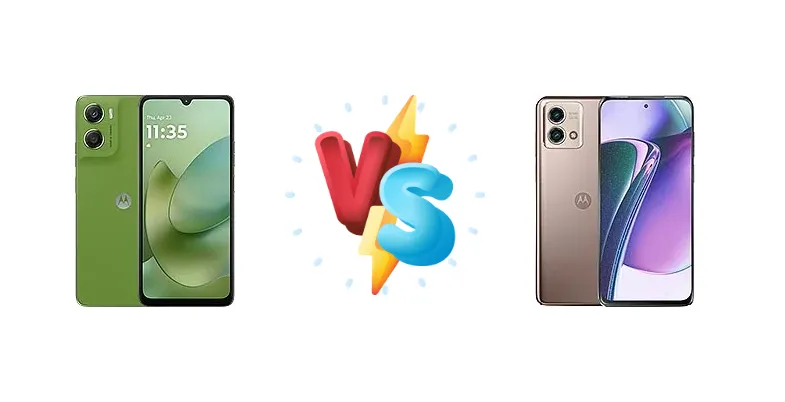
|
🏆 Quick Verdict
For the average user prioritizing long battery life and a lower price point, the Moto G06 is the better choice. However, the Moto G Stylus 5G (2023) justifies its higher cost with a significantly more efficient chipset and 5G capabilities, making it ideal for data-heavy users and future-proofing.
| PHONES | ||
|---|---|---|
| Phone Names | Motorola Moto G06 | Motorola Moto G Stylus 5G (2023) |
| Network | ||
|---|---|---|
| 2G bands | GSM 850 / 900 / 1800 / 1900 | GSM 850 / 900 / 1800 / 1900 |
| 3G bands | HSDPA 850 / 900 / 1900 / 2100 | HSDPA 850 / 900 / 1700(AWS) / 1900 / 2100 |
| 4G bands | 1, 3, 5, 7, 8, 20, 28, 38, 40, 41 - Europe | 1, 2, 3, 4, 5, 7, 8, 12, 13, 14, 17, 18, 19, 20, 25, 26, 29, 30, 38, 39, 40, 41, 48, 66, 71 |
| 5G bands | - | 1, 2, 3, 5, 7, 12, 13, 14, 25, 26, 29, 30, 38, 41, 48, 66, 70, 71, 77, 78 SA/NSA |
| Speed | HSPA, LTE | HSPA, LTE, 5G |
| Technology | GSM / HSPA / LTE | GSM / HSPA / LTE / 5G |
| Launch | ||
|---|---|---|
| Announced | 2025, September 05 | 2023, May 30 |
| Status | Available. Released 2025, September 23 | Available. Released 2023, June 02 |
| Body | ||
|---|---|---|
| Build | Glass front (Gorilla Glass 3), plastic frame, silicone polymer back (eco leather) | Glass front, plastic frame, plastic back |
| Dimensions | 171.4 x 77.5 x 8.3 mm (6.75 x 3.05 x 0.33 in) | 162.8 x 73.8 x 9.2 mm (6.41 x 2.91 x 0.36 in) |
| SIM | Nano-SIM + Nano-SIM | Nano-SIM |
| Weight | 194 g (6.84 oz) | 202 g (7.13 oz) |
| Display | ||
|---|---|---|
| Protection | Corning Gorilla Glass 3, Mohs level 4 | - |
| Resolution | 720 x 1640 pixels (~260 ppi density) | 1080 x 2400 pixels, 20:9 ratio (~399 ppi density) |
| Size | 6.88 inches, 112.4 cm2 (~84.6% screen-to-body ratio) | 6.6 inches, 105.2 cm2 (~87.5% screen-to-body ratio) |
| Type | IPS LCD, 120Hz | IPS LCD, 120Hz |
| Platform | ||
|---|---|---|
| CPU | Octa-core (2x2.0 GHz Cortex-A75 & 6x1.7 GHz Cortex-A55) | Octa-core (4x2.2 GHz Cortex-A78 & 4x1.8 GHz Cortex-A55) |
| Chipset | Mediatek Helio G81 Ultra (12 nm) | Qualcomm SM6450 Snapdragon 6 Gen 1 (4 nm) |
| GPU | Mali-G52 MC2 | Adreno 710 |
| OS | Android 15 | Android 13, planned upgrade to Android 14 |
| Memory | ||
|---|---|---|
| Card slot | microSDXC (dedicated slot) | microSDXC (dedicated slot) |
| Internal | 64GB 4GB RAM, 128GB 4GB RAM, 256GB 4GB RAM, 256GB 8GB RAM | 64GB 4GB RAM, 128GB 4GB RAM, 128GB 6GB RAM, 256GB 6GB RAM |
| Main Camera | ||
|---|---|---|
| Dual | - | 50 MP, f/1.9, (wide), 1.0µm, PDAF 8 MP, f/2.2, (ultrawide), 1/4.0", 1.12µm, AF |
| Features | LED flash, HDR | LED flash, HDR, panorama |
| Single | 50 MP, f/1.8, (wide), PDAF | - |
| Video | 1080p@30fps | 4K@30fps, 1080p@30/60fps |
| Selfie camera | ||
|---|---|---|
| Features | HDR | HDR |
| Single | 8 MP, f/2.1, (wide), 1.12µm | 16 MP, f/2.5, (wide), 1.0µm |
| Video | 1080p@30fps | 1080p@30fps |
| Sound | ||
|---|---|---|
| 35mm jack | Yes | Yes |
| Loudspeaker | Yes, with stereo speakers | Yes, with stereo speakers |
| Comms | ||
|---|---|---|
| Bluetooth | Yes | 5.1, A2DP, LE |
| NFC | Yes (market/region dependent) | Yes |
| Positioning | GPS, GALILEO, GLONASS | GPS (L1+L5), GALILEO |
| Radio | No | FM radio |
| USB | USB Type-C 2.0 | USB Type-C 2.0 |
| WLAN | Wi-Fi 802.11 a/b/g/n/ac, dual-band | Wi-Fi 802.11 a/b/g/n/ac, dual-band |
| Features | ||
|---|---|---|
| Sensors | Fingerprint (side-mounted), accelerometer, proximity | Fingerprint (side-mounted), accelerometer, gyro, proximity, compass, barometer |
| Battery | ||
|---|---|---|
| Charging | 10W wired | 20W wired |
| Type | 5200 mAh | Li-Po 5000 mAh |
| Misc | ||
|---|---|---|
| Colors | Pantone: Laurel Oak, Arabesque, Tapestry, Tendril | Cosmic Black, Rose Champagne |
| Models | XT2535-1, XT2535-2, XT2535-3, XT2535-14 | XT2315-1, XT2315-4 |
| Price | About 130 EUR | $ 93.43 |
| EU LABEL | ||
|---|---|---|
| Battery | 55:21h endurance, 1200 cycles | - |
| Energy | Class A | - |
| Free fall | Class A (270 falls) | - |
| Repairability | Class A | - |
Motorola Moto G06
- Exceptional battery endurance (55:21h)
- High charge cycle count (1200)
- More affordable price point
- Less powerful chipset
- No 5G connectivity
- Slower charging speed
Motorola Moto G Stylus 5G (2023)
- More efficient Snapdragon 6 Gen 1 chipset
- 5G connectivity for faster data speeds
- Faster 20W charging
- Likely shorter battery life compared to G06
- Higher price tag
- Battery endurance data unavailable
Display Comparison
While display specifications are absent from the provided data, the Moto G Stylus 5G (2023) likely benefits from a more modern panel due to its newer release. The G06, positioned as a budget device, likely utilizes a standard LCD. The key difference lies in the chipset's ability to drive a higher refresh rate display, a feature likely exclusive to the Stylus model. The G Stylus 5G’s 4nm chipset will also allow for more efficient display power consumption.
Camera Comparison
Without detailed camera specs, it’s difficult to make a definitive judgment. However, the newer chipset in the Moto G Stylus 5G (2023) likely supports more advanced image signal processing (ISP) capabilities, resulting in better dynamic range and low-light performance. The G06’s Helio G81 Ultra is capable, but the Snapdragon 6 Gen 1 offers a more modern platform for computational photography. We can assume the Stylus model will have a more sophisticated camera system overall.
Performance
The core difference here is the chipset architecture. The Moto G06’s Mediatek Helio G81 Ultra (12nm) uses a combination of Cortex-A75 and A55 cores, offering decent performance for its price bracket. However, the Moto G Stylus 5G (2023) boasts the Qualcomm Snapdragon 6 Gen 1 (4nm) with Cortex-A78 and A55 cores. The A78 cores represent a significant architectural leap, providing substantially improved single-core and multi-core performance. Crucially, the 4nm process node of the Snapdragon 6 Gen 1 translates to significantly better thermal efficiency, reducing throttling during sustained workloads and extending battery life even under heavy use. This benefits gamers and power users.
Battery Life
The Moto G06 boasts an impressive 55:21h endurance and 1200 charge cycles, indicating a focus on long-term battery health and longevity. While the Moto G Stylus 5G (2023) doesn’t have endurance data, its 4nm chipset is significantly more power-efficient. The 20W charging on the Stylus model will also allow for faster top-ups compared to the G06’s 10W charging, potentially offsetting any difference in battery capacity (which isn't specified). The G06 prioritizes sheer runtime, while the Stylus balances runtime with faster charging and overall efficiency.
Buying Guide
Buy the Motorola Moto G06 if you need exceptional battery life and are primarily concerned with everyday tasks like calling, texting, and social media. It’s the perfect phone for users who prioritize longevity over cutting-edge features. Buy the Motorola Moto G Stylus 5G (2023) if you prefer faster performance, 5G connectivity for quicker downloads and streaming, and a more modern processor that will handle future software updates more smoothly.