
Motorola Moto G Power (2024) vs. Moto G05: A Deep Dive into Performance and Battery Life
| Phones Images | |||||
|---|---|---|---|---|---|
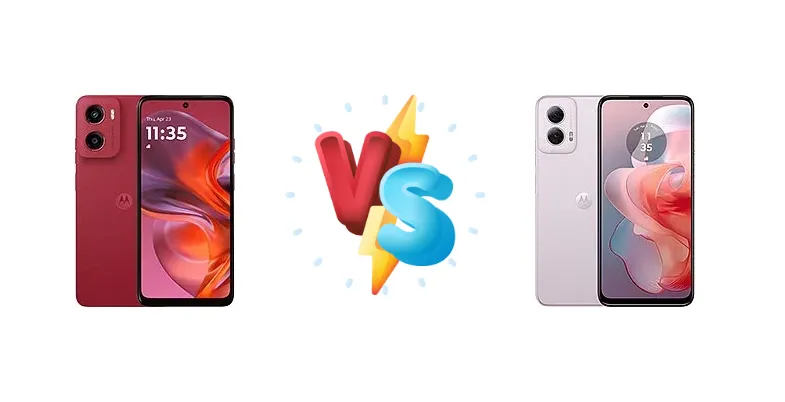
|
🏆 Quick Verdict
For most users, the Motorola Moto G Power (2024) is the superior choice. The Mediatek Dimensity 7020 provides a substantial performance uplift over the Helio G81 in the G05, translating to smoother multitasking and improved gaming. While the G05 offers excellent battery endurance, the G Power’s faster charging and more efficient chipset make it the more practical option.
| PHONES | ||
|---|---|---|
| Phone Names | Motorola Moto G05 | Motorola Moto G Power (2024) |
| Network | ||
|---|---|---|
| 2G bands | GSM 850 / 900 / 1800 / 1900 | GSM 850 / 900 / 1800 / 1900 |
| 3G bands | HSDPA 850 / 900 / 2100 | HSDPA 850 / 900 / 1700(AWS) / 1900 / 2100 |
| 4G bands | 1, 3, 5, 7, 8, 20, 28, 38, 40, 41 | 1, 2, 3, 4, 5, 7, 8, 12, 13, 14, 17, 18, 20, 25, 26, 28, 29, 30, 38, 39, 40, 41, 48, 66, 71 |
| 5G bands | - | 2, 5, 7, 12, 14, 25, 26, 29, 30, 41, 48, 66, 70, 71, 77, 78 SA/NSA |
| Speed | HSPA, LTE | HSPA, LTE, 5G |
| Technology | GSM / HSPA / LTE | GSM / HSPA / LTE / 5G |
| Launch | ||
|---|---|---|
| Announced | 2024, December 17 | 2024, March 12 |
| Status | Available. Released 2025, January 13 | Available. Released 2024, March 22 |
| Body | ||
|---|---|---|
| Build | Glass front (Gorilla Glass 3), plastic frame, silicone polymer back (eco leather) | Glass front, silicone polymer back (eco leather), plastic frame |
| Dimensions | 165.7 x 76 x 8.2 mm (6.52 x 2.99 x 0.32 in) | 167.2 x 76.4 x 8.5 mm (6.58 x 3.01 x 0.33 in) |
| SIM | Nano-SIM + Nano-SIM | Nano-SIM + eSIM |
| Weight | 188.8 g (6.67 oz) | 201 g (7.09 oz) |
| Display | ||
|---|---|---|
| Protection | Corning Gorilla Glass 3, Mohs level 6 | - |
| Resolution | 720 x 1604 pixels, 20:9 ratio (~264 ppi density) | 1080 x 2400 pixels, 20:9 ratio (~393 ppi density) |
| Size | 6.67 inches, 107.2 cm2 (~85.2% screen-to-body ratio) | 6.7 inches, 108.4 cm2 (~84.8% screen-to-body ratio) |
| Type | IPS LCD, 90Hz | IPS LCD, 120Hz |
| Platform | ||
|---|---|---|
| CPU | Octa-core (2x2.0 GHz Cortex-A75 & 6x1.7 GHz Cortex-A55) | Octa-core (2x2.2 GHz Cortex-A78 & 6x2.0 GHz Cortex-A55) |
| Chipset | Mediatek Helio G81 Extreme (12 nm) | Mediatek Dimensity 7020 (6 nm) |
| GPU | Mali-G52 MC2 | IMG BXM-8-256 |
| OS | Android 15 | Android 14 |
| Memory | ||
|---|---|---|
| Card slot | microSDXC (dedicated slot) | microSDXC (dedicated slot) |
| Internal | 64GB 4GB RAM, 128GB 4GB RAM, 128GB 8GB RAM, 256GB 4GB RAM, 256GB 8GB RAM | 128GB 8GB RAM |
| Main Camera | ||
|---|---|---|
| Dual | - | 50 MP, f/1.8, (wide), 0.64µm, PDAF, OIS 8 MP, f/2.2, 118˚ (ultrawide), 1.12µm, AF |
| Features | LED flash, HDR | LED flash, HDR, panorama |
| Single | 50 MP, f/1.8, (wide), PDAF | - |
| Video | 1080p@30fps | 1080p@30fps, gyro-EIS |
| Selfie camera | ||
|---|---|---|
| Features | HDR | HDR |
| Single | 8 MP, f/2.1, (wide), 1.12µm | 16 MP, f/2.4, (wide), 1.0µm |
| Video | 1080p@30fps | 1080p@30fps |
| Sound | ||
|---|---|---|
| 35mm jack | Yes | Yes |
| Loudspeaker | Yes, with stereo speakers | Yes, with stereo speakers |
| Comms | ||
|---|---|---|
| Bluetooth | 5.0, A2DP, LE | 5.3, A2DP, LE |
| NFC | Yes (market/region dependent) | Yes |
| Positioning | GPS, GALILEO, GLONASS | GPS, GLONASS, GALILEO |
| Radio | No | No |
| USB | USB Type-C 2.0 | USB Type-C 2.0 |
| WLAN | Wi-Fi 802.11 a/b/g/n/ac, dual-band | Wi-Fi 802.11 a/b/g/n/ac, dual-band |
| Features | ||
|---|---|---|
| Sensors | Fingerprint (side-mounted), accelerometer, proximity | Fingerprint (side-mounted), accelerometer, gyro, proximity, compass, barometer |
| Battery | ||
|---|---|---|
| Charging | 18W wired | 30W wired 15W wireless |
| Type | 5200 mAh | 5000 mAh |
| Misc | ||
|---|---|---|
| Colors | Plum Red, Fresh Lavender, Forest Green, Misty Blue | Midnight Blue, Pale Lilac |
| Models | XT2523-2, XT2523-3, XT2523-11 | XT2415-3, XT2415V |
| Price | € 82.38 / $ 108.00 / £ 77.00 / ₹ 7,316 | $ 75.00 / C$ 209.97 / £ 149.00 |
| EU LABEL | ||
|---|---|---|
| Battery | 60:22h endurance, 1000 cycles | - |
| Energy | Class A | - |
| Free fall | Class B (180 falls) | - |
| Repairability | Class B | - |
Motorola Moto G05
- Exceptional battery life (60:22h endurance)
- Proven reliability and software support
- More affordable price point (likely)
- Less powerful processor for demanding tasks
- Slower charging speeds (18W wired)
- Potentially outdated display technology
Motorola Moto G Power (2024)
- Significantly faster processor (Dimensity 7020)
- Faster charging (30W wired, 15W wireless)
- Improved power efficiency
- Likely better camera image processing
- Potentially slightly shorter battery life than G05
- Higher price point
Display Comparison
While display specifications are absent, the Moto G Power (2024) likely benefits from a more modern panel due to its newer release. The G05’s display, while adequate, is likely to exhibit lower peak brightness and potentially less accurate color reproduction. The chipset difference suggests the G Power could support higher refresh rates, though this isn't confirmed. Bezels are likely comparable given both phones target the budget segment.
Camera Comparison
Without detailed camera specs, it's difficult to make a definitive judgment. However, the newer chipset in the G Power (2024) likely enables more advanced image processing algorithms, potentially resulting in better dynamic range and noise reduction. The G05’s camera system is likely more basic, relying heavily on software optimization. The presence of a 2MP macro lens on either device is unlikely to significantly impact image quality; these sensors are often included for marketing purposes rather than practical benefit.
Performance
The core difference lies in the chipsets. The Moto G Power (2024)'s Mediatek Dimensity 7020 (6nm) represents a significant leap over the Moto G05’s Mediatek Helio G81 Extreme (12nm). The Dimensity 7020 utilizes more efficient Cortex-A78 cores (2x2.2 GHz) compared to the G05’s Cortex-A75 cores (2x2.0 GHz). The 6nm process node further enhances efficiency, reducing heat and improving sustained performance. This translates to noticeably faster app loading times, smoother multitasking, and a more enjoyable gaming experience on the G Power. The G05’s Helio G81, while capable, will struggle with graphically intensive games and demanding applications.
Battery Life
The Moto G05 boasts impressive battery endurance at 60:22h, a testament to its efficient chipset and likely optimized software. However, the Moto G Power (2024) mitigates any potential battery life reduction with its significantly faster 30W wired charging and the addition of 15W wireless charging. The Dimensity 7020’s 6nm process also contributes to improved power efficiency. While the G05’s 18W charging is adequate, the G Power’s faster charging speeds drastically reduce downtime, making it more convenient for users who frequently need to top up their battery.
Buying Guide
Buy the Motorola Moto G05 if you prioritize maximum battery life above all else and primarily use your phone for basic tasks like calls, texts, and light social media. You'll benefit from its impressive 60:22h endurance. Buy the Motorola Moto G Power (2024) if you demand a more responsive user experience, enjoy mobile gaming, or frequently use demanding applications. The Dimensity 7020 and faster charging capabilities justify the potential trade-off in ultimate battery longevity.