
Motorola Moto G Stylus (2023) vs. Moto G Power 5G: A Head-to-Head Comparison
| Phones Images | |||||
|---|---|---|---|---|---|
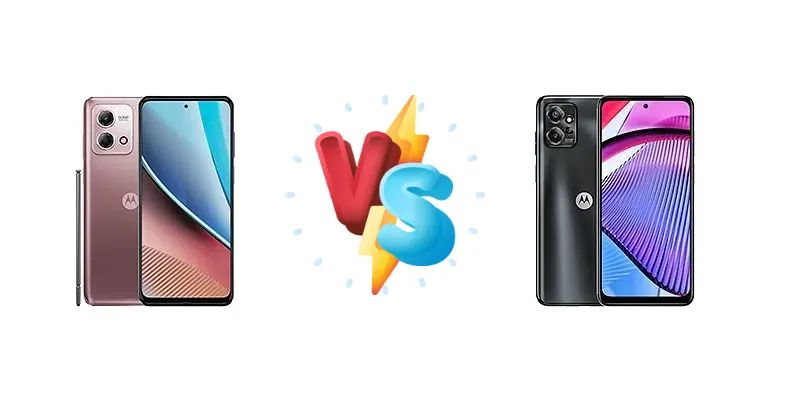
|
🏆 Quick Verdict
The Moto G Power 5G edges out the Stylus (2023) thanks to its significantly faster Dimensity 930 chipset and 5G connectivity. However, the Stylus's integrated stylus and potentially better camera (depending on software optimization) make it a strong contender for note-takers and creative users.
| PHONES | ||
|---|---|---|
| Phone Names | Motorola Moto G Stylus (2023) | Motorola Moto G Power 5G |
| Network | ||
|---|---|---|
| 2G bands | GSM 850 / 900 / 1800 / 1900 | GSM 850 / 900 / 1800 / 1900 |
| 3G bands | HSDPA 850 / 900 / 1700(AWS) / 1900 / 2100 | HSDPA 850 / 900 / 1700(AWS) / 1900 / 2100 |
| 4G bands | 1, 2, 3, 4, 5, 7, 8, 12, 13, 14, 17, 25, 26, 29, 30, 38, 41, 66, 71 | 1, 2, 3, 4, 5, 7, 8, 12, 13, 14, 17, 20, 25, 26, 29, 30, 38, 39, 40, 41, 48, 66, 71 |
| 5G bands | - | 2, 5, 7, 12, 25, 30, 41, 66, 71, 77, 78 SA/NSA/Sub6 |
| Speed | HSPA, LTE | HSPA, LTE, 5G |
| Technology | GSM / HSPA / LTE | GSM / HSPA / LTE / 5G |
| Launch | ||
|---|---|---|
| Announced | 2023, May 02 | 2023, April 06 |
| Status | Available. Released 2023, May 05 | Available. Released 2023, April 13 |
| Body | ||
|---|---|---|
| Build | Glass front, plastic frame, plastic back | Glass front, plastic back, plastic frame |
| Dimensions | 162.9 x 74.1 x 9.2 mm (6.41 x 2.92 x 0.36 in) | 163.1 x 74.8 x 8.5 mm (6.42 x 2.94 x 0.33 in) |
| SIM | Nano-SIM | Nano-SIM |
| Weight | 195 g (6.88 oz) | 185 g (6.53 oz) |
| Stylus Water-repellent design | Water-repellent design | |
| Display | ||
|---|---|---|
| Resolution | 720 x 1600 pixels, 20:9 ratio (~270 ppi density) | 1080 x 2400 pixels, 20:9 ratio (~405 ppi density) |
| Size | 6.5 inches, 102.0 cm2 (~84.5% screen-to-body ratio) | 6.5 inches, 102.0 cm2 (~83.6% screen-to-body ratio) |
| Type | IPS LCD, 90Hz | IPS LCD, 120Hz |
| Platform | ||
|---|---|---|
| CPU | Octa-core (2x2.0 GHz Cortex-A75 & 6x1.8 GHz Cortex-A55) | Octa-core (2x2.2 GHz Cortex-A78 & 6x2.0 GHz Cortex-A55) |
| Chipset | Mediatek MT6769 Helio G85 (12 nm) | Mediatek Dimensity 930 (6 nm) |
| GPU | Mali-G52 MC2 | IMG BXM-8-256 |
| OS | Android 13, planned upgrade to Android 14 | Android 13, upgradable to Android 14 |
| Memory | ||
|---|---|---|
| Card slot | microSDXC (dedicated slot) | microSDXC (dedicated slot) |
| Internal | 64GB 4GB RAM | 128GB 4GB RAM, 256GB 6GB RAM |
| Main Camera | ||
|---|---|---|
| Dual | 50 MP, f/1.8, (wide), 0.64µm, PDAF 2 MP (macro) | - |
| Features | LED flash, HDR, panorama | LED flash, HDR, panorama |
| Triple | 50 MP, f/1.8, (wide), 0.64µm, PDAF 2 MP, f/2.4, (macro) | 50 MP, f/1.8, (wide), 0.64µm, PDAF 2 MP (macro) Auxiliary lens |
| Video | 1080p@30/60fps | 1080p@30fps, gyro-EIS |
| Selfie camera | ||
|---|---|---|
| Features | HDR | - |
| Single | 8 MP, f/2.0, (wide), 1/4.0", 1.12µm | 16 MP, f/2.4, (wide), 1.0µm |
| Video | 1080p@30fps | 1080p@30fps |
| Sound | ||
|---|---|---|
| 3.5mm jack | Yes | Yes |
| 35mm jack | Yes | Yes |
| Loudspeaker | Yes, with stereo speakers | Yes, with stereo speakers |
| Comms | ||
|---|---|---|
| Bluetooth | 5.0, A2DP, LE | 5.3, A2DP, LE |
| NFC | No | No |
| Positioning | GPS, GLONASS, GALILEO | GPS, GLONASS, GALILEO |
| Radio | No | No |
| USB | USB Type-C 2.0 | USB Type-C 2.0 |
| WLAN | Wi-Fi 802.11 a/b/g/n/ac, dual-band, Wi-Fi Direct | Wi-Fi 802.11 a/b/g/n/ac, dual-band |
| Features | ||
|---|---|---|
| Sensors | Fingerprint (side-mounted), accelerometer, gyro, proximity, compass, barometer | Fingerprint (side-mounted), accelerometer, gyro, proximity, compass |
| Battery | ||
|---|---|---|
| Charging | 15W wired | 15W wired |
| Type | Li-Po 5000 mAh | Li-Po 5000 mAh |
| Misc | ||
|---|---|---|
| Colors | Blue, Rose Gold | Dark Blue |
| Price | About 200 EUR | $ 97.90 / £ 199.00 |
Motorola Moto G Stylus (2023)
- Integrated stylus for note-taking and drawing
- Large display
- Decent battery life
- Expandable storage (likely via microSD card)
- Less powerful chipset
- Slower performance
- 15W charging is slow
- Stylus can feel bulky
Motorola Moto G Power 5G
- Faster Dimensity 930 chipset
- 5G connectivity
- Excellent battery life
- Smoother performance
- No stylus
- Potentially less refined camera software
- 15W charging is slow
Display Comparison
Both phones feature large displays, typically around 6.6 inches. The Moto G Power 5G likely has a slightly more modern panel with potentially better color accuracy and brightness due to the newer chipset. However, both are expected to be LCD panels with a standard refresh rate (likely 60Hz or 120Hz depending on the specific variant). Resolution is likely FHD+ on both.
Camera Comparison
Camera performance is often software-dependent. Both phones likely feature a multi-lens setup (typically a main sensor, ultrawide, and macro). While the Stylus (2023) might have slightly better hardware on paper, the Power 5G's newer chipset could enable better image processing and overall image quality. Expect decent but not exceptional camera performance from both.
Performance
This is where the Moto G Power 5G shines. The Dimensity 930 chipset is considerably more powerful than the Helio G85. Expect noticeably faster app loading times, smoother multitasking, and better gaming performance on the Power 5G. The Stylus (2023) is adequate for everyday tasks but will struggle with demanding applications.
Battery Life
Both phones are known for their excellent battery life, typically exceeding a full day of moderate use. The Moto G Power 5G often boasts a larger battery capacity (typically 5000mAh or higher), potentially giving it a slight edge in longevity.
Buying Guide
The Moto G Stylus (2023) is ideal for students, note-takers, and anyone who values a built-in stylus for writing, drawing, or navigating. The Moto G Power 5G is a better choice for users prioritizing performance, 5G connectivity, and a smoother overall experience, especially for multitasking and gaming.