
Moto G Power vs. Moto G Stylus (2023): Which Motorola is Right for You?
| Phones Images | |||||
|---|---|---|---|---|---|
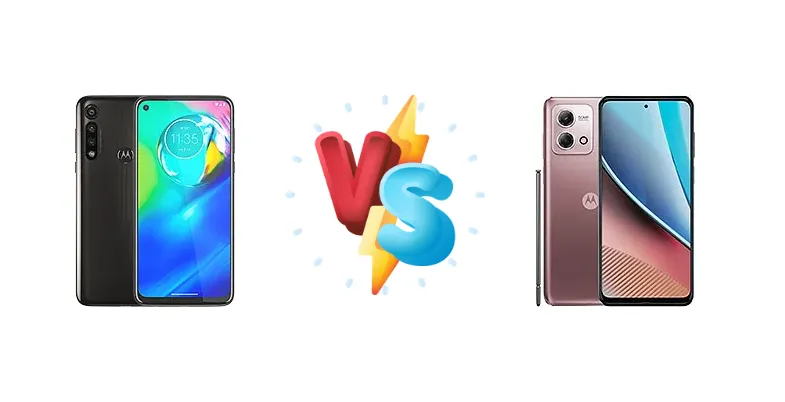
|
🏆 Quick Verdict
For the average user prioritizing longevity, the Moto G Power remains a strong contender due to its focus on maximizing battery runtime. However, the Moto G Stylus (2023) offers a noticeable performance uplift with its Helio G85 chipset and the added utility of the stylus, making it the better all-around choice for those willing to trade a bit of battery life.
| PHONES | ||
|---|---|---|
| Phone Names | Motorola Moto G Power | Motorola Moto G Stylus (2023) |
| Network | ||
|---|---|---|
| 2G bands | GSM 850 / 900 / 1800 / 1900 | GSM 850 / 900 / 1800 / 1900 |
| 3G bands | HSDPA 850 / 900 / 1700(AWS) / 1900 / 2100 | HSDPA 850 / 900 / 1700(AWS) / 1900 / 2100 |
| 4G bands | 1, 2, 3, 4, 5, 7, 8, 12, 13, 14, 17, 18, 19, 20, 25, 26, 29, 30, 38, 39, 40, 41, 66, 71 | 1, 2, 3, 4, 5, 7, 8, 12, 13, 14, 17, 25, 26, 29, 30, 38, 41, 66, 71 |
| Speed | HSPA 42.2/5.76 Mbps, LTE (2CA) Cat13 600/100 Mbps | HSPA, LTE |
| Technology | GSM / CDMA / HSPA / EVDO / LTE | GSM / HSPA / LTE |
| CDMA2000 1xEV-DO | - | |
| Launch | ||
|---|---|---|
| Announced | 2020, February 07. Released 2020, April 17 | 2023, May 02 |
| Status | Discontinued | Available. Released 2023, May 05 |
| Body | ||
|---|---|---|
| Build | Glass front, plastic back, aluminum frame (6000 series) | Glass front, plastic frame, plastic back |
| Dimensions | 159.9 x 75.8 x 9.6 mm (6.30 x 2.98 x 0.38 in) | 162.9 x 74.1 x 9.2 mm (6.41 x 2.92 x 0.36 in) |
| SIM | Nano-SIM | Nano-SIM |
| Weight | 199 g (7.02 oz) | 195 g (6.88 oz) |
| Water-repellent coating | Stylus Water-repellent design | |
| Display | ||
|---|---|---|
| Resolution | 1080 x 2300 pixels (~399 ppi density) | 720 x 1600 pixels, 20:9 ratio (~270 ppi density) |
| Size | 6.4 inches, 100.7 cm2 (~83.0% screen-to-body ratio) | 6.5 inches, 102.0 cm2 (~84.5% screen-to-body ratio) |
| Type | IPS LCD | IPS LCD, 90Hz |
| Platform | ||
|---|---|---|
| CPU | Octa-core (4x2.0 GHz Kryo 260 Gold & 4x1.8 GHz Kryo 260 Silver) | Octa-core (2x2.0 GHz Cortex-A75 & 6x1.8 GHz Cortex-A55) |
| Chipset | Qualcomm SDM665 Snapdragon 665 (11 nm) | Mediatek MT6769 Helio G85 (12 nm) |
| GPU | Adreno 610 | Mali-G52 MC2 |
| OS | Android 10 | Android 13, planned upgrade to Android 14 |
| Memory | ||
|---|---|---|
| Card slot | microSDXC (dedicated slot) | microSDXC (dedicated slot) |
| Internal | 64GB 4GB RAM | 64GB 4GB RAM |
| eMMC 5.1 | - | |
| Main Camera | ||
|---|---|---|
| Dual | - | 50 MP, f/1.8, (wide), 0.64µm, PDAF 2 MP (macro) |
| Features | LED flash, HDR, panorama | LED flash, HDR, panorama |
| Triple | 16 MP, f/1.7, (wide), 1/2.8", 1.12µm, PDAF 8 MP, f/2.2, 118˚ (ultrawide), 1/4.0", 1.12µm 2 MP (macro) | 50 MP, f/1.8, (wide), 0.64µm, PDAF 2 MP, f/2.4, (macro) |
| Video | 4K@30fps, 1080p@30/60fps, 1080p@30fps (gyro-EIS) | 1080p@30/60fps |
| Selfie camera | ||
|---|---|---|
| Features | HDR | HDR |
| Single | 16 MP, f/2.0, (wide), 1/3.06", 1.0µm | 8 MP, f/2.0, (wide), 1/4.0", 1.12µm |
| Video | 1080p@30/120fps | 1080p@30fps |
| Sound | ||
|---|---|---|
| 3.5mm jack | Yes | Yes |
| 35mm jack | Yes | Yes |
| Loudspeaker | Yes, with stereo speakers | Yes, with stereo speakers |
| Comms | ||
|---|---|---|
| Bluetooth | 5.0, A2DP, LE | 5.0, A2DP, LE |
| NFC | No | No |
| Positioning | GPS, GLONASS, BDS, GALILEO | GPS, GLONASS, GALILEO |
| Radio | FM radio | No |
| USB | USB Type-C 2.0 | USB Type-C 2.0 |
| WLAN | Wi-Fi 802.11 a/b/g/n/ac, dual-band, Wi-Fi Direct | Wi-Fi 802.11 a/b/g/n/ac, dual-band, Wi-Fi Direct |
| Features | ||
|---|---|---|
| Sensors | Fingerprint (rear-mounted), accelerometer, gyro, proximity | Fingerprint (side-mounted), accelerometer, gyro, proximity, compass, barometer |
| Battery | ||
|---|---|---|
| Charging | 10W wired | 15W wired |
| Type | Li-Po 5000 mAh | Li-Po 5000 mAh |
| Misc | ||
|---|---|---|
| Colors | Smoke Black | Blue, Rose Gold |
| Models | XT2041DL | - |
| Price | - | About 200 EUR |
Motorola Moto G Power
- Exceptional battery life due to efficient chipset and likely larger battery capacity.
- More affordable price point, making it accessible to budget-conscious consumers.
- Proven reliability and software support from Motorola.
- Older chipset limits performance in demanding applications.
- Slower 10W charging takes longer to replenish the battery.
Motorola Moto G Stylus (2023)
- More powerful Helio G85 chipset delivers a smoother user experience.
- Integrated stylus adds versatility for note-taking and creative tasks.
- Faster 15W charging reduces downtime.
- Battery life may be shorter compared to the Moto G Power.
- Potentially higher price tag than the Moto G Power.
Display Comparison
Both devices likely feature LCD panels, typical for this price segment. While specific display specs (resolution, brightness) aren't provided, the focus here is on the chipset's ability to drive the display efficiently. The G Stylus's Helio G85, built on a 12nm process, should offer slightly better graphics performance, potentially resulting in smoother animations and a more responsive feel when scrolling. However, without knowing the panel characteristics, it's difficult to assess color accuracy or peak brightness differences.
Camera Comparison
Without detailed camera specifications, a direct comparison is limited. However, the G Stylus (2023) likely benefits from the improved image signal processor (ISP) within the Helio G85 chipset, potentially leading to better image processing and noise reduction. The presence of a stylus also suggests a focus on creative applications, potentially influencing software features related to image editing and annotation. It's reasonable to assume both phones will include a standard set of camera modes, but the G Stylus may offer slightly faster processing and improved image quality in challenging lighting conditions.
Performance
The core difference lies in the chipsets. The Moto G Power utilizes the Qualcomm Snapdragon 665 (11nm), while the G Stylus (2023) features the MediaTek Helio G85 (12nm). While both are octa-core CPUs, the Helio G85 employs a more modern CPU architecture – 2x Cortex-A75 cores alongside 6x Cortex-A55 cores versus the Snapdragon 665’s 4x Kryo 260 Gold and 4x Kryo 260 Silver. This translates to a performance advantage for the G Stylus, particularly in tasks demanding sustained processing power. The 12nm process of the Helio G85 is slightly less efficient than the 11nm Snapdragon 665, but the architectural improvements likely offset this, offering a better overall experience.
Battery Life
The Moto G Power is renowned for its large battery capacity (specific mAh not provided), and its 10W charging is a compromise for maximizing runtime. The Moto G Stylus (2023) features a 15W charging capability, offering a faster recharge time, but likely with a smaller battery capacity. The Snapdragon 665’s 11nm process contributes to better power efficiency, potentially offsetting the G Stylus’s faster charging. Users prioritizing absolute longevity will lean towards the G Power, while those valuing quicker top-ups will prefer the G Stylus.
Buying Guide
Buy the Motorola Moto G Power if you absolutely need the longest possible battery life and primarily use your phone for basic tasks like calls, texts, and light social media. You'll benefit from fewer charging cycles and extended uptime. Buy the Motorola Moto G Stylus (2023) if you value a more responsive user experience, enjoy taking notes or sketching with a stylus, and appreciate a slightly more modern processor for smoother multitasking and gaming.