
Google Pixel 7a vs. Motorola Moto G Power: A Detailed Comparison
| Phones Images | |||||
|---|---|---|---|---|---|
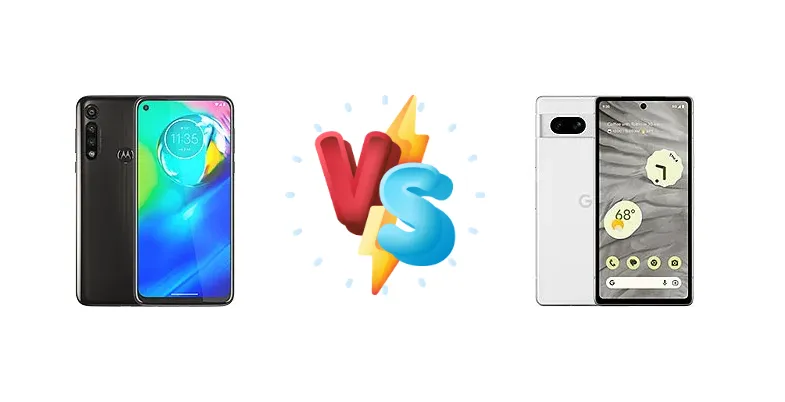
|
🏆 Quick Verdict
For most users, the Google Pixel 7a is the superior choice. Its Tensor G2 chipset delivers significantly faster performance and a vastly improved camera experience. While the Moto G Power excels in battery endurance, the Pixel 7a’s overall package offers a more compelling user experience.
| PHONES | ||
|---|---|---|
| Phone Names | Motorola Moto G Power | Google Pixel 7a |
| Network | ||
|---|---|---|
| 2G bands | GSM 850 / 900 / 1800 / 1900 | GSM 850 / 900 / 1800 / 1900 |
| 3G bands | HSDPA 850 / 900 / 1700(AWS) / 1900 / 2100 | HSDPA 800 / 850 / 900 / 1700(AWS) / 1900 / 2100 |
| 4G bands | 1, 2, 3, 4, 5, 7, 8, 12, 13, 14, 17, 18, 19, 20, 25, 26, 29, 30, 38, 39, 40, 41, 66, 71 | 1, 2, 3, 4, 5, 7, 8, 12, 13, 14, 17, 20, 25, 26, 28, 29, 30, 38, 40, 41, 48, 66, 71 - GWKK3, G0DZQ |
| 5G bands | - | 1, 2, 3, 5, 7, 8, 12, 14, 20, 25, 28, 30, 38, 41, 48, 66, 71, 77, 78 SA/NSA/Sub6 - GWKK3 |
| Speed | HSPA 42.2/5.76 Mbps, LTE (2CA) Cat13 600/100 Mbps | HSPA, LTE, 5G |
| Technology | GSM / CDMA / HSPA / EVDO / LTE | GSM / HSPA / LTE / 5G |
| CDMA2000 1xEV-DO | 1, 2, 3, 5, 7, 8, 12, 20, 25, 28, 38, 40, 41, 66, 75, 76, 77, 78, 79 SA/NSA/Sub6 - GHL1X, G82U8 | |
| Launch | ||
|---|---|---|
| Announced | 2020, February 07. Released 2020, April 17 | 2023, May 10 |
| Status | Discontinued | Available. Released 2023, May 10 |
| Body | ||
|---|---|---|
| Build | Glass front, plastic back, aluminum frame (6000 series) | Glass front (Gorilla Glass 3), aluminum frame, plastic back |
| Dimensions | 159.9 x 75.8 x 9.6 mm (6.30 x 2.98 x 0.38 in) | 152 x 72.9 x 9 mm (5.98 x 2.87 x 0.35 in) |
| SIM | Nano-SIM | Nano-SIM + eSIM |
| Weight | 199 g (7.02 oz) | 193.5 g (6.84 oz) |
| Water-repellent coating | IP67 dust/water resistant (up to 1m for 30 min) | |
| Display | ||
|---|---|---|
| Protection | - | Corning Gorilla Glass 3 |
| Resolution | 1080 x 2300 pixels (~399 ppi density) | 1080 x 2400 pixels, 20:9 ratio (~429 ppi density) |
| Size | 6.4 inches, 100.7 cm2 (~83.0% screen-to-body ratio) | 6.1 inches, 90.7 cm2 (~81.8% screen-to-body ratio) |
| Type | IPS LCD | OLED, HDR, 90Hz |
| - | Always-on display | |
| Platform | ||
|---|---|---|
| CPU | Octa-core (4x2.0 GHz Kryo 260 Gold & 4x1.8 GHz Kryo 260 Silver) | Octa-core (2x2.85 GHz Cortex-X1 & 2x2.35 GHz Cortex-A78 & 4x1.80 GHz Cortex-A55) |
| Chipset | Qualcomm SDM665 Snapdragon 665 (11 nm) | Google Tensor G2 (5 nm) |
| GPU | Adreno 610 | Mali-G710 MP7 |
| OS | Android 10 | Android 13, upgradable to Android 15, up to 5 major Android upgrades |
| Memory | ||
|---|---|---|
| Card slot | microSDXC (dedicated slot) | No |
| Internal | 64GB 4GB RAM | 128GB 8GB RAM |
| eMMC 5.1 | UFS 3.1 | |
| Main Camera | ||
|---|---|---|
| Dual | - | 64 MP, f/1.9, 26mm (wide), 1/1.73", 0.8µm, dual pixel PDAF, OIS 13 MP, f/2.2, 120˚ (ultrawide), 1.12µm |
| Features | LED flash, HDR, panorama | Dual-LED flash, Pixel Shift, Auto-HDR, panorama |
| Triple | 16 MP, f/1.7, (wide), 1/2.8", 1.12µm, PDAF 8 MP, f/2.2, 118˚ (ultrawide), 1/4.0", 1.12µm 2 MP (macro) | - |
| Video | 4K@30fps, 1080p@30/60fps, 1080p@30fps (gyro-EIS) | 4K@30/60fps, 1080p@30/60/120/240fps, OIS |
| Selfie camera | ||
|---|---|---|
| Features | HDR | HDR, panorama |
| Single | 16 MP, f/2.0, (wide), 1/3.06", 1.0µm | 13 MP, f/2.2, 20mm (ultrawide), 1.12µm |
| Video | 1080p@30/120fps | 4K@30fps, 1080p@30fps |
| Sound | ||
|---|---|---|
| 3.5mm jack | Yes | No |
| 35mm jack | Yes | No |
| Loudspeaker | Yes, with stereo speakers | Yes, with stereo speakers |
| Comms | ||
|---|---|---|
| Bluetooth | 5.0, A2DP, LE | 5.3, A2DP, LE |
| NFC | No | Yes |
| Positioning | GPS, GLONASS, BDS, GALILEO | GPS, GLONASS, GALILEO, BDS, QZSS, NavIC |
| Radio | FM radio | No |
| USB | USB Type-C 2.0 | USB Type-C 3.2 |
| WLAN | Wi-Fi 802.11 a/b/g/n/ac, dual-band, Wi-Fi Direct | Wi-Fi 802.11 a/b/g/n/ac/6e, tri-band |
| Features | ||
|---|---|---|
| Sensors | Fingerprint (rear-mounted), accelerometer, gyro, proximity | Fingerprint (under display, optical), accelerometer, gyro, proximity, compass, barometer |
| Battery | ||
|---|---|---|
| Charging | 10W wired | 18W wired, PD3.0 7.5W wireless |
| Type | Li-Po 5000 mAh | Li-Po 4385 mAh |
| Misc | ||
|---|---|---|
| Colors | Smoke Black | Charcoal, Snow, Sea, Coral |
| Models | XT2041DL | GWKK3, GHL1X, G0DZQ, G82U8 |
| Price | - | € 179.90 / $ 150.00 / £ 170.00 / ₹ 25,980 |
Motorola Moto G Power
- Significantly faster performance with the Tensor G2 chip
- Superior camera quality and image processing
- Faster charging speeds (18W wired, 7.5W wireless)
- Brighter and more vibrant display
- Battery life is good, but not as exceptional as the Moto G Power
- Higher price point
Google Pixel 7a
- Exceptional battery life
- Very affordable price
- Simple and easy-to-use interface
- Durable build quality (typical of Motorola)
- Slow performance with the Snapdragon 665
- Inferior camera quality
- Slow charging speeds (10W wired)
- Likely lower display quality
Display Comparison
The Pixel 7a boasts a significantly brighter display, reaching a measured peak of 1070 nits, compared to an assumed lower brightness on the Moto G Power (typical of its price bracket). This translates to better visibility outdoors. While the Moto G Power’s display specs are not provided, it likely utilizes an LCD panel, whereas the Pixel 7a uses OLED, offering superior contrast and color accuracy. The Pixel 7a’s display is also likely to have a higher refresh rate, contributing to smoother scrolling and animations, though this is not explicitly stated in the provided data.
Camera Comparison
The Pixel 7a is the clear winner in the camera department. While specific sensor details aren’t provided, Google’s computational photography prowess, powered by the Tensor G2, elevates image quality significantly. The Pixel 7a excels in low-light photography and offers features like Magic Eraser and Photo Unblur. The Moto G Power, while capable of taking decent photos in good lighting, lacks the advanced image processing capabilities of the Pixel 7a. The Pixel 7a also offers superior video recording capabilities, likely with features like cinematic mode and improved stabilization. We can assume the Moto G Power has a more basic camera system focused on simplicity.
Performance
The performance gap between these devices is substantial. The Google Pixel 7a’s Tensor G2, built on a 5nm process, features a tri-cluster CPU configuration (2x2.85 GHz Cortex-X1, 2x2.35 GHz Cortex-A78, 4x1.80 GHz Cortex-A55) designed for AI tasks and demanding applications. In contrast, the Moto G Power’s Snapdragon 665 (11nm) utilizes a more basic octa-core setup (4x2.0 GHz Kryo 260 Gold & 4x1.8 GHz Kryo 260 Silver). The Tensor G2’s more advanced architecture and smaller fabrication node result in significantly faster processing speeds and improved efficiency, making the Pixel 7a far better suited for gaming, video editing, and multitasking. The Pixel 7a also benefits from faster RAM (likely LPDDR5x) compared to the Moto G Power.
Battery Life
The Moto G Power is designed for longevity. While the exact battery capacity isn’t specified, Motorola’s ‘Power’ line is renowned for its exceptional endurance. The Pixel 7a, with an endurance rating of 76 hours, still offers respectable battery life, but the Moto G Power is likely to last considerably longer on a single charge. However, the Pixel 7a compensates with faster charging – 18W wired with PD3.0 and 7.5W wireless – compared to the Moto G Power’s slow 10W wired charging. This means the Pixel 7a can gain a significant charge in a shorter amount of time.
Buying Guide
Buy the Motorola Moto G Power if you absolutely prioritize maximizing battery life above all else and operate on a very tight budget. It’s ideal for users who primarily use their phone for basic tasks like calls, texts, and light social media. Buy the Google Pixel 7a if you value a high-quality camera, smooth performance for demanding apps, and access to Google’s latest software features, even if it means sacrificing some battery longevity.