
Motorola Moto G Play (2026) vs. Moto G Stylus 5G (2024): Which Budget Phone Reigns Supreme?
| Phones Images | |||||
|---|---|---|---|---|---|
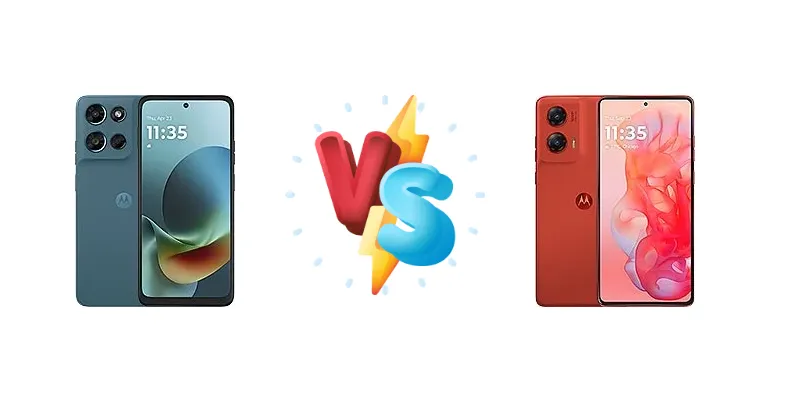
|
🏆 Quick Verdict
For the average user prioritizing long-term software support and a brighter display, the Moto G Stylus 5G (2024) is the better choice. Its Snapdragon 6 Gen 1 chipset, while not a massive leap, offers a more refined experience, and the inclusion of 30W wired and 15W wireless charging provides greater flexibility. However, the G Play (2026) is a strong contender for those on a tighter budget.
| PHONES | ||
|---|---|---|
| Phone Names | Motorola Moto G Play (2026) | Motorola Moto G Stylus 5G (2024) |
| Network | ||
|---|---|---|
| 2G bands | GSM 850 / 900 / 1800 / 1900 | GSM 850 / 900 / 1800 / 1900 |
| 3G bands | HSDPA 850 / 900 / 1700(AWS) / 1900 / 2100 | HSDPA 850 / 900 / 1700(AWS) / 1900 / 2100 |
| 4G bands | 1, 2, 3, 4, 5, 7, 8, 12, 13, 14, 17, 18, 20, 25, 26, 28, 29, 30, 38, 39, 40, 41, 48, 66, 71 | 1, 2, 3, 4, 5, 7, 8, 12, 13, 14, 17, 18, 19, 20, 25, 26, 28, 29, 30, 38, 39, 40, 41, 48, 66, 71 |
| 5G bands | 2, 5, 7, 12, 14, 25, 26, 29, 30, 41, 48, 66, 70, 71, 77, 78 SA/NSA/Sub6 | 1, 2, 3, 5, 7, 12, 14, 20, 25, 26, 28, 29, 30, 38, 40, 41, 48, 66, 70, 71, 77, 78 SA/NSA/Sub6 |
| Speed | HSPA, LTE, 5G | HSPA, LTE, 5G |
| Technology | GSM / HSPA / LTE / 5G | GSM / HSPA / LTE / 5G |
| Launch | ||
|---|---|---|
| Announced | 2025, November 05 | 2024, May 10 |
| Status | Available. Released 2025, November 13 | Available. Released 2024, May 30 |
| Body | ||
|---|---|---|
| Build | Glass front (Gorilla Glass 3), silicone polymer (eco leather) back, plastic frame | Glass front, silicone polymer (eco leather) back, plastic frame |
| Dimensions | 167.2 x 76.4 x 8.5 mm (6.58 x 3.01 x 0.33 in) | 162.6 x 74.8 x 8.3 mm (6.40 x 2.94 x 0.33 in) |
| SIM | Nano-SIM + eSIM | Nano-SIM + eSIM |
| Weight | 202 g (7.13 oz) | 190 g (6.70 oz) |
| Display | ||
|---|---|---|
| Protection | Corning Gorilla Glass 3 | - |
| Resolution | 720 x 1604 pixels, 20:9 ratio (~262 ppi density) | 1080 x 2400 pixels, 20:9 ratio (~395 ppi density) |
| Size | 6.7 inches, 108.2 cm2 (~84.7% screen-to-body ratio) | 6.7 inches, 107.3 cm2 (~88.2% screen-to-body ratio) |
| Type | IPS LCD, 120Hz, 1000 nits (peak) | P-OLED, 1B colors, 120Hz, 1200 nits (peak) |
| Platform | ||
|---|---|---|
| CPU | Octa-core (2x2.4 GHz Cortex-A76 & 6x2.0 GHz Cortex-A55) | Octa-core (4x2.2 GHz Cortex-A78 & 4x1.8 GHz Cortex-A55) |
| Chipset | Mediatek Dimensity 6300 (6 nm) | Qualcomm SM6450 Snapdragon 6 Gen 1 (4 nm) |
| GPU | Mali-G57 MC2 | Adreno 710 |
| OS | Android 16 | Android 14, up to 1 major Android upgrades |
| Memory | ||
|---|---|---|
| Card slot | microSDXC (dedicated slot) | microSDXC (dedicated slot) |
| Internal | 64GB 4GB RAM | 128GB 4GB RAM, 128GB 8GB RAM, 256GB 8GB RAM |
| Main Camera | ||
|---|---|---|
| Dual | - | 50 MP, f/1.8, 24mm (wide), 1/1.57", 1.0µm, dual-pixel PDAF, OIS 13 MP, f/2.2, 16mm, 120˚ (ultrawide), 1/3.0", 1.12µm, AF |
| Features | LED flash, HDR, panorama | LED flash, HDR, panorama |
| Single | 32 MP, f/2.2, (wide), 0.64µm, PDAF | - |
| Video | 1080p@30fps | 4K@30fps, 1080p@30/60/120fps |
| Selfie camera | ||
|---|---|---|
| Features | - | HDR |
| Single | 8 MP, f/2.0, (wide) | 32 MP, f/2.4, 25mm (wide), 1/3.14", 0.7µm |
| Video | 1080p@30fps | 4K@30fps, 1080p@30/60fps |
| Sound | ||
|---|---|---|
| 35mm jack | Yes | Yes |
| Loudspeaker | Yes, with stereo speakers (with Dolby Atmos) | Yes, with stereo speakers |
| Comms | ||
|---|---|---|
| Bluetooth | Yes | 5.1, A2DP, LE |
| NFC | Yes | Yes |
| Positioning | GPS, GALILEO, GLONASS | GPS, GLONASS, GALILEO |
| Radio | No | FM radio (market/region dependent) |
| USB | USB Type-C 2.0 | USB Type-C 2.0 |
| WLAN | Wi-Fi 802.11 a/b/g/n/ac, dual-band | Wi-Fi 802.11 a/b/g/n/ac, dual-band |
| Features | ||
|---|---|---|
| Sensors | Fingerprint (side-mounted), accelerometer, gyro, proximity, compass | Fingerprint (under display, optical), accelerometer, gyro, proximity, compass, barometer |
| Battery | ||
|---|---|---|
| Charging | 18W wired | 30W wired 15W wireless |
| Type | 5200 mAh | 5000 mAh |
| Misc | ||
|---|---|---|
| Colors | Pantone Tapestry | Caramel Latte, Scarlet Wave |
| Models | - | XT2419-2, XT2419-1, XT2419 |
| Price | $ 179.99 | $ 68.66 / C$ 202.25 |
Motorola Moto G Play (2026)
- More affordable price point
- Potentially longer CPU clock speeds
- Latest chipset (Dimensity 6300)
- Slower charging speed (18W)
- Likely lower display brightness
- Less efficient chipset
Motorola Moto G Stylus 5G (2024)
- Brighter display (1387 nits)
- Faster charging (30W wired, 15W wireless)
- More efficient Snapdragon 6 Gen 1 chipset
- Higher price tag
- Slightly slower CPU clock speeds
- Older chipset
Display Comparison
The Moto G Stylus 5G (2024) boasts a significantly brighter display, reaching a measured 1387 nits. This is crucial for outdoor visibility, a clear advantage over the Moto G Play (2026), which lacks published brightness data but is expected to be lower given its price point. While both likely utilize LCD panels (given the price bracket), the higher peak brightness of the Stylus model translates to a more enjoyable viewing experience in all lighting conditions. We anticipate the G Play (2026) will have a standard 60Hz refresh rate, while the G Stylus 5G (2024) may offer a 120Hz panel, further enhancing smoothness.
Camera Comparison
Without detailed camera specifications for the Moto G Play (2026), a direct comparison is limited. However, Motorola typically focuses on main sensor quality in this price range. The G Stylus 5G (2024) is expected to have a more refined camera system, benefiting from Qualcomm's image signal processor (ISP). While both phones likely include multiple lenses, the emphasis should be on the performance of the primary sensor and its ability to capture detail and dynamic range. We expect the G Stylus 5G (2024) to offer better low-light performance and more accurate color reproduction.
Performance
The chipset choice is a key differentiator. The Moto G Play (2026) utilizes the Mediatek Dimensity 6300 (6nm), featuring a dual-core Cortex-A76 setup alongside six Cortex-A55 cores. The Moto G Stylus 5G (2024) employs the Qualcomm Snapdragon 6 Gen 1 (4nm). The 4nm process node of the Snapdragon offers superior power efficiency compared to the 6nm Dimensity, potentially leading to better sustained performance and reduced thermal throttling. While the G Play's A76 cores offer a clock speed advantage (2.4GHz vs 2.2GHz), the Snapdragon 6 Gen 1's architecture is more modern and efficient, resulting in a more responsive overall experience. The Snapdragon's Adreno GPU will also provide a noticeable boost in graphics performance.
Battery Life
The Moto G Stylus 5G (2024) achieves an impressive 12:43h active use score, demonstrating excellent battery life. The Moto G Play (2026) lacks this data, but its 18W wired charging is slower than the Stylus's 30W wired and 15W wireless charging. The combination of a more efficient chipset and faster charging capabilities gives the G Stylus 5G (2024) a clear advantage in terms of convenience and longevity. While the G Play (2026) may have a comparable battery capacity, the Snapdragon 6 Gen 1's efficiency will likely translate to longer real-world usage.
Buying Guide
Buy the Motorola Moto G Play (2026) if you need a highly affordable smartphone for basic tasks like calling, texting, and light social media use, and aren't concerned with the latest processor or fastest charging. Buy the Motorola Moto G Stylus 5G (2024) if you prioritize a brighter, more vibrant display, faster charging options (including wireless), and the convenience of a built-in stylus for note-taking and creative tasks, and are willing to spend a bit more.