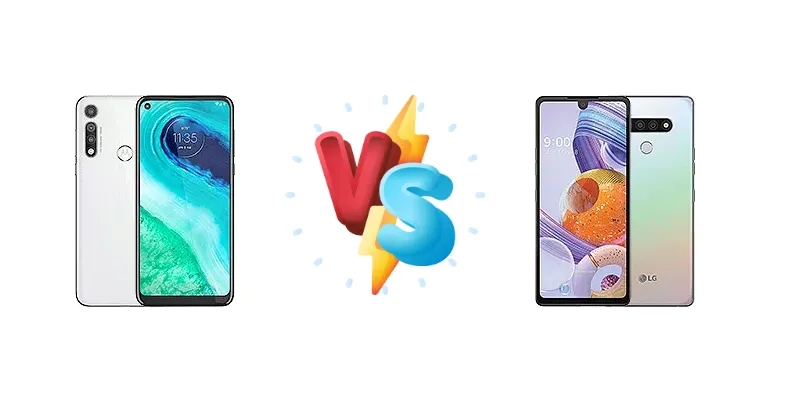
The Motorola Moto G Fast and LG Stylo 6 represent two compelling options in the ultra-budget smartphone space. Both aim to deliver essential smartphone functionality without breaking the bank, but they achieve this with significantly different hardware approaches. This comparison dissects those differences, focusing on real-world impact for the average user.
🏆 Quick Verdict
For most users, the Motorola Moto G Fast emerges as the better choice. Its Qualcomm Snapdragon 665 chipset, built on an 11nm process, provides a noticeable performance advantage over the LG Stylo 6’s MediaTek Helio P35, translating to smoother multitasking and app loading. While both offer similar battery capacities, the G Fast’s more efficient processor contributes to better overall stamina.
| Network |
|---|
| 2G bands | GSM 850 / 900 / 1800 / 1900 | GSM 850 / 900 / 1800 / 1900 |
| 3G bands | HSDPA 850 / 900 / 1700(AWS) / 1900 / 2100 | HSDPA 850 / 900 / 1900 / 2100 |
| 4G bands | 1, 2, 3, 4, 5, 7, 8, 12, 13, 14, 17, 25, 26, 29, 30, 38, 41, 66, 71 | LTE |
| Speed | HSPA, LTE | HSPA 42.2/5.76 Mbps, LTE (2CA) Cat6 300/50 Mbps |
| Technology | GSM / CDMA / HSPA / EVDO / LTE | GSM / HSPA / LTE |
| | CDMA2000 1xEV-DO | - |
| Launch |
|---|
| Announced | 2020, June 05. Released 2020, June 12 | 2020, May 20. Released 2020, May 20 |
| Status | Discontinued | Discontinued |
| Body |
|---|
| Dimensions | 161.9 x 75.7 x 9.1 mm (6.37 x 2.98 x 0.36 in) | 171.2 x 77.7 x 8.6 mm (6.74 x 3.06 x 0.34 in) |
| SIM | Nano-SIM + Nano-SIM | Nano-SIM |
| Weight | 189.4 g (6.67 oz) | 219 g (7.72 oz) |
| | Water-repellent coating | Stylus |
| Display |
|---|
| Resolution | 720 x 1560 pixels, 19.5:9 ratio (~268 ppi density) | 1080 x 2460 pixels (~395 ppi density) |
| Size | 6.4 inches, 100.5 cm2 (~82.0% screen-to-body ratio) | 6.8 inches, 109.8 cm2 (~82.5% screen-to-body ratio) |
| Type | IPS LCD | IPS LCD |
| Platform |
|---|
| CPU | Octa-core (4x2.0 GHz Kryo 260 Gold & 4x1.8 GHz Kryo 260 Silver) | Octa-core (4x2.3 GHz Cortex-A53 & 4x1.8 GHz Cortex-A53) |
| Chipset | Qualcomm SM6125 Snapdragon 665 (11 nm) | Mediatek MT6765 Helio P35 (12 nm) |
| GPU | Adreno 610 | PowerVR GE8320 |
| OS | Android 10 | Android 10 |
| Memory |
|---|
| Card slot | microSDXC (uses shared SIM slot) | microSDXC (dedicated slot) |
| Internal | 32GB 3GB RAM | 64GB 3GB RAM |
| | eMMC 5.1 | eMMC 5.1 |
| Main Camera |
|---|
| Features | LED flash, HDR, panorama | LED flash, panorama, HDR |
| Triple | 16 MP, f/1.7, (wide), 1/2.8", 1.12µm, PDAF
8 MP, f/2.2, 118˚ (ultrawide), 1/4.0", 1.12µm
2 MP (macro) | 13 MP, (wide), PDAF
5 MP, 120˚, (ultrawide)
Auxiliary lens |
| Video | 4K@30fps, 1080p@30/60fps, gyro-EIS | 1080p@30fps |
| Selfie camera |
|---|
| Features | HDR | - |
| Single | 8 MP, f/2.0, (wide), 1.12µm | 13 MP, 1/3.1", 1.12µm |
| Video | 1080p@30fps, gyro-EIS | 1080p@30fps |
| Sound |
|---|
| 3.5mm jack | Yes | Yes |
| 35mm jack | Yes | Yes |
| Loudspeaker | Yes | Yes |
| Comms |
|---|
| Bluetooth | 5.0, A2DP, LE | 5.0, A2DP, LE |
| NFC | No | No |
| Positioning | GPS, GLONASS, GALILEO | GPS |
| Radio | - | No |
| USB | USB Type-C 2.0 | USB Type-C 2.0 |
| WLAN | Wi-Fi 802.11 a/b/g/n/ac, dual-band, Wi-Fi Direct | Wi-Fi 802.11 b/g/n, Wi-Fi Direct |
| Features |
|---|
| Sensors | Fingerprint (rear-mounted), accelerometer, gyro, proximity | Fingerprint (rear-mounted), accelerometer, proximity |
| Battery |
|---|
| Charging | 10W wired | - |
| Type | Li-Po 4000 mAh | Li-Po 4000 mAh |
| Misc |
|---|
| Colors | Pearl White | White |
| Models | XT2045-3 | LMQ730TM, LM-Q730TM |
| Price | About 90 EUR | About 200 EUR |
Motorola Moto G Fast
- More powerful Snapdragon 665 processor
- More efficient 11nm process for better battery life
- Potentially smoother multitasking experience
- Lacks a stylus
- Charging is limited to 10W
LG Stylo 6
- Integrated stylus for note-taking and drawing
- Larger display size for media consumption
- Potentially lower price point
- Less powerful MediaTek Helio P35 processor
- Less efficient 12nm process
- Slower overall performance
Display Comparison
Neither device boasts a particularly impressive display. Specifications are unavailable for panel type or brightness, but given the price point, both likely utilize IPS LCDs. The LG Stylo 6’s larger screen size (6.8 inches vs. 6.5 inches on the Moto G Fast) may appeal to media consumers, but this comes at the cost of potentially lower pixel density. Without specific brightness data, it’s difficult to assess outdoor visibility, but both will likely struggle in direct sunlight. Color accuracy is expected to be standard for this segment, prioritizing saturation over fidelity.
Camera Comparison
Camera performance is likely to be similar, with both phones targeting basic photography needs. Detailed sensor information is missing, but both will likely feature a primary sensor paired with depth or macro lenses of limited utility. The aperture and sensor size will be the key differentiators, but without that data, it’s difficult to declare a clear winner. Image processing will likely lean towards boosting saturation and contrast to create visually appealing images, rather than prioritizing natural color reproduction. Expect limited low-light performance from both devices.
Performance
The core difference lies in the chipsets. The Motorola Moto G Fast’s Qualcomm Snapdragon 665, fabricated on an 11nm process, offers a clear architectural advantage over the LG Stylo 6’s MediaTek Helio P35 (12nm). The Snapdragon 665’s Kryo 260 cores – a mix of 4x2.0 GHz Gold and 4x1.8 GHz Silver – provide a more balanced and efficient performance profile than the Helio P35’s homogenous 4x2.3 GHz Cortex-A53 and 4x1.8 GHz Cortex-A53 configuration. While the Helio P35’s higher clock speed on its primary cores might suggest faster single-core performance, the Snapdragon 665’s superior architecture and process node deliver better sustained performance and multitasking capabilities. This translates to quicker app launches and smoother scrolling for the Moto G Fast.
Battery Life
Both the Moto G Fast and LG Stylo 6 offer substantial battery capacities, though specific mAh figures are unavailable. However, the Snapdragon 665’s 11nm process is more power-efficient than the Helio P35’s 12nm process. This efficiency, combined with the Moto G Fast’s 10W wired charging, suggests it will likely offer slightly longer battery life and potentially faster charging times, despite the similar wattage. Real-world usage will vary, but the Moto G Fast’s processor advantage gives it an edge in endurance.
Buying Guide
Buy the Motorola Moto G Fast if you prioritize responsiveness and a smoother user experience, even if it means sacrificing stylus functionality. It’s ideal for users who frequently switch between apps, browse the web, or enjoy casual gaming. Buy the LG Stylo 6 if the integrated stylus is a must-have feature for note-taking, sketching, or precise navigation, and you’re willing to accept slightly slower performance in exchange.
Frequently Asked Questions
❓ Will the Moto G Fast handle demanding games like PUBG Mobile?
While the Snapdragon 665 can run PUBG Mobile, expect to play at lower graphics settings and frame rates to maintain a stable experience. The Helio P35 in the Stylo 6 will struggle even more with demanding titles, requiring even lower settings and potentially experiencing significant frame drops.
❓ How important is the stylus on the LG Stylo 6 for everyday use?
The stylus is the Stylo 6’s primary differentiator. It’s ideal for users who frequently take handwritten notes, sketch, or prefer precise navigation. If you don’t anticipate using a stylus regularly, the Moto G Fast’s performance benefits are more compelling.
❓ Does the Moto G Fast support fast charging beyond 10W?
No, the Moto G Fast is limited to 10W wired charging. While not particularly fast by modern standards, it’s sufficient for overnight charging. The LG Stylo 6’s charging speed is also likely around 10W, so there’s no significant advantage for either device in this regard.
❓ Which phone is better for streaming videos?
The LG Stylo 6’s larger 6.8-inch display provides a more immersive viewing experience for videos. However, the Moto G Fast’s smoother performance may result in fewer stutters during streaming, especially with higher-resolution content.