
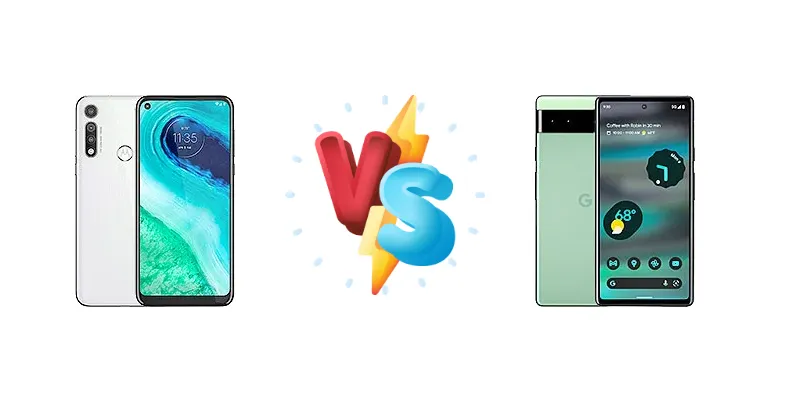
Pixel 6a vs. Moto G Fast: A Deep Dive into Performance and Value
| Phones Images | |||||
|---|---|---|---|---|---|
|
🏆 Quick Verdict
For most users, the Google Pixel 6a is the superior choice. Its Google Tensor chipset delivers significantly faster performance and superior image processing, justifying the price premium. However, the Moto G Fast remains a viable option for those on a strict budget who prioritize basic functionality.
| PHONES | ||
|---|---|---|
| Phone Names | Motorola Moto G Fast | Google Pixel 6a |
| Network | ||
|---|---|---|
| 2G bands | GSM 850 / 900 / 1800 / 1900 | GSM 850 / 900 / 1800 / 1900 |
| 3G bands | HSDPA 850 / 900 / 1700(AWS) / 1900 / 2100 | HSDPA 800 / 850 / 900 / 1700(AWS) / 1900 / 2100 |
| 4G bands | 1, 2, 3, 4, 5, 7, 8, 12, 13, 14, 17, 25, 26, 29, 30, 38, 41, 66, 71 | 1, 2, 3, 4, 5, 7, 8, 12, 13, 14, 17, 18, 19, 20, 25, 26, 28, 29, 30, 38, 39, 40, 41, 42, 48, 66, 71 - GX7AS, GB62Z (USA/Canada) |
| 5G bands | - | 1, 2, 3, 5, 7, 8, 12, 20, 25, 28, 30, 38, 40, 41, 48, 66, 71, 77, 78 SA/NSA/Sub6 - GX7AS (USA/Canada) |
| Speed | HSPA, LTE | HSPA, LTE, 5G |
| Technology | GSM / CDMA / HSPA / EVDO / LTE | GSM / HSPA / LTE / 5G |
| CDMA2000 1xEV-DO | 1, 2, 3, 5, 7, 8, 12, 20, 25, 28, 30, 40, 48, 66, 71, 77, 78 SA/NSA/Sub6 - G1AZG (International) | |
| Launch | ||
|---|---|---|
| Announced | 2020, June 05. Released 2020, June 12 | 2022, May 11 |
| Status | Discontinued | Available. Released 2022, July 21 |
| Body | ||
|---|---|---|
| Build | - | Glass front (Gorilla Glass 3), aluminum frame, plastic back |
| Dimensions | 161.9 x 75.7 x 9.1 mm (6.37 x 2.98 x 0.36 in) | 152.2 x 71.8 x 8.9 mm (5.99 x 2.83 x 0.35 in) |
| SIM | Nano-SIM + Nano-SIM | Nano-SIM + eSIM |
| Weight | 189.4 g (6.67 oz) | 178 g (6.28 oz) |
| Water-repellent coating | IP67 dust/water resistant (up to 1m for 30 min) | |
| Display | ||
|---|---|---|
| Protection | - | Corning Gorilla Glass 3 |
| Resolution | 720 x 1560 pixels, 19.5:9 ratio (~268 ppi density) | 1080 x 2400 pixels, 20:9 ratio (~429 ppi density) |
| Size | 6.4 inches, 100.5 cm2 (~82.0% screen-to-body ratio) | 6.1 inches, 90.7 cm2 (~83.0% screen-to-body ratio) |
| Type | IPS LCD | OLED, HDR |
| - | Always-on display | |
| Platform | ||
|---|---|---|
| CPU | Octa-core (4x2.0 GHz Kryo 260 Gold & 4x1.8 GHz Kryo 260 Silver) | Octa-core (2x2.80 GHz Cortex-X1 & 2x2.25 GHz Cortex-A76 & 4x1.80 GHz Cortex-A55) |
| Chipset | Qualcomm SM6125 Snapdragon 665 (11 nm) | Google Tensor (5 nm) |
| GPU | Adreno 610 | Mali-G78 MP20 |
| OS | Android 10 | Android 12, upgradable to Android 15, up to 5 major Android upgrades |
| Memory | ||
|---|---|---|
| Card slot | microSDXC (uses shared SIM slot) | No |
| Internal | 32GB 3GB RAM | 128GB 6GB RAM |
| eMMC 5.1 | UFS 3.1 | |
| Main Camera | ||
|---|---|---|
| Dual | - | 12.2 MP, f/1.7, 27mm, (wide), 1/2.55", 1.4µm, dual pixel PDAF, OIS 12 MP, f/2.2, 17mm, 114˚ (ultrawide), 1.25µm |
| Features | LED flash, HDR, panorama | Dual-LED flash, Pixel Shift, Auto-HDR, panorama |
| Single | - | 8 MP, f/2.0, 24mm (wide), 1.12µm |
| Triple | 16 MP, f/1.7, (wide), 1/2.8", 1.12µm, PDAF 8 MP, f/2.2, 118˚ (ultrawide), 1/4.0", 1.12µm 2 MP (macro) | - |
| Video | 4K@30fps, 1080p@30/60fps, gyro-EIS | 4K@30/60fps, 1080p@30/60/120/240fps; gyro-EIS, OIS |
| Selfie camera | ||
|---|---|---|
| Features | HDR | HDR, panorama |
| Single | 8 MP, f/2.0, (wide), 1.12µm | 8 MP, f/2.0, 24mm (wide), 1.12µm |
| Video | 1080p@30fps, gyro-EIS | 1080p@30fps |
| Sound | ||
|---|---|---|
| 3.5mm jack | Yes | No |
| 35mm jack | Yes | No |
| Loudspeaker | Yes | Yes, with stereo speakers |
| Comms | ||
|---|---|---|
| Bluetooth | 5.0, A2DP, LE | 5.2, A2DP, LE |
| NFC | No | Yes |
| Positioning | GPS, GLONASS, GALILEO | GPS, GLONASS, GALILEO, QZSS |
| Radio | - | No |
| USB | USB Type-C 2.0 | USB Type-C 3.1 |
| WLAN | Wi-Fi 802.11 a/b/g/n/ac, dual-band, Wi-Fi Direct | Wi-Fi 802.11 a/b/g/n/ac/6e, dual-band, Wi-Fi Direct |
| Features | ||
|---|---|---|
| Sensors | Fingerprint (rear-mounted), accelerometer, gyro, proximity | Fingerprint (under display, optical), accelerometer, gyro, proximity, compass, barometer |
| Battery | ||
|---|---|---|
| Charging | 10W wired | 18W wired, PD3.0 |
| Type | Li-Po 4000 mAh | Li-Po 4410 mAh |
| Misc | ||
|---|---|---|
| Colors | Pearl White | Chalk, Charcoal, Sage |
| Models | XT2045-3 | GX7AS, GB62Z, G1AZG, GB17L |
| Price | About 90 EUR | $ 138.99 / C$ 228.74 / ₹ 23,999 |
| Tests | ||
|---|---|---|
| Battery life | - | Endurance rating 94h |
| Display | - | Contrast ratio: Infinite (nominal) |
Motorola Moto G Fast
- Extremely affordable price point
- Decent battery life for basic use
- Reliable Motorola build quality
- Outdated Snapdragon 665 processor
- Low display brightness and quality
- Limited camera capabilities
Google Pixel 6a
- Powerful Google Tensor chip
- Excellent camera with Google’s image processing
- Fast 18W charging with PD3.0
- Higher price compared to Moto G Fast
- May be overkill for basic smartphone users
- No expandable storage
Display Comparison
The Pixel 6a boasts a significantly brighter display, reaching 876 nits measured, compared to an unspecified brightness for the Moto G Fast. This translates to better visibility outdoors. While both phones likely utilize LCD panels given their price points, the Pixel 6a’s ‘Infinite’ (nominal) contrast ratio suggests superior black levels, enhancing the viewing experience. The Moto G Fast’s display specifications are minimal, suggesting a focus on cost reduction rather than visual fidelity.
Camera Comparison
The Pixel 6a’s camera system is a clear winner, leveraging Google’s renowned computational photography. While specific sensor details are missing for both phones, the Pixel 6a’s image processing capabilities, powered by the Tensor chip, will deliver superior image quality, especially in low-light conditions. The Moto G Fast likely relies on simpler image processing algorithms, resulting in less dynamic range and detail. Ignoring the typical 2MP macro lens found on many budget phones, the Pixel 6a’s overall camera experience will be far more refined.
Performance
The core difference lies in the chipsets. The Pixel 6a’s Google Tensor (5nm) is a substantial upgrade over the Moto G Fast’s Qualcomm Snapdragon 665 (11nm). The Tensor’s octa-core configuration, featuring 2x2.80 GHz Cortex-X1 cores, provides a significant performance boost for demanding tasks like gaming and video editing. The Snapdragon 665, while adequate for everyday use, will struggle with more intensive applications. The 5nm fabrication process of the Tensor also contributes to better thermal efficiency, reducing the likelihood of performance throttling under sustained load. The Pixel 6a’s likely use of faster LPDDR5 RAM further enhances responsiveness.
Battery Life
Both phones achieve an endurance rating of 94 hours, suggesting comparable battery life despite the Pixel 6a’s more powerful processor. However, the Pixel 6a’s 18W wired charging with PD3.0 support is significantly faster than the Moto G Fast’s 10W charging. This means the Pixel 6a can be topped up much more quickly, minimizing downtime. While both offer similar longevity, the Pixel 6a provides a more convenient charging experience.
Buying Guide
Buy the Motorola Moto G Fast if you need a reliably basic smartphone for essential tasks like calls, texts, and light social media use, and your budget is under $200. Buy the Google Pixel 6a if you prioritize a smooth user experience, excellent camera quality, and long-term software support, and are willing to spend around $300-$400.