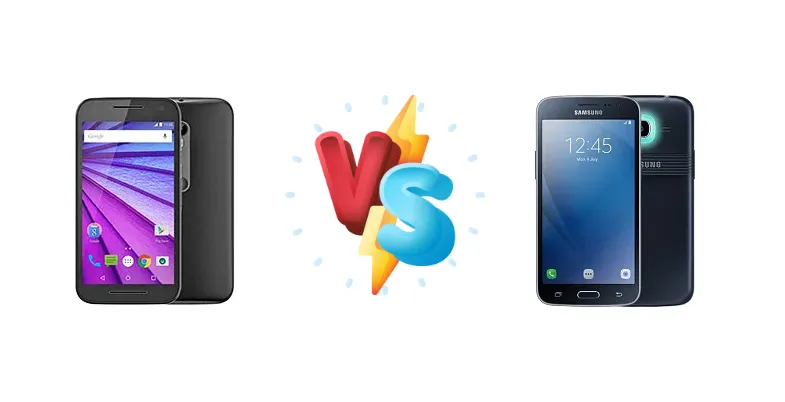
The Motorola Moto G (3rd Gen) and Samsung Galaxy J2 (2016) were popular budget contenders. Both offered a compelling entry point into the Android ecosystem, but which one truly delivered the better experience? This comprehensive comparison dives deep into their specs, performance, and features to help you decide.
🏆 Quick Verdict
The Moto G 3rd Gen generally edges out the Galaxy J2 (2016) thanks to its superior chipset and overall performance. While the J2 offers Samsung's brand recognition and potentially slightly better software support, the Moto G provides a smoother, faster experience for most users.
| Network |
|---|
| 2G bands | GSM 850 / 900 / 1800 / 1900 - SIM 1 & SIM 2 | GSM 850 / 900 / 1800 / 1900 - SIM 1 & SIM 2 (dual-SIM model only) |
| 3G bands | HSDPA 850 / 900 / 2100 - XT1550 | HSDPA 850 / 900 / 1900 / 2100 |
| 4G bands | 1, 3, 7, 8, 28, 40 - XT1550 | 1, 3, 5, 8, 20, 40 - India |
| Speed | HSPA 42.2/5.76 Mbps, LTE Cat4 150/50 Mbps | HSPA 42.2/5.76 Mbps, LTE Cat4 150/50 Mbps |
| Technology | GSM / HSPA / LTE | GSM / HSPA / LTE |
| | 4, 7, 28 - XT1543, XT1544 | - |
| Launch |
|---|
| Announced | 2015, July. Released 2015, July | 2016, July. Released 2016, July |
| Status | Discontinued | Discontinued |
| Body |
|---|
| Build | - | Glass front, plastic back, plastic frame |
| Dimensions | 142.1 x 72.4 x 11.6 mm (5.59 x 2.85 x 0.46 in) | 142.4 x 71.1 x 8 mm (5.61 x 2.80 x 0.31 in) |
| SIM | Dual SIM (Micro-SIM, dual stand-by) | Dual SIM (Micro-SIM, dual stand-by) |
| Weight | 155 g (5.47 oz) | 138 g (4.87 oz) |
| | IPX7 water resistant up to 1 meter and 30 minutes | - |
| Display |
|---|
| Protection | Corning Gorilla Glass 3 | - |
| Resolution | 720 x 1280 pixels, 16:9 ratio (~294 ppi density) | 720 x 1280 pixels, 16:9 ratio (~294 ppi density) |
| Size | 5.0 inches, 68.9 cm2 (~67.0% screen-to-body ratio) | 5.0 inches, 68.9 cm2 (~68.1% screen-to-body ratio) |
| Type | IPS LCD | Super AMOLED |
| Platform |
|---|
| CPU | Quad-core 1.4 GHz Cortex-A53 | Quad-core 1.5 GHz Cortex-A7 |
| Chipset | Qualcomm MSM8916 Snapdragon 410 (28 nm) | Spreadtrum SC8830 |
| GPU | Adreno 306 | Mali-400MP2 |
| OS | Android 5.1.1 (Lollipop) | Android 6.0.1 (Marshmallow) |
| Memory |
|---|
| Card slot | microSDHC (dedicated slot) | microSDXC (dedicated slot) |
| Internal | 8GB 1GB RAM, 16GB 2GB RAM | 8GB 1.5GB RAM |
| | eMMC 4.5 | - |
| Main Camera |
|---|
| Features | Dual-LED dual-tone flash, panorama | LED flash, HDR, panorama |
| Single | 13 MP, f/2.0, AF | 8 MP, f/2.2, AF |
| Video | 1080p@30fps, HDR | 720p@30fps |
| Selfie camera |
|---|
| Features | HDR | - |
| Single | 5 MP, f/2.2 | 5 MP, f/2.2 |
| Sound |
|---|
| 3.5mm jack | Yes | Yes |
| 35mm jack | Yes | Yes |
| Loudspeaker | Yes | Yes |
| Comms |
|---|
| Bluetooth | 4.0, A2DP, LE, aptX | 4.1, A2DP, LE |
| NFC | No | No |
| Positioning | GPS, GLONASS, BDS | GPS, GLONASS |
| Radio | FM radio | FM radio, RDS |
| USB | microUSB 2.0, OTG | microUSB 2.0 |
| WLAN | Wi-Fi 802.11 b/g/n, hotspot | Wi-Fi 802.11 b/g/n, Wi-Fi Direct |
| Features |
|---|
| Sensors | Ambient light sensor, accelerometer (2), proximity sensor | Accelerometer, proximity |
| Battery |
|---|
| Music play | - | Up to 54 h |
| Talk time | - | Up to 14 h (3G) |
| Type | Li-Ion 2470 mAh, non-removable | Li-Ion 2600 mAh, removable |
| Misc |
|---|
| Colors | Black, White | Silver, Black, Gold |
| Models | XT1550, XT1543, XT1544 | SM-J210F, SM-J210G, SM-J210H, SM-J210GU |
| Price | About 170 EUR | About 120 EUR |
| SAR EU | 0.91 W/kg (head) 1.07 W/kg (body) | 0.59 W/kg (head) 1.24 W/kg (body) |
| Tests |
|---|
| Performance | - |
Basemark OS II 2.0: 406Basemark X: 1419 |
Motorola Moto G Dual SIM (3rd gen)
- Better Performance
- Cleaner Android Experience
- Potentially better camera
- Good Value
- Plastic Build
- Basic Camera Features
- Screen could be brighter
Samsung Galaxy J2 (2016)
- Samsung Brand Recognition
- Potentially better software support (though often bloated)
- Slightly larger battery (capacity)
- Weaker Performance
- Less Efficient Chipset
- Lower Camera Quality
- Samsung's UI can be intrusive
Display Comparison
The Moto G 3rd Gen typically features a 5.0-inch 720p display, offering decent clarity. The Galaxy J2 (2016) also has a 5.0-inch 720p display. Both are adequate for the price point, but neither excels in color accuracy or brightness. Viewing angles are acceptable on both.
Camera Comparison
The Moto G 3rd Gen usually has an 8MP or 13MP rear camera (depending on the variant) and a 2MP front camera. The Galaxy J2 (2016) typically features a 5MP rear camera and a 2MP front camera. Image quality is generally acceptable on both, but the Moto G often captures slightly more detail and better dynamic range, especially in good lighting conditions. Low-light performance is weak on both.
Performance
Here's where the Moto G 3rd Gen pulls ahead. Its Qualcomm Snapdragon 410 chipset, while not a powerhouse, is generally more efficient and offers better performance than the Spreadtrum SC8830 in the Galaxy J2. The Cortex-A53 cores in the Moto G also tend to perform better than the Cortex-A7 cores in the J2. Expect smoother multitasking and app loading on the Moto G.
Battery Life
The Galaxy J2 (2016) often boasts a slightly larger battery capacity (2600mAh) compared to the Moto G 3rd Gen (2800mAh). However, the Moto G's more efficient chipset often results in comparable or even slightly better battery life in real-world usage.
Buying Guide
The Motorola Moto G 3rd Gen is ideal for users prioritizing performance and a cleaner Android experience. It's a good choice for basic tasks, light gaming, and everyday use. The Samsung Galaxy J2 (2016) might appeal to those heavily invested in the Samsung ecosystem or seeking a slightly more polished (though potentially bloated) software experience, and who value Samsung's brand.
Frequently Asked Questions
❓ Which phone is better for gaming?
The Motorola Moto G 3rd Gen is the better choice for gaming due to its more powerful chipset.
❓ Does the Samsung Galaxy J2 (2016) receive regular software updates?
Samsung typically provides updates for their devices, but the J2 (2016) may have limited updates compared to newer models.