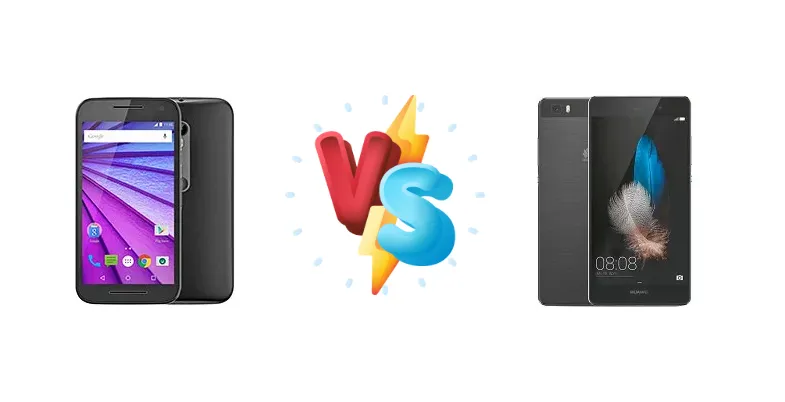
The Motorola Moto G3 and Huawei P8 Lite were popular budget contenders, offering a compelling mix of features and affordability. But which one truly reigned supreme? We're diving deep into a head-to-head comparison to help you decide which phone is the better choice for your needs.
🏆 Quick Verdict
The Moto G3 takes the crown thanks to its significantly longer battery life and excellent sunlight display performance. While the P8 Lite boasts an octa-core processor, the G3's endurance and screen visibility make it the more practical choice for everyday use, especially for those prioritizing longevity.
| Network |
|---|
| 2G bands | GSM 850 / 900 / 1800 / 1900 | GSM 850 / 900 / 1800 / 1900 - SIM 1 & SIM 2 |
| 3G bands | HSDPA 900 / 2100 - XT1541 | HSDPA 900 / 1900 / 2100 |
| 4G bands | 1, 3, 7, 8, 20 - XT1541 | 3, 7, 8, 20 |
| Speed | HSPA 42.2/5.76 Mbps, LTE Cat4 150/50 Mbps | HSPA 42.2/5.76 Mbps, LTE Cat4 150/50 Mbps |
| Technology | GSM / CDMA / HSPA / LTE | GSM / HSPA / LTE |
| | 2, 4, 5, 12, 17, 25, 26, 41 - XT1548 | - |
| Launch |
|---|
| Announced | 2015, July. Released 2015, July | 2015, April. Released 2015, May |
| Status | Discontinued | Discontinued |
| Body |
|---|
| Build | Glass front (Gorilla Glass 3), plastic back, plastic frame | Glass front (Gorilla Glass 3), plastic back, plastic frame |
| Dimensions | 142.1 x 72.4 x 11.6 mm (5.59 x 2.85 x 0.46 in) | 143 x 70.6 x 7.7 mm (5.63 x 2.78 x 0.30 in) |
| SIM | Micro-SIM | Nano-SIM + Micro-SIM |
| Weight | 155 g (5.47 oz) | 131 g (4.62 oz) |
| | IPX7 water resistant up to 1 meter and 30 minutes | - |
| Display |
|---|
| Protection | Corning Gorilla Glass 3 | Corning Gorilla Glass 3 |
| Resolution | 720 x 1280 pixels, 16:9 ratio (~294 ppi density) | 720 x 1280 pixels, 16:9 ratio (~294 ppi density) |
| Size | 5.0 inches, 68.9 cm2 (~67.0% screen-to-body ratio) | 5.0 inches, 68.9 cm2 (~68.3% screen-to-body ratio) |
| Type | IPS LCD | IPS LCD |
| Platform |
|---|
| CPU | Quad-core 1.4 GHz Cortex-A53 | Octa-core 1.2 GHz Cortex-A53 |
| Chipset | Qualcomm MSM8916 Snapdragon 410 (28 nm) | Kirin 620 (28 nm) |
| GPU | Adreno 306 | Mali-450MP4 |
| OS | Android 5.1.1 (Lollipop), upgradable to 6.0 (Marshmallow) | Android 5.0.2 (Lollipop), upgradable to 6.0 (Marshmallow), EMUI 3.1 |
| Memory |
|---|
| Card slot | microSDHC (dedicated slot) | microSDXC (uses shared SIM slot) |
| Internal | 8GB 1GB RAM, 16GB 2GB RAM | 16GB 2GB RAM |
| | eMMC 4.5 | - |
| Main Camera |
|---|
| Features | Dual-LED dual-tone flash, panorama | Dual-LED flash, panorama, HDR |
| Single | 13 MP, f/2.0, AF | 13 MP, f/2.0, 27mm (wide), AF |
| Video | 1080p@30fps, HDR | 1080p@30fps |
| Selfie camera |
|---|
| Features | HDR | - |
| Single | 5 MP, f/2.2 | 5 MP |
| Video | - | 720p |
| Sound |
|---|
| 3.5mm jack | Yes | Yes |
| 35mm jack | Yes | Yes |
| Loudspeaker | Yes | Yes |
| Comms |
|---|
| Bluetooth | 4.0, A2DP, LE, aptX | 4.0, A2DP, EDR, LE |
| Infrared port | - | Yes |
| NFC | No | Yes |
| Positioning | GPS, GLONASS, BDS | GPS, GLONASS |
| Radio | FM radio | FM radio |
| USB | microUSB 2.0, OTG | microUSB 2.0 |
| WLAN | Wi-Fi 802.11 b/g/n, hotspot | Wi-Fi 802.11 b/g/n, Wi-Fi Direct |
| Features |
|---|
| Sensors | Accelerometer, proximity | Accelerometer, proximity, compass |
| Battery |
|---|
| Charging | - | 10W wired
Reverse wired |
| Stand-by | - | Up to 380 h (3G) |
| Talk time | - | Up to 11 h (3G) |
| Type | Li-Ion 2470 mAh, non-removable | Li-Ion 2200 mAh, non-removable |
| Misc |
|---|
| Colors | Black, White | Black, White, Gold |
| Models | XT1541, XT1540, XT1548, Moto G3 | ALE-L21, ALE-L02, hi6210sft, ALE-L23, ALE-UL00, ALE-21, ALE-CL00 |
| Price | About 170 EUR | About 170 EUR |
| SAR | 1.06 W/kg (head) 1.13 W/kg (body) | - |
| SAR EU | 0.68 W/kg (head) 0.60 W/kg (body) | 0.39 W/kg (head) 1.02 W/kg (body) |
| Tests |
|---|
| Audio quality |
Noise -91.5dB / Crosstalk -92.6dB |
Noise-89.0dB / Crosstalk -74.2dB |
| Battery life |
Endurance rating 76h
|
Endurance rating 53h
|
| Camera |
Photo / Video |
Photo / Video |
| Display |
Contrast ratio: 1009:1 (nominal), 2.026 (sunlight) |
Contrast ratio: 802 (nominal), 2.078 (sunlight) |
| Loudspeaker |
Voice 75dB / Noise 69dB / Ring 75dB
|
Voice 66dB / Noise 66dB / Ring 75dB
|
| Performance |
Basemark X: 1866 |
Basemark OS II 2.0: 691Basemark X: 3648 |
Motorola Moto G (3rd gen)
- Exceptional battery life (76h)
- Excellent sunlight display visibility
- Clean Android experience
- Durable build quality
- Processor slightly less powerful than P8 Lite
- Camera performance is average
- Design is somewhat dated
Huawei P8lite
- Octa-core processor for slightly better performance
- Reverse wired charging
- Sleek design
- Decent camera for the price
- Significantly shorter battery life (53h)
- Lower contrast ratio display
- Software can be bloated with Huawei apps
Display Comparison
Both phones feature 5.0-inch displays, but the Moto G3 shines with a superior contrast ratio (1009:1 vs 802:1) and exceptional sunlight readability (2.026 vs 2.078). While the difference in sunlight performance is minimal, the Moto G3's overall contrast provides a richer viewing experience.
Camera Comparison
Camera performance is comparable, with both phones offering decent photo and video capabilities for their price range. Image quality is generally acceptable in good lighting conditions, but low-light performance is where both struggle. Neither phone has exceptional camera features.
Performance
The Huawei P8 Lite has a slight edge in raw processing power with its octa-core Kirin 620 chipset compared to the Moto G3's quad-core Snapdragon 410. However, in real-world usage, the difference is often negligible, and the Moto G3's efficient processor handles daily tasks smoothly. The P8 Lite's octa-core might show a bit more responsiveness in demanding games.
Battery Life
This is where the Moto G3 truly dominates. Its endurance rating of 76 hours significantly surpasses the P8 Lite's 53 hours. This translates to considerably longer usage between charges, making the Moto G3 a clear winner for battery-conscious users.
Buying Guide
The Motorola Moto G3 is ideal for users who prioritize battery life and outdoor visibility. The Huawei P8 Lite is a good option for those who want a slightly faster processor and appreciate reverse wired charging, but are willing to compromise on battery endurance.
Frequently Asked Questions
❓ Which phone is better for gaming?
The Huawei P8 Lite's octa-core processor offers a slight advantage for gaming, but neither phone is a powerhouse. Expect moderate performance in less demanding games.
❓ Is the Moto G3 still worth buying in [current year]?
While older, the Moto G3's exceptional battery life remains a strong selling point. However, newer budget phones offer improved features and performance, so consider your priorities.