
Motorola Moto G (2023) vs. Moto G Power 5G: A Head-to-Head Showdown
| Phones Images | |||||
|---|---|---|---|---|---|
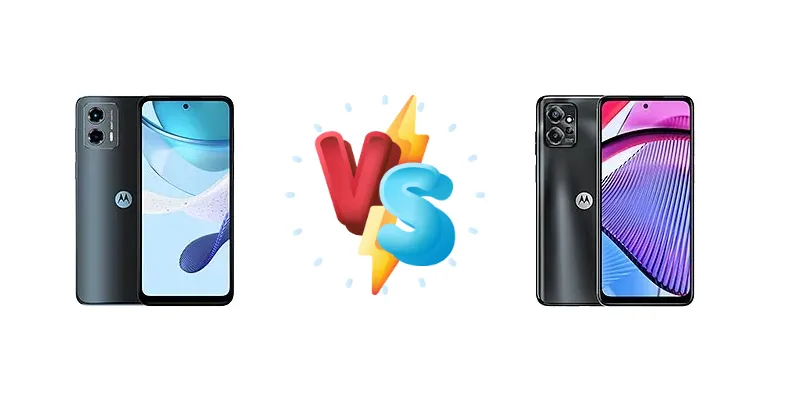
|
🏆 Quick Verdict
The Moto G Power 5G generally offers better performance thanks to its Dimensity 930 chipset and larger battery. However, the Moto G (2023) might appeal to those prioritizing a slightly more compact design and potentially a better camera experience depending on software optimization. It's a close call!
| PHONES | ||
|---|---|---|
| Phone Names | Motorola Moto G (2023) | Motorola Moto G Power 5G |
| Network | ||
|---|---|---|
| 2G bands | GSM 850 / 900 / 1800 / 1900 | GSM 850 / 900 / 1800 / 1900 |
| 3G bands | HSDPA 850 / 900 / 1700(AWS) / 1900 / 2100 | HSDPA 850 / 900 / 1700(AWS) / 1900 / 2100 |
| 4G bands | 1, 2, 3, 4, 5, 7, 8, 12, 13, 14, 17, 18, 20, 25, 26, 29, 30, 38, 39, 40, 41, 48, 66, 71 | 1, 2, 3, 4, 5, 7, 8, 12, 13, 14, 17, 20, 25, 26, 29, 30, 38, 39, 40, 41, 48, 66, 71 |
| 5G bands | 2, 5, 7, 12, 14, 25, 26, 29, 30, 41, 48, 66, 70, 71, 78 SA/NSA | 2, 5, 7, 12, 25, 30, 41, 66, 71, 77, 78 SA/NSA/Sub6 |
| Speed | HSPA, LTE, 5G | HSPA, LTE, 5G |
| Technology | GSM / HSPA / LTE / 5G | GSM / HSPA / LTE / 5G |
| Launch | ||
|---|---|---|
| Announced | 2023, May 02 | 2023, April 06 |
| Status | Available. Released 2023, May 25 | Available. Released 2023, April 13 |
| Body | ||
|---|---|---|
| Build | Glass front, plastic frame, plastic back | Glass front, plastic back, plastic frame |
| Dimensions | 164 x 75 x 8.4 mm (6.46 x 2.95 x 0.33 in) | 163.1 x 74.8 x 8.5 mm (6.42 x 2.94 x 0.33 in) |
| SIM | Nano-SIM | Nano-SIM |
| Weight | 189 g (6.67 oz) | 185 g (6.53 oz) |
| Water-repellent design | Water-repellent design | |
| Display | ||
|---|---|---|
| Resolution | 720 x 1600 pixels, 20:9 ratio (~270 ppi density) | 1080 x 2400 pixels, 20:9 ratio (~405 ppi density) |
| Size | 6.5 inches, 102.0 cm2 (~82.9% screen-to-body ratio) | 6.5 inches, 102.0 cm2 (~83.6% screen-to-body ratio) |
| Type | IPS LCD, 120Hz | IPS LCD, 120Hz |
| Platform | ||
|---|---|---|
| CPU | Octa-core (2x2.2 GHz Kryo 460 & 6x1.8 GHz Kryo 460) | Octa-core (2x2.2 GHz Cortex-A78 & 6x2.0 GHz Cortex-A55) |
| Chipset | Qualcomm SM4350-AC Snapdragon 480+ 5G (8 nm) | Mediatek Dimensity 930 (6 nm) |
| GPU | Adreno 619 | IMG BXM-8-256 |
| OS | Android 13, planned upgrade to Android 14 | Android 13, upgradable to Android 14 |
| Memory | ||
|---|---|---|
| Card slot | microSDXC (dedicated slot) | microSDXC (dedicated slot) |
| Internal | 64GB 4GB RAM, 128GB 4GB RAM | 128GB 4GB RAM, 256GB 6GB RAM |
| Main Camera | ||
|---|---|---|
| Dual | 48 MP, f/1.7, (wide), 0.8µm, PDAF 2 MP (macro) | - |
| Features | LED flash, HDR, panorama | LED flash, HDR, panorama |
| Triple | - | 50 MP, f/1.8, (wide), 0.64µm, PDAF 2 MP (macro) Auxiliary lens |
| Video | 1080p@30fps | 1080p@30fps, gyro-EIS |
| Selfie camera | ||
|---|---|---|
| Features | HDR | - |
| Single | 8 MP, f/2.0, (wide), 1/4.0", 1.12µm | 16 MP, f/2.4, (wide), 1.0µm |
| Video | 1080p@30fps | 1080p@30fps |
| Sound | ||
|---|---|---|
| 3.5mm jack | Yes | Yes |
| 35mm jack | Yes | Yes |
| Loudspeaker | Yes, with stereo speakers | Yes, with stereo speakers |
| Comms | ||
|---|---|---|
| Bluetooth | 5.1, A2DP, LE | 5.3, A2DP, LE |
| NFC | No | No |
| Positioning | GPS, GLONASS, GALILEO, BDS | GPS, GLONASS, GALILEO |
| Radio | No | No |
| USB | USB Type-C 2.0 | USB Type-C 2.0 |
| WLAN | Wi-Fi 802.11 a/b/g/n/ac, dual-band | Wi-Fi 802.11 a/b/g/n/ac, dual-band |
| Features | ||
|---|---|---|
| Sensors | Fingerprint (side-mounted), accelerometer, gyro, proximity, compass | Fingerprint (side-mounted), accelerometer, gyro, proximity, compass |
| Battery | ||
|---|---|---|
| Charging | 15W wired | 15W wired |
| Type | Li-Po 5000 mAh | Li-Po 5000 mAh |
| Misc | ||
|---|---|---|
| Colors | Ink Blue | Dark Blue |
| Models | XT2313 | - |
| Price | $ 56.55 | $ 97.90 / £ 199.00 |
Motorola Moto G (2023)
- Compact and lightweight design
- Decent 5G connectivity
- Generally affordable price
- Clean Android experience
- Less powerful chipset
- Shorter battery life
- Potentially less impressive camera
Motorola Moto G Power 5G
- Excellent battery life
- More powerful processor
- Larger display
- Good value for money
- Larger and heavier design
- Camera performance may vary
- 15W charging is relatively slow
Display Comparison
Both phones feature similar display technology (likely IPS LCD) and resolution, but the Moto G Power 5G often has a slightly larger screen size. Expect comparable color accuracy and brightness, suitable for everyday use but not ideal for HDR content. The Moto G (2023) might have a slightly more compact form factor, making it easier to handle.
Camera Comparison
Camera specs are often similar on paper (likely a 50MP main sensor), but image processing and software optimization play a crucial role. The Moto G Power 5G *may* have slightly better low-light performance due to its more powerful chipset. Both phones likely offer decent image quality in good lighting conditions, but don't expect flagship-level results.
Performance
The Dimensity 930 in the Moto G Power 5G provides a noticeable performance advantage over the Snapdragon 480+ in the Moto G (2023). Expect smoother multitasking, faster app loading times, and better gaming performance on the Power 5G. The Moto G (2023) is still capable for basic tasks, but may struggle with more demanding applications.
Battery Life
The Moto G Power 5G typically boasts a significantly larger battery capacity (often 5000mAh or higher) compared to the Moto G (2023). This translates to noticeably longer battery life, easily lasting a full day or even two with moderate usage. Both phones share the same 15W charging speed, so charging times will be comparable.
Buying Guide
The Motorola Moto G (2023) is ideal for users seeking a reliable, compact 5G phone for everyday tasks and light gaming. The Moto G Power 5G is a better choice for power users, those who prioritize long battery life, and those who need a bit more processing power for demanding apps.