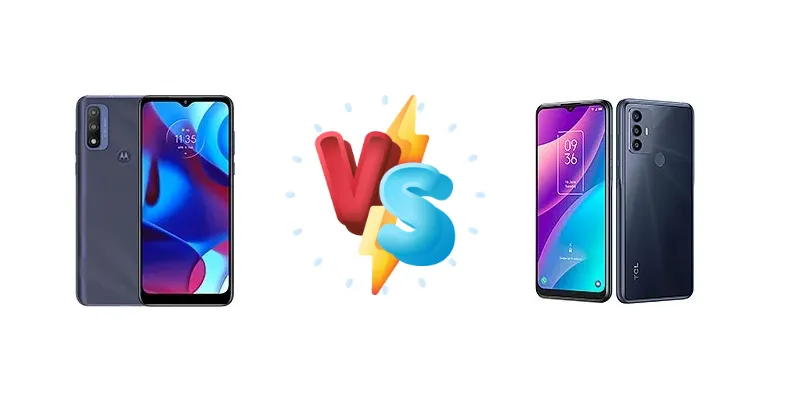
The Motorola G Pure and TCL 30 SE represent the fiercely competitive sub-$150 smartphone market. Both devices target first-time smartphone buyers or those seeking a reliable secondary device. While sharing a core chipset, subtle differences in charging speed and potential software optimization create a surprisingly nuanced comparison.
🏆 Quick Verdict
For the average user prioritizing a slightly faster charging experience and potential for longer software support, the TCL 30 SE emerges as the better choice. However, the Motorola G Pure remains a viable option for those seeking a minimalist experience and potentially lower initial cost.
| Network |
|---|
| 2G bands | GSM 850 / 900 / 1800 / 1900 | GSM 850 / 900 / 1800 / 1900 |
| 3G bands | HSDPA 850 / 900 / 1700(AWS) / 1900 / 2100 | HSDPA 850 / 900 / 1900 / 2100 - EMEA/APAC |
| 4G bands | 1, 2, 3, 4, 5, 7, 8, 12, 13, 17, 25, 26, 38, 40, 41, 66, 71 | 1, 3, 5, 7, 8, 20, 28, 38, 40, 41 - EMEA |
| Speed | HSPA 42.2/5.76 Mbps, LTE Cat4 150/50 Mbps | HSPA 42.2/11.5 Mbps, LTE Cat4 150/50 Mbps |
| Technology | GSM / HSPA / LTE | GSM / HSPA / LTE |
| | - | 2, 3, 4, 5, 7, 8, 12, 13, 17, 26, 28, 66 - LATAM |
| Launch |
|---|
| Announced | 2021, October 07 | 2022, February 27 |
| Status | Available. Released 2021, October 14 | Available. Released 2022, April 20 |
| Body |
|---|
| Build | Glass front, plastic frame, plastic back | Glass front, plastic frame, plastic back |
| Dimensions | 167.4 x 75.6 x 8.8 mm (6.59 x 2.98 x 0.35 in) | 165.2 x 75.5 x 8.9 mm (6.50 x 2.97 x 0.35 in) |
| SIM | Nano-SIM | · Nano-SIM· Nano-SIM + Nano-SIM |
| Weight | 188 g (6.63 oz) | 190 g (6.70 oz) |
| | Water-repellent design | - |
| Display |
|---|
| Resolution | 720 x 1600 pixels, 20:9 ratio (~270 ppi density) | 720 x 1600 pixels, 20:9 ratio (~269 ppi density) |
| Size | 6.5 inches, 102.0 cm2 (~80.6% screen-to-body ratio) | 6.52 inches, 102.6 cm2 (~82.3% screen-to-body ratio) |
| Type | IPS LCD | IPS LCD, 450 nits (typ) |
| Platform |
|---|
| CPU | Octa-core (4x2.0 GHz Cortex-A53 & 4x1.5 GHz Cortex-A53) | Octa-core (4x2.0 GHz Cortex-A53 & 4x1.5 GHz Cortex-A53) |
| Chipset | Mediatek MT6762G Helio G25 (12 nm) | Mediatek MT6762G Helio G25 (12 nm) |
| GPU | PowerVR GE8320 | PowerVR GE8320 |
| OS | Android 11 | Android 12, TCL UI 4.0 |
| Memory |
|---|
| Card slot | microSDXC (dedicated slot) | microSDXC (dedicated slot) |
| Internal | 32GB 2GB RAM, 32GB 3GB RAM | 64GB 4GB RAM, 128GB 4GB RAM |
| | eMMC 5.1 | eMMC 5.1 |
| Main Camera |
|---|
| Dual | 13 MP, f/2.2, (wide), 1.12µm, AF
Auxiliary lens | - |
| Features | LED flash, HDR, panorama | LED flash, HDR, panorama |
| Single | - | 8 MP, f/2.0, 26mm (wide), 1/4", 1.12µm |
| Triple | - | 50 MP, f/1.9, 28mm (wide), 1/2.76", 0.64µm, PDAF
2 MP (macro)
Auxiliary lens |
| Video | 1080p@30fps | 1080p@30fps |
| Selfie camera |
|---|
| Features | HDR | HDR |
| Single | 5 MP, f/2.4, 1.12µm | 8 MP, f/2.0, 26mm (wide), 1/4.0", 1.12µm |
| Video | 1080p@30fps | 1080p@30fps |
| Sound |
|---|
| 3.5mm jack | Yes | Yes |
| 35mm jack | Yes | Yes |
| Loudspeaker | Yes | Yes |
| Comms |
|---|
| Bluetooth | 5.0, A2DP, LE | 5.0, A2DP, LE |
| NFC | No | Yes (6165H/6165H1 only) |
| Positioning | GPS, GLONASS | GPS, GLONASS, GALILEO, BDS |
| Radio | No | Unspecified |
| USB | USB Type-C 2.0 | USB Type-C 2.0 |
| WLAN | Wi-Fi 802.11 a/b/g/n/ac, dual-band | Wi-Fi 802.11 b/g/n, Wi-Fi Direct |
| Features |
|---|
| Sensors | Fingerprint (rear-mounted) | Fingerprint (rear-mounted), accelerometer, proximity, compass |
| Battery |
|---|
| Charging | 10W wired | 15W wired |
| Type | Li-Po 4000 mAh | Li-Po 5000 mAh |
| Misc |
|---|
| Colors | Deep Indigo | Atlantic Blue, Space Gray, Glacial Blue |
| Models | XT-2163-4, XT2163-4, XT2163-6, XT2163-1, XT2163-2 | 6165H, 6156H1, 6165A, 6165A1, 6165S |
| Price | $ 63.99 / C$ 123.00 | - |
Motorola G Pure
- Potentially lower initial cost.
- Simple, uncluttered software experience.
- Reliable brand reputation for basic smartphones.
- Slower 10W charging.
- Likely limited software update support.
- May have less refined build quality.
TCL 30 SE
- Faster 15W charging.
- Potential for longer software update support from TCL.
- Growing brand presence and ecosystem.
- May be slightly more expensive than the G Pure.
- TCL's software experience can be more feature-rich (and potentially bloated).
- Camera performance likely similar to G Pure.
Display Comparison
Both the Motorola G Pure and TCL 30 SE likely feature LCD panels, typical for this price bracket. Specifics like resolution and peak brightness are not provided, but we can assume they are similar, aiming for a functional viewing experience rather than vibrant color accuracy. Bezels are expected to be noticeable on both devices, maximizing screen real estate within a budget. The absence of high refresh rate technology or advanced panel features like LTPO is standard at this price point.
Camera Comparison
Camera performance is likely to be similar on both devices, relying heavily on software processing to enhance image quality. Without sensor size or aperture information, it's difficult to make definitive claims. However, given the price point, expect modest performance in low-light conditions. The inclusion of a 2MP macro camera on either device is largely a marketing tactic, offering limited practical benefit due to the small sensor size and lack of optical image stabilization (OIS).
Performance
Both devices are powered by the Mediatek MT6762G Helio G25 (12 nm) chipset, featuring an octa-core CPU configuration with 4x2.0 GHz Cortex-A53 and 4x1.5 GHz Cortex-A53 cores. This means performance will be nearly identical for everyday tasks like browsing, social media, and light app usage. The 12nm process node suggests moderate thermal efficiency; sustained heavy gaming is unlikely to be a smooth experience on either device. RAM configurations are not specified, but lower RAM amounts (2GB or 3GB) would be typical, potentially impacting multitasking performance.
Battery Life
While battery capacity isn't specified, both devices likely house batteries in the 4000-5000 mAh range, typical for all-day usage with moderate use. The TCL 30 SE's 15W wired charging is a key differentiator, offering a noticeably faster charging experience compared to the Motorola G Pure's 10W charging. This translates to less time tethered to a wall outlet, a significant benefit for users who frequently need to top up their battery.
Buying Guide
Buy the Motorola G Pure if you need a truly basic, no-frills smartphone experience and prioritize simplicity above all else. It's ideal for users who primarily need calling, texting, and light app usage. Buy the TCL 30 SE if you prefer a slightly more refined experience with faster charging, potentially better software updates, and a brand with a growing presence in the smart TV and mobile space.
Frequently Asked Questions
❓ Will either of these phones struggle with popular apps like Facebook or WhatsApp?
While both phones can run Facebook and WhatsApp, expect some lag when switching between apps or loading media-heavy content. The Helio G25 chipset is designed for basic tasks, and these apps can be demanding, especially with limited RAM.
❓ How long will it take to fully charge each phone from 0%?
With 10W charging, the Motorola G Pure will likely take around 3-4 hours to fully charge. The TCL 30 SE, with its 15W charging, should complete a full charge in approximately 2-3 hours, offering a significant time saving.
❓ Are these phones good for mobile gaming?
Neither phone is ideal for serious mobile gaming. The Helio G25 chipset will struggle with graphically intensive games like PUBG or Call of Duty. You may be able to play less demanding games, but expect low frame rates and potential overheating.
❓ What kind of storage options are available on these phones?
Storage configurations are not specified, but both devices likely offer 32GB or 64GB of internal storage. Given the limited storage, consider using a microSD card to expand storage capacity for photos, videos, and apps.