
Google Pixel 8a vs. Motorola Edge: A Detailed Comparison of Mid-Range Champions
| Phones Images | |||||
|---|---|---|---|---|---|
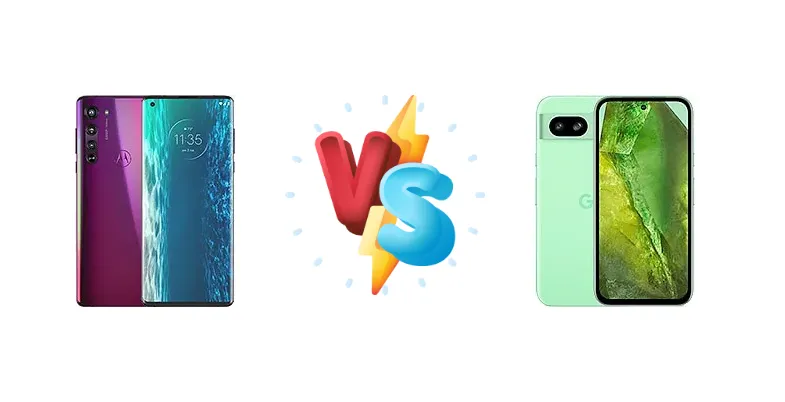
|
🏆 Quick Verdict
For most users, the Google Pixel 8a is the superior choice. Its Tensor G3 chipset offers a more modern and capable processing experience, and its camera system is significantly more advanced. While the Motorola Edge boasts impressive battery endurance, the Pixel 8a’s overall package of features and performance justifies its slightly higher price.
| PHONES | ||
|---|---|---|
| Phone Names | Motorola Edge | Google Pixel 8a |
| Network | ||
|---|---|---|
| 2G bands | GSM 850 / 900 / 1800 / 1900 | GSM 850 / 900 / 1800 / 1900 |
| 3G bands | HSDPA 850 / 900 / 1700(AWS) / 1900 / 2100 | HSDPA 800 / 850 / 900 / 1700(AWS) / 1900 / 2100 |
| 4G bands | 1, 2, 3, 4, 5, 7, 8, 12, 13, 17, 20, 25, 26, 28, 32, 38, 39, 40, 41, 66, 71 | 1, 2, 3, 4, 5, 7, 8, 12, 17, 18, 19, 20, 26, 28, 32, 38, 40, 41, 42, 66 - G6GPR (International) |
| 5G bands | 1, 2, 3, 5, 7, 25, 28, 38, 41, 66, 71, 78 Sub6 | 1, 2, 3, 5, 7, 8, 12, 20, 26, 28, 38, 40, 41, 66, 75, 76, 77, 78 SA/NSA/Sub6 - G6GPR (International) |
| EDGE | No | - |
| GPRS | No | - |
| Speed | HSPA 42.2/5.76 Mbps, LTE (5CA) Cat16 1000/150 Mbps, 5G | HSPA, LTE, 5G |
| Technology | GSM / CDMA / HSPA / EVDO / LTE / 5G | GSM / HSPA / LTE / 5G |
| CDMA2000 1xEV-DO | - | |
| Launch | ||
|---|---|---|
| Announced | 2020, April 22. Released 2020, May 29 | 2024, May 07 |
| Status | Discontinued | Available. Released 2024, May 14 |
| Body | ||
|---|---|---|
| Build | Glass front (Gorilla Glass 5), aluminum frame, plastic back | Glass front (Gorilla Glass 3), aluminum frame, plastic back |
| Dimensions | 161.6 x 71.1 x 9.3 mm (6.36 x 2.80 x 0.37 in) | 152.1 x 72.7 x 8.9 mm (5.99 x 2.86 x 0.35 in) |
| SIM | Nano-SIM + Nano-SIM | Nano-SIM + eSIM |
| Weight | 188 g (6.63 oz) | 188 g (6.63 oz) |
| Water-repellent coating | - | |
| Display | ||
|---|---|---|
| Protection | Corning Gorilla Glass 5 | Corning Gorilla Glass 3, Mohs level 5 |
| Resolution | 1080 x 2340 pixels, 19.5:9 ratio (~385 ppi density) | 1080 x 2400 pixels, 20:9 ratio (~430 ppi density) |
| Size | 6.7 inches, 110.2 cm2 (~95.9% screen-to-body ratio) | 6.1 inches, 90.3 cm2 (~81.6% screen-to-body ratio) |
| Type | OLED, 90Hz, HDR10 | OLED, HDR, 120Hz, 2000 nits (peak) |
| Platform | ||
|---|---|---|
| CPU | Octa-core (1x2.4 GHz Kryo 475 Prime & 1x2.2 GHz Kryo 475 Gold & 6x1.8 GHz Kryo 475 Silver) | Nona-core (1x3.0 GHz Cortex-X3 & 4x2.45 GHz Cortex-A715 & 4x2.15 GHz Cortex-A510) |
| Chipset | Qualcomm SM7250 Snapdragon 765G 5G (7 nm) | Google Tensor G3 (4 nm) |
| GPU | Adreno 620 | Immortalis-G715s MC10 |
| OS | Android 10 | Android 14, upgradable to Android 16, up to 7 major Android upgrades |
| Memory | ||
|---|---|---|
| Card slot | microSDXC (uses shared SIM slot) | No |
| Internal | 128GB 4GB RAM, 128GB 6GB RAM, 256GB 6GB RAM | 128GB 8GB RAM, 256GB 8GB RAM |
| UFS 2.1 | - | |
| Main Camera | ||
|---|---|---|
| Dual | - | 64 MP (16 MP eff.), f/1.9, 26mm (wide), 1/1.73", 0.8µm, dual pixel PDAF, OIS 13 MP, f/2.2, 120˚ (ultrawide), 1.12µm |
| Features | LED flash, panorama, HDR | Dual-LED flash, Pixel Shift, Ultra HDR, panorama, Best Take |
| Single | 3.15 MP, AF | - |
| Triple | 64 MP, f/1.8, (wide), 1/1.72", 0.8µm, PDAF 8 MP, f/2.4, 52mm (telephoto), 1.12µm, 2x optical zoom, PDAF 16 MP, f/2.2, 13mm (ultrawide), 1.0µm TOF 3D, (depth) | - |
| Video | 4K@30fps, 1080p@30/60fps | 4K@30/60fps, 1080p@30/60/120/240fps, OIS |
| Selfie camera | ||
|---|---|---|
| Features | HDR | HDR, panorama |
| Single | 25 MP, f/2.0, (wide), 0.9µm | 13 MP, f/2.2, 20mm (ultrawide), 1.12µm |
| Video | 1080p@30fps | 4K@30fps, 1080p@30/60fps |
| Sound | ||
|---|---|---|
| 3.5mm jack | Yes | - |
| 35mm jack | Yes | No |
| Loudspeaker | Yes, with stereo speakers | Yes, with stereo speakers |
| Comms | ||
|---|---|---|
| Bluetooth | 5.1, A2DP, LE | 5.3, A2DP, LE |
| NFC | Yes | Yes |
| Positioning | GPS, GLONASS, GALILEO, BDS | GPS, GLONASS, GALILEO, BDS, QZSS, NavIC |
| Radio | FM radio | No |
| USB | USB Type-C 2.0 | USB Type-C 3.2 |
| WLAN | Wi-Fi 802.11 a/b/g/n/ac, dual-band, Wi-Fi Direct | Wi-Fi 802.11 a/b/g/n/ac/6e, dual/tri-band (market/region dependent) |
| Features | ||
|---|---|---|
| Browser | HTML, Adobe Flash | - |
| Sensors | Fingerprint (under display, optical), accelerometer, gyro, proximity | Fingerprint (under display, optical), accelerometer, gyro, proximity, compass, barometer |
| Battery | ||
|---|---|---|
| Charging | 18W wired | 18W wired, PD3.0 7.5W wireless Bypass charging |
| Stand-by | Up to 950 h | - |
| Type | Li-Po 4500 mAh | Li-Po 4492 mAh |
| Misc | ||
|---|---|---|
| Colors | Solar Black, Midnight Magenta | Obsidian, Porcelain, Bay, Aloe |
| Models | XT2063-2, XT2063-3 | GKV4X, G6GPR, G8HHN, G576D |
| Price | About 250 EUR | $ 229.98 / C$ 417.99 / £ 279.00 / € 299.99 / ₹ 33,300 |
| SAR EU | 0.18 W/kg (head) | - |
| Tests | ||
|---|---|---|
| Battery life | Endurance rating 102h | - |
| Camera | Photo / Video | - |
| Display | Contrast ratio: Infinite (nominal) | - |
| Loudspeaker | -30.4 LUFS (Below average) | - |
| Performance | AnTuTu: 305989 (v8) GeekBench: 1862 (v5.1) GFXBench: 18fps (ES 3.1 onscreen) | - |
| EU LABEL | ||
|---|---|---|
| Battery | - | 40:06h endurance, 1000 cycles |
| Energy | - | Class B |
| Free fall | - | Class A (270 falls) |
| Repairability | - | Class B |
Motorola Edge
- Superior camera performance with Google’s computational photography.
- More powerful Tensor G3 chipset for smoother performance.
- Wireless charging and bypass charging for added convenience.
- Slightly shorter battery endurance compared to the Motorola Edge.
- Potentially higher price point.
Google Pixel 8a
- Exceptional battery life with a 102-hour endurance rating.
- More affordable price point.
- Reliable performance for everyday tasks.
- Less powerful Snapdragon 765G chipset.
- Inferior camera system compared to the Pixel 8a.
Display Comparison
The Pixel 8a’s display is a clear upgrade, boasting a measured peak brightness of 1508 nits compared to the Motorola Edge’s ‘Infinite’ (nominal) contrast ratio, which doesn’t specify brightness. This translates to significantly better visibility outdoors. While both lack explicit refresh rate data, the Pixel 8a’s OLED panel likely offers superior color accuracy and viewing angles. The Motorola Edge’s display, while functional, lacks the vibrancy and clarity of the Pixel 8a’s.
Camera Comparison
The Pixel 8a’s camera system is a significant advantage. While both phones offer photo and video capabilities, the Pixel 8a benefits from Google’s renowned computational photography algorithms. Without specific sensor details for the Motorola Edge, it’s safe to assume the Pixel 8a’s camera delivers superior image quality, particularly in low-light conditions. The Pixel 8a’s image processing excels at dynamic range and detail preservation. The Motorola Edge likely relies more on hardware limitations, resulting in less refined images. The Pixel 8a’s software features, like Best Take and Photo Unblur, further enhance its photographic capabilities.
Performance
The Google Tensor G3 (4nm) in the Pixel 8a represents a substantial leap in processing power over the Qualcomm Snapdragon 765G (7nm) found in the Motorola Edge. The Tensor G3’s nona-core architecture, featuring a Cortex-X3 prime core, delivers faster performance in demanding tasks like video editing and gaming. The 4nm process also contributes to improved thermal efficiency, reducing the likelihood of throttling during sustained workloads. The Snapdragon 765G is adequate for everyday use, but will struggle with more intensive applications. The Pixel 8a’s architecture is designed for on-device AI processing, enabling features like Magic Eraser and real-time translation.
Battery Life
The Motorola Edge’s endurance rating of 102 hours is impressive, but the Pixel 8a holds its own with 40:06 hours of endurance and a tested active use score of 11:25 hours. The Pixel 8a’s 1000-cycle battery longevity suggests a longer lifespan. Both phones support 18W wired charging, but the Pixel 8a adds the convenience of 7.5W wireless charging and bypass charging, allowing you to use the phone while it’s charging. The Edge’s longer endurance is beneficial for users who frequently go extended periods without access to a charger, but the Pixel 8a’s charging versatility and longevity are valuable assets.
Buying Guide
Buy the Motorola Edge if you prioritize maximizing battery life above all else and need a reliable phone for basic tasks. Its 102-hour endurance rating is exceptional. Buy the Google Pixel 8a if you value a superior camera experience, smoother performance for demanding apps, and access to Google’s latest AI-powered features. It’s the better choice for photography enthusiasts and power users.