
Motorola Edge X30 vs Edge 30 Pro: The Ultimate Showdown
| Phones Images | |||||
|---|---|---|---|---|---|
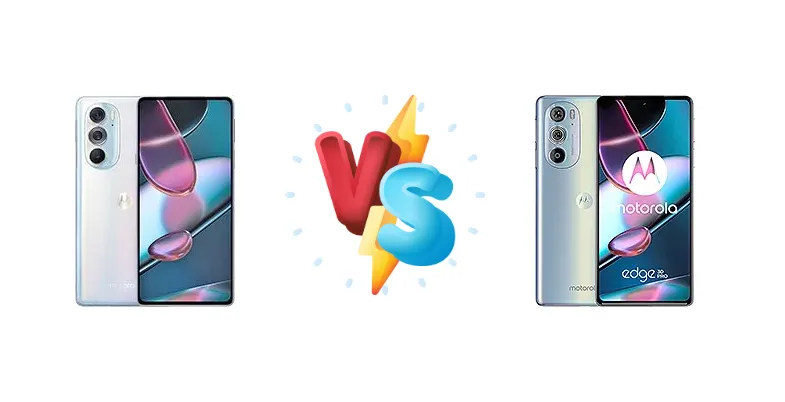
|
🏆 Quick Verdict
The Edge 30 Pro offers a more refined experience with faster charging, wireless charging capabilities, and potentially a slightly better camera system. However, the Edge X30 often presents a better value proposition, especially if you prioritize raw performance and a slightly larger screen. It's a close call, depending on your priorities.
| PHONES | ||
|---|---|---|
| Phone Names | Motorola Edge X30 | Motorola Edge 30 Pro |
| Network | ||
|---|---|---|
| 2G bands | GSM 850 / 900 / 1800 / 1900 | GSM 850 / 900 / 1800 / 1900 |
| 3G bands | HSDPA 850 / 900 / 1800 / 1900 / 2100 | HSDPA 850 / 900 / 1700(AWS) / 1900 / 2100 |
| 4G bands | 1, 2, 3, 4, 5, 7, 8, 12, 17, 34, 38, 39, 40, 41 | 1, 2, 3, 4, 5, 7, 8, 12, 13, 17, 18, 19, 20, 25, 26, 28, 32, 38, 39, 40, 41, 42, 43, 48, 66 - International |
| 5G bands | 1, 3, 5, 7, 8, 20, 28, 38, 41, 78 SA/NSA/Sub6 | 1, 3, 5, 7, 8, 20, 28, 38, 40, 41, 66, 77, 78 SA/NSA/Sub6 - International |
| Speed | HSPA, LTE, 5G | HSPA 42.2/5.76 Mbps, LTE Cat20 2000/150 Mbps, 5G |
| Technology | GSM / HSPA / LTE / 5G | GSM / HSPA / LTE / 5G |
| - | 2, 5, 7, 12, 25, 26, 29, 30, 41, 48, 66, 71, 77, 78, 260, 261 SA/NSA/Sub6/mmWave - USA | |
| Launch | ||
|---|---|---|
| Announced | 2021, December 09 | 2022, January 24 |
| Status | Available. Released 2021, December 15 | Available. Released 2022, March 04 |
| Body | ||
|---|---|---|
| Build | Glass front, glass back (Gorilla Glass 5) | Glass front (Gorilla Glass 3), glass back (Gorilla Glass 5), plastic frame |
| Dimensions | 163.6 x 75.6 x 8.5 mm (6.44 x 2.98 x 0.33 in) | 163.1 x 76 x 8.8 mm (6.42 x 2.99 x 0.35 in) |
| SIM | Nano-SIM + Nano-SIM | · Nano-SIM· Nano-SIM + Nano-SIM |
| Weight | 194 g (6.84 oz) | 196 g (6.91 oz) |
| Water-repellent design | Water-repellent design | |
| Display | ||
|---|---|---|
| Protection | - | Corning Gorilla Glass 3 |
| Resolution | 1080 x 2400 pixels, 20:9 ratio (~393 ppi density) | 1080 x 2400 pixels, 20:9 ratio (~393 ppi density) |
| Size | 6.7 inches, 108.4 cm2 (~87.6% screen-to-body ratio) | 6.7 inches, 108.4 cm2 (~87.4% screen-to-body ratio) |
| Type | OLED, 1B colors, 144Hz, HDR10+, 500 nits (typ), 700 nits (HBM) | OLED, 1B colors, 144Hz, HDR10+ |
| - | Always-on display | |
| Platform | ||
|---|---|---|
| CPU | Octa-core (1x3.00 GHz Cortex-X2 & 3x2.50 GHz Cortex-A710 & 4x1.80 GHz Cortex-A510) | Octa-core (1x3.00 GHz Cortex-X2 & 3x2.50 GHz Cortex-A710 & 4x1.80 GHz Cortex-A510) |
| Chipset | Qualcomm SM8450 Snapdragon 8 Gen 1 (4 nm) | Qualcomm SM8450 Snapdragon 8 Gen 1 (4 nm) |
| GPU | Adreno 730 | Adreno 730 |
| OS | Android 12, MYUI 3.0 | Android 12, upgradable to Android 14 |
| Memory | ||
|---|---|---|
| Card slot | No | No |
| Internal | 128GB 8GB RAM, 256GB 8GB RAM, 256GB 12GB RAM | 128GB 8GB RAM, 256GB 8GB RAM, 256GB 12GB RAM, 512GB 8GB RAM, 512GB 12GB RAM |
| UFS 3.1 | UFS 3.1 | |
| Main Camera | ||
|---|---|---|
| Features | Dual-LED flash, panorama, HDR | Dual-LED dual-tone flash, HDR, panorama |
| Triple | 50 MP, f/1.9, (wide), 1/1.55", 1.0µm, dual pixel PDAF, OIS 50 MP, f/2.2, 114˚ (ultrawide), 1/2.76", 0.64µm Auxiliary lens | 50 MP, f/1.8, (wide), 1/1.55", 1.0µm, multi-directional PDAF, OIS 50 MP, f/2.2, 114˚ (ultrawide), 1/2.76", 0.64µm, AF Auxiliary lens |
| Video | 4K@30fps, 1080p@30/60/120/240fps, 720p@960fps, 10-bit HDR10+, gyro-EIS | 8K@24/30fps, 4K@30/60fps, 1080p@30/60/120/240/960fps, 10-bit HDR10+, gyro-EIS |
| Selfie camera | ||
|---|---|---|
| Features | HDR | HDR |
| Single | 60 MP, f/2.2, (wide), 1/2.8", 0.61µm or 60 MP, f/2.2, (wide), 1/2.8", 0.61µm, under display | 60 MP, f/2.2, (wide), 1/2.8", 0.61µm |
| Video | 4K@30fps, 1080p@30/120fps | 4K@30fps, 1080p@30/120fps |
| Sound | ||
|---|---|---|
| 3.5mm jack | No | No |
| 35mm jack | No | No |
| Loudspeaker | Yes, with stereo speakers | Yes, with stereo speakers |
| - | 24-bit/192kHz audio | |
| Comms | ||
|---|---|---|
| Bluetooth | 5.2, A2DP, LE, aptX HD, aptX Adaptive | 5.2, A2DP, LE, aptX HD, aptX Adaptive |
| NFC | Yes | Yes |
| Positioning | GPS (L1+L5), GLONASS, BDS, GALILEO | GPS (L1+L5), GLONASS, BDS, GALILEO |
| Radio | No | No |
| USB | USB Type-C | USB Type-C 3.1, DisplayPort 1.4 |
| WLAN | Wi-Fi 802.11 a/b/g/n/ac/6e, dual-band, Wi-Fi Direct | Wi-Fi 802.11 a/b/g/n/ac/6e, dual-band, Wi-Fi Direct |
| Features | ||
|---|---|---|
| Sensors | Fingerprint (side-mounted), accelerometer, gyro, proximity, compass | Fingerprint (side-mounted), accelerometer, gyro, proximity, compass, barometer |
| Ready For support | Ready For support | |
| Battery | ||
|---|---|---|
| Charging | 68W wired, 100% in 35 min | 68W wired, 50% in 15 min, 100% in 35 min 15W wireless 5W reverse wireless |
| Type | Market-dependent versions:· Li-Po 5000 mAh (regular version)· Li-Po 4800 mAh (under screen camera version) | Li-Po 4800 mAh |
| Misc | ||
|---|---|---|
| Colors | White, Black | Cosmos Blue, Stardust White |
| Models | XT2201-2, XT2201-6 | XT2201-1 |
| Price | About 420 EUR | € 475.45 |
| Tests | ||
|---|---|---|
| Battery life | - | Endurance rating 80h |
| Camera | - | Photo / Video |
| Display | - | Contrast ratio: Infinite (nominal) |
| Loudspeaker | - | -24.2 LUFS (Very good) |
| Performance | - | AnTuTu: 941895 (v9) GeekBench: 3658 (v5.1) GFXBench: 78fps (ES 3.1 onscreen) |
Motorola Edge X30
- Larger Display
- Excellent Value
- Flagship Performance
- Fast Wired Charging
- No Wireless Charging
- Potentially Slightly Inferior Camera
Motorola Edge 30 Pro
- Wireless Charging
- Faster Wired Charging (50% in 15 min)
- Potentially Better Camera
- Excellent Battery Life (80h Endurance)
- Higher Price
- Slightly Smaller Display
Display Comparison
Both phones feature OLED displays with a 144Hz refresh rate, ensuring smooth scrolling and vibrant visuals. The Edge 30 Pro boasts a measured peak brightness of 685 nits, offering better visibility in direct sunlight. The Edge X30's display is slightly larger, potentially offering a more immersive viewing experience. Contrast ratio is listed as 'Infinite' for the Edge 30 Pro, indicating excellent black levels.
Camera Comparison
While both phones offer capable camera systems, the Edge 30 Pro is generally considered to have a slight edge in image quality, particularly in challenging lighting conditions. The Edge 30 Pro likely has improved image processing algorithms. Specific camera specs (megapixels, sensor sizes) would be needed for a more precise comparison.
Performance
Both devices are powered by the Snapdragon 8 Gen 1 chipset, guaranteeing flagship-level performance. Expect snappy multitasking, smooth gaming, and effortless handling of demanding applications. Real-world performance differences are likely to be minimal, though software optimization could play a role.
Battery Life
The Edge 30 Pro boasts an impressive endurance rating of 80 hours, suggesting excellent battery life. Both phones support 68W wired charging, achieving 100% charge in 35 minutes. The Edge 30 Pro adds 15W wireless charging and 5W reverse wireless charging, providing added convenience.
Buying Guide
The Motorola Edge X30 is ideal for users seeking a powerful Android experience at a more accessible price point, prioritizing a larger display and raw processing power. The Motorola Edge 30 Pro is better suited for those who value convenience features like wireless charging, faster wired charging, and potentially a more versatile camera system, and are willing to pay a premium.