
Motorola Edge X30 vs Edge 20: The Ultimate Showdown
| Phones Images | |||||
|---|---|---|---|---|---|
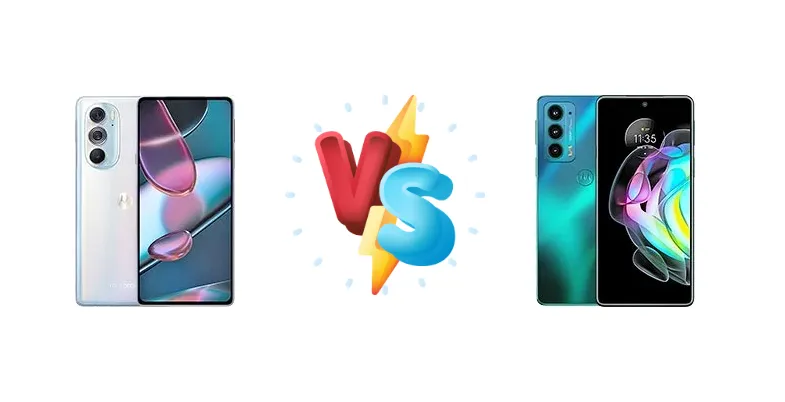
|
🏆 Quick Verdict
The Motorola Edge X30 is the clear performance winner thanks to its Snapdragon 8 Gen 1 chipset. However, the Edge 20 boasts exceptional battery life and a potentially more refined camera experience for some users. Consider your priorities: raw power or extended endurance.
| PHONES | ||
|---|---|---|
| Phone Names | Motorola Edge X30 | Motorola Edge 20 |
| Network | ||
|---|---|---|
| 2G bands | GSM 850 / 900 / 1800 / 1900 | GSM 850 / 900 / 1800 / 1900 |
| 3G bands | HSDPA 850 / 900 / 1800 / 1900 / 2100 | HSDPA 850 / 900 / 1700(AWS) / 1900 / 2100 |
| 4G bands | 1, 2, 3, 4, 5, 7, 8, 12, 17, 34, 38, 39, 40, 41 | 1, 2, 3, 4, 5, 7, 8, 12, 18, 19, 20, 26, 28, 32, 34, 38, 39, 40, 41, 42, 43, 66 |
| 5G bands | 1, 3, 5, 7, 8, 20, 28, 38, 41, 78 SA/NSA/Sub6 | 1, 3, 5, 7, 8, 28, 38, 41, 66, 77, 78 SA/NSA/Sub6 |
| Speed | HSPA, LTE, 5G | HSPA 42.2/5.76 Mbps, LTE Cat18 1200/150 Mbps, 5G |
| Technology | GSM / HSPA / LTE / 5G | GSM / HSPA / LTE / 5G |
| Launch | ||
|---|---|---|
| Announced | 2021, December 09 | 2021, July 29 |
| Status | Available. Released 2021, December 15 | Available. Released 2021, August 16 |
| Body | ||
|---|---|---|
| Build | Glass front, glass back (Gorilla Glass 5) | Glass front (Gorilla Glass 5), aluminum frame, glass back (Gorilla Glass 3) |
| Dimensions | 163.6 x 75.6 x 8.5 mm (6.44 x 2.98 x 0.33 in) | 163 x 76 x 7 mm (6.42 x 2.99 x 0.28 in) |
| SIM | Nano-SIM + Nano-SIM | Nano-SIM + Nano-SIM |
| Weight | 194 g (6.84 oz) | 163 g (5.75 oz) |
| Water-repellent design | Water-repellent design | |
| Display | ||
|---|---|---|
| Protection | - | Corning Gorilla Glass 5 |
| Resolution | 1080 x 2400 pixels, 20:9 ratio (~393 ppi density) | 1080 x 2400 pixels, 19.5:9 ratio (~385 ppi density) |
| Size | 6.7 inches, 108.4 cm2 (~87.6% screen-to-body ratio) | 6.7 inches, 110.2 cm2 (~89.0% screen-to-body ratio) |
| Type | OLED, 1B colors, 144Hz, HDR10+, 500 nits (typ), 700 nits (HBM) | OLED, 1B colors, 144Hz, HDR10+ |
| Platform | ||
|---|---|---|
| CPU | Octa-core (1x3.00 GHz Cortex-X2 & 3x2.50 GHz Cortex-A710 & 4x1.80 GHz Cortex-A510) | Octa-core (1x2.4 GHz Cortex-A78 & 3x2.2 GHz Cortex-A78 & 4x1.9 GHz Cortex-A55) |
| Chipset | Qualcomm SM8450 Snapdragon 8 Gen 1 (4 nm) | Qualcomm SM7325 Snapdragon 778G 5G (6 nm) |
| GPU | Adreno 730 | Adreno 642L |
| OS | Android 12, MYUI 3.0 | Android 11, upgradable to Android 13 |
| Memory | ||
|---|---|---|
| Card slot | No | No |
| Internal | 128GB 8GB RAM, 256GB 8GB RAM, 256GB 12GB RAM | 128GB 6GB RAM, 128GB 8GB RAM, 256GB 8GB RAM |
| UFS 3.1 | UFS | |
| Main Camera | ||
|---|---|---|
| Features | Dual-LED flash, panorama, HDR | Dual-LED dual-tone flash, HDR, panorama |
| Triple | 50 MP, f/1.9, (wide), 1/1.55", 1.0µm, dual pixel PDAF, OIS 50 MP, f/2.2, 114˚ (ultrawide), 1/2.76", 0.64µm Auxiliary lens | 108 MP, f/1.9, (wide), 1/1.52", 0.7µm, PDAF 8 MP, f/2.4, 79mm (telephoto), 1.0µm, 3x optical zoom, PDAF, OIS 16 MP, f/2.2, 17mm, 119˚ (ultrawide), 1/3.06", 1.0µm, AF |
| Video | 4K@30fps, 1080p@30/60/120/240fps, 720p@960fps, 10-bit HDR10+, gyro-EIS | 4K@30fps, 1080p@30/60/120/240fps, 720p@960fps, gyro-EIS |
| Selfie camera | ||
|---|---|---|
| Features | HDR | HDR |
| Single | 60 MP, f/2.2, (wide), 1/2.8", 0.61µm or 60 MP, f/2.2, (wide), 1/2.8", 0.61µm, under display | 32 MP, f/2.3, (wide), 0.7µm |
| Video | 4K@30fps, 1080p@30/120fps | 1080p@30fps |
| Sound | ||
|---|---|---|
| 3.5mm jack | No | No |
| 35mm jack | No | No |
| Loudspeaker | Yes, with stereo speakers | Yes |
| Comms | ||
|---|---|---|
| Bluetooth | 5.2, A2DP, LE, aptX HD, aptX Adaptive | 5.2, A2DP, LE, aptX HD, aptX Adaptive |
| NFC | Yes | Yes |
| Positioning | GPS (L1+L5), GLONASS, BDS, GALILEO | GPS, GLONASS, BDS, GALILEO |
| Radio | No | No |
| USB | USB Type-C | USB Type-C 2.0 |
| WLAN | Wi-Fi 802.11 a/b/g/n/ac/6e, dual-band, Wi-Fi Direct | Wi-Fi 802.11 a/b/g/n/ac/6e, dual-band, Wi-Fi Direct |
| Features | ||
|---|---|---|
| Sensors | Fingerprint (side-mounted), accelerometer, gyro, proximity, compass | Fingerprint (side-mounted), accelerometer, gyro, proximity, compass |
| Ready For support | - | |
| Battery | ||
|---|---|---|
| Charging | 68W wired, 100% in 35 min | 30W wired |
| Type | Market-dependent versions:· Li-Po 5000 mAh (regular version)· Li-Po 4800 mAh (under screen camera version) | Li-Po 4000 mAh |
| Misc | ||
|---|---|---|
| Colors | White, Black | Frosted Grey, Frosted White, Frosted Emerald |
| Models | XT2201-2, XT2201-6 | XT2143-1 |
| Price | About 420 EUR | About 140 EUR |
| Tests | ||
|---|---|---|
| Battery life | - | Endurance rating 86h |
| Camera | - | Photo / Video |
| Display | - | Contrast ratio: Infinite (nominal) |
| Loudspeaker | - | -28.7 LUFS (Average) |
| Performance | - | AnTuTu: 424031 (v8), 488574 (v9) GeekBench: 2550 (v5.1) GFXBench: 29fps (ES 3.1 onscreen) |
Motorola Edge X30
- Flagship Snapdragon 8 Gen 1 performance
- Fast 68W charging
- Likely higher resolution display
- Potentially better camera processing
- Higher price
- Potentially shorter battery life
- Snapdragon 8 Gen 1 can run hot
Motorola Edge 20
- Exceptional battery life (86h endurance rating)
- Balanced camera system
- More affordable price
- OLED display with 'infinite' contrast
- Mid-range Snapdragon 778G performance
- Slower 30W charging
- Lower resolution display compared to X30
Display Comparison
The Edge X30 likely features a higher resolution and potentially a faster refresh rate display (often 144Hz) compared to the Edge 20. While the Edge 20 boasts an 'infinite' contrast ratio (likely due to its OLED panel), the X30's display should offer better overall sharpness and responsiveness. Brightness is a key factor; the Edge 20's 650 nits is a good starting point, but the X30 likely exceeds this.
Camera Comparison
Both phones offer capable camera systems. The Edge 20 is known for its consistent image quality and reliable video recording. The Edge X30, with its flagship chipset, *could* offer better image processing and potentially more advanced features, but real-world performance will depend on Motorola's software optimization. Expect the X30 to have a higher resolution main sensor.
Performance
This is where the Edge X30 truly shines. The Snapdragon 8 Gen 1 is a significant upgrade over the Snapdragon 778G 5G found in the Edge 20. Expect dramatically faster app loading times, smoother multitasking, and significantly improved gaming performance on the X30. The X30's cooling system will be crucial to manage the 8 Gen 1's heat.
Battery Life
The Edge 20's endurance rating of 86 hours is remarkable. While the Edge X30's 4500mAh battery is a decent size, the Snapdragon 8 Gen 1 is power-hungry. The Edge 20 likely offers significantly longer battery life under typical usage, though the X30's 68W charging will allow for much faster top-ups.
Buying Guide
The Motorola Edge X30 is ideal for gamers, power users, and anyone demanding top-tier performance. The Motorola Edge 20 is a great choice for those prioritizing battery life, a balanced camera system, and a more budget-friendly price point.