
Motorola Edge S vs Xiaomi Mi 11i: Which Snapdragon Flagship Delivers More?
| Phones Images | |||||
|---|---|---|---|---|---|
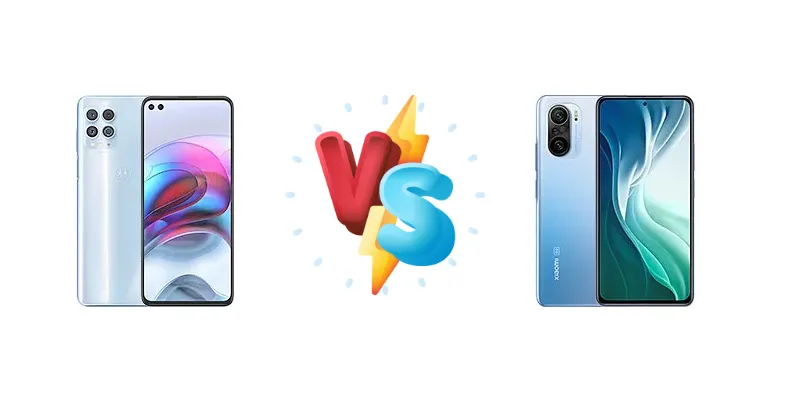
|
🏆 Quick Verdict
For most users, the Xiaomi Mi 11i emerges as the stronger choice. While the Motorola Edge S offers excellent value, the Mi 11i’s Snapdragon 888 provides a noticeable performance edge, coupled with faster 33W charging and a brighter display, making it a more well-rounded package.
| PHONES | ||
|---|---|---|
| Phone Names | Motorola Edge S | Xiaomi Mi 11i |
| Network | ||
|---|---|---|
| 2G bands | GSM 850 / 900 / 1800 / 1900 | GSM 850 / 900 / 1800 / 1900 |
| 3G bands | HSDPA 850 / 900 / 1700(AWS) / 1900 / 2100 | HSDPA 850 / 900 / 1700(AWS) / 1900 / 2100 |
| 4G bands | 1, 2, 3, 4, 5, 7, 8, 12, 13, 17, 20, 26, 28, 32, 34, 38, 39, 40, 41, 42, 43, 66 | 1, 2, 3, 4, 5, 7, 8, 12, 17, 20, 28, 38, 40, 41, 66 |
| 5G bands | 1, 3, 5, 7, 8, 28, 38, 41, 66, 77, 78 SA/NSA | 1, 3, 5, 7, 8, 20, 28, 38, 41, 77, 78 SA/NSA |
| Speed | HSPA 42.2/5.76 Mbps, LTE Cat20 2000/200 Mbps, 5G | HSPA, LTE, 5G |
| Technology | GSM / CDMA / HSPA / CDMA2000 / LTE / 5G | GSM / HSPA / LTE / 5G |
| CDMA2000 1x | - | |
| Launch | ||
|---|---|---|
| Announced | 2021, January 26 | 2021, March 29 |
| Status | Available. Released 2021, February 03 | Available. Released 2021, May 31 |
| Body | ||
|---|---|---|
| Dimensions | 168.4 x 74 x 9.7 mm (6.63 x 2.91 x 0.38 in) | 163.7 x 76.4 x 7.8 mm (6.44 x 3.01 x 0.31 in) |
| SIM | Nano-SIM + Nano-SIM | Nano-SIM + Nano-SIM |
| Weight | 215 g (7.58 oz) | 196 g (6.91 oz) |
| Water repellent design | IP53, dust and splash resistant | |
| Display | ||
|---|---|---|
| Protection | - | Corning Gorilla Glass 5 |
| Resolution | 1080 x 2520 pixels, 21:9 ratio (~409 ppi density) | 1080 x 2400 pixels, 20:9 ratio (~395 ppi density) |
| Size | 6.7 inches, 104.9 cm2 (~84.1% screen-to-body ratio) | 6.67 inches, 107.4 cm2 (~85.9% screen-to-body ratio) |
| Type | IPS LCD, 90Hz, HDR10, 560 nits (HBM) | Super AMOLED, 120Hz, HDR10+, 900 nits (HBM), 1300 nits (peak) |
| Platform | ||
|---|---|---|
| CPU | Octa-core (1x3.2 GHz Kryo 585 & 3x2.42 GHz Kryo 585 & 4x1.80 GHz Kryo 585) | Octa-core (1x2.84 GHz Cortex-X1 & 3x2.42 GHz Cortex-A78 & 4x1.80 GHz Cortex-A55) |
| Chipset | Qualcomm SM8250-AC Snapdragon 870 5G (7 nm) | Qualcomm SM8350 Snapdragon 888 5G (5 nm) |
| GPU | Adreno 650 | Adreno 660 |
| OS | Android 11, upgradable to Android 12 | Android 11, MIUI 12 |
| Memory | ||
|---|---|---|
| Card slot | microSDXC (uses shared SIM slot) | No |
| Internal | 128GB 6GB RAM, 128GB 8GB RAM, 256GB 8GB RAM | 128GB 8GB RAM, 256GB 8GB RAM |
| UFS 3.1 | UFS 3.1 | |
| Main Camera | ||
|---|---|---|
| Features | Laser AF, Dual-LED flash, ring flash (macro mode), panorama, HDR | Color spectrum sensor, LED flash, HDR, panorama |
| Single | - | 20 MP, f/2.5, (wide), 1/3.4", 0.8µm |
| Triple | 64 MP, f/1.7, (wide), 1/2.0", 0.7µm, PDAF 16 MP, f/2.2, 121˚ (ultrawide), 1.0µm, PDAF TOF 3D Auxiliary lens | 108 MP, f/1.8, 26mm (wide), 1/1.52", 0.7µm, PDAF 8 MP, f/2.2, 119˚ (ultrawide) 5 MP, f/2.4, 50mm (telephoto macro), 1/5.0", 1.12µm, AF |
| Video | 6K@30fps, 4K@30/60fps, 1080p@30/60/120fps, gyro-EIS | 8K@30fps, 4K@30/60fps, 1080p@30/60/120/240/960fps, gyro-EIS, HDR10+ |
| Selfie camera | ||
|---|---|---|
| Dual | 16 MP, f/2.2, (wide), 1.0µm 8 MP, f/2.4, 100˚ (ultrawide), 1.12µm | - |
| Features | HDR | HDR |
| Single | - | 20 MP, f/2.5, (wide), 1/3.4", 0.8µm |
| Video | 1080p@30fps | 1080p@30fps, 720p@120fps |
| Sound | ||
|---|---|---|
| 3.5mm jack | Yes | No |
| 35mm jack | Yes | No |
| Loudspeaker | Yes | Yes, with stereo speakers |
| - | 24-bit/192kHz audio | |
| Comms | ||
|---|---|---|
| Bluetooth | 5.1, A2DP, LE | 5.2, A2DP, LE |
| Infrared port | - | Yes |
| NFC | Yes | Yes (market/region dependent) |
| Positioning | GPS (L1+L5), GLONASS, BDS, GALILEO | GPS (L1+L5), GLONASS (L1), BDS (B1I+B1c+B2a), GALILEO (E1+E5a), QZSS (L1+L5), NavIC (L5) |
| Radio | No | No |
| USB | USB Type-C 3.1, OTG | USB Type-C 2.0, OTG |
| WLAN | Wi-Fi 802.11 a/b/g/n/ac/6, dual-band, Wi-Fi Direct | Wi-Fi 802.11 a/b/g/n/ac/6, dual-band, Wi-Fi Direct |
| Features | ||
|---|---|---|
| Sensors | Fingerprint (side-mounted), accelerometer, gyro, proximity, compass | Fingerprint (side-mounted), accelerometer, gyro, proximity, compass, barometer |
| Ready For support | - | |
| Battery | ||
|---|---|---|
| Charging | 20W wired | 33W wired, PD3.0, QC3, 100% in 52 min |
| Type | Li-Po 5000 mAh | Li-Po 4520 mAh |
| Misc | ||
|---|---|---|
| Colors | Blue, Silver | Celestial Silver, Frosty White, Cosmic Black |
| Models | - | M2012K11G |
| Price | About 250 EUR | About 230 EUR |
| SAR | - | 0.95 W/kg (head) 0.74 W/kg (body) |
| SAR EU | - | 0.57 W/kg (head) 0.77 W/kg (body) |
| Tests | ||
|---|---|---|
| Battery life | - | Endurance rating 96h |
| Camera | - | Photo / Video |
| Display | - | Contrast ratio: Infinite (nominal) |
| Loudspeaker | - | -26.0 LUFS (Very good) |
| Performance | - | AnTuTu: 690021 (v8) GeekBench: 3641 (v5.1) |
Motorola Edge S
- Excellent value for money
- Snapdragon 870 offers sustained performance
- Good battery life
- Slower charging speed (20W)
- Display brightness likely lower than Mi 11i
Xiaomi Mi 11i
- Faster Snapdragon 888 processor
- Brighter display (939 nits)
- Faster 33W charging with PD3.0/QC3
- Snapdragon 888 can be prone to throttling
- Potentially higher price point
Display Comparison
The Xiaomi Mi 11i boasts a significantly brighter display, reaching a measured 939 nits, compared to an unspecified brightness for the Motorola Edge S. This translates to better visibility outdoors under direct sunlight. While both displays likely feature high refresh rates (a common feature in this segment), the Mi 11i’s higher peak brightness is a clear advantage. The 'Infinite' contrast ratio specification for the Mi 11i suggests a quality AMOLED panel, while the Edge S’s panel characteristics remain less defined.
Camera Comparison
Both phones offer photo and video capabilities, but detailed camera specifications are limited. Without sensor size or aperture information, a direct comparison is difficult. However, the Mi 11i, being positioned as a slightly more premium device, likely benefits from more advanced image processing algorithms and potentially a larger main sensor. The inclusion of OIS (Optical Image Stabilization) on the Mi 11i would be a significant advantage for video recording and low-light photography. The 2MP macro cameras often found on both devices are unlikely to be a deciding factor for most users.
Performance
The core difference lies in the chipsets. The Xiaomi Mi 11i’s Snapdragon 888, built on a 5nm process, offers a theoretical performance advantage over the Motorola Edge S’s Snapdragon 870 (7nm). The 888 features the Cortex-X1 prime core clocked at 2.84 GHz, designed for peak performance, while the 870 utilizes the Kryo 585 architecture. However, the 888 is known to run hotter, potentially leading to thermal throttling during prolonged intensive tasks. The Edge S’s 870, while slightly less powerful on paper, often maintains more consistent performance due to its superior thermal efficiency. Both devices benefit from 5G connectivity.
Battery Life
Both the Motorola Edge S and Xiaomi Mi 11i achieve an impressive endurance rating of 96 hours, suggesting similar real-world battery life. However, the Mi 11i’s 33W wired charging, supporting PD3.0 and QC3, offers a significant advantage over the Edge S’s 20W charging. The Mi 11i can reach 100% charge in just 52 minutes, while the Edge S will take considerably longer. This faster charging is crucial for users who need to quickly top up their battery throughout the day.
Buying Guide
Buy the Motorola Edge S if you prioritize value and sustained performance under load. The Snapdragon 870 is known for its thermal efficiency, making it ideal for extended gaming sessions without significant throttling. Buy the Xiaomi Mi 11i if you demand peak performance for demanding tasks and appreciate faster charging speeds and a brighter, more vibrant display. It’s the better option for users who frequently edit videos, play graphically intensive games, or simply want the fastest possible experience.