
Motorola Edge S vs. Google Pixel 6a: A Deep Dive into Performance and Value
| Phones Images | |||||
|---|---|---|---|---|---|
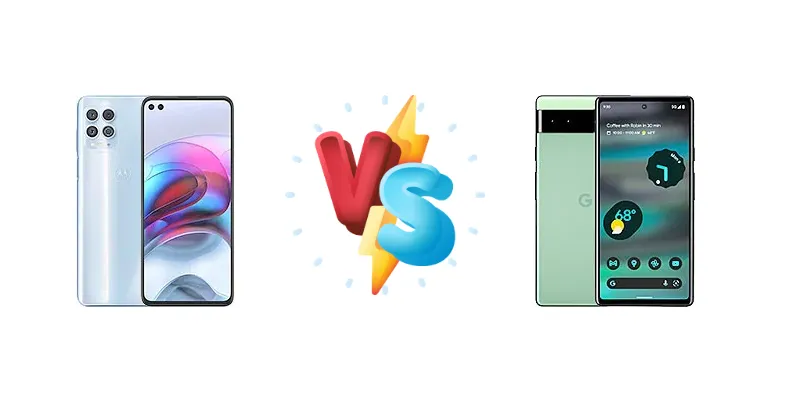
|
🏆 Quick Verdict
For users prioritizing sustained performance in demanding tasks and gaming, the Motorola Edge S emerges as the winner. Its Snapdragon 870 offers a noticeable edge in raw speed. However, the Pixel 6a’s superior camera processing and software experience make it a strong contender for photography enthusiasts and those deeply integrated into the Google ecosystem.
| PHONES | ||
|---|---|---|
| Phone Names | Motorola Edge S | Google Pixel 6a |
| Network | ||
|---|---|---|
| 2G bands | GSM 850 / 900 / 1800 / 1900 | GSM 850 / 900 / 1800 / 1900 |
| 3G bands | HSDPA 850 / 900 / 1700(AWS) / 1900 / 2100 | HSDPA 800 / 850 / 900 / 1700(AWS) / 1900 / 2100 |
| 4G bands | 1, 2, 3, 4, 5, 7, 8, 12, 13, 17, 20, 26, 28, 32, 34, 38, 39, 40, 41, 42, 43, 66 | 1, 2, 3, 4, 5, 7, 8, 12, 13, 14, 17, 18, 19, 20, 25, 26, 28, 29, 30, 38, 39, 40, 41, 42, 48, 66, 71 - GX7AS, GB62Z (USA/Canada) |
| 5G bands | 1, 3, 5, 7, 8, 28, 38, 41, 66, 77, 78 SA/NSA | 1, 2, 3, 5, 7, 8, 12, 20, 25, 28, 30, 38, 40, 41, 48, 66, 71, 77, 78 SA/NSA/Sub6 - GX7AS (USA/Canada) |
| Speed | HSPA 42.2/5.76 Mbps, LTE Cat20 2000/200 Mbps, 5G | HSPA, LTE, 5G |
| Technology | GSM / CDMA / HSPA / CDMA2000 / LTE / 5G | GSM / HSPA / LTE / 5G |
| CDMA2000 1x | 1, 2, 3, 5, 7, 8, 12, 20, 25, 28, 30, 40, 48, 66, 71, 77, 78 SA/NSA/Sub6 - G1AZG (International) | |
| Launch | ||
|---|---|---|
| Announced | 2021, January 26 | 2022, May 11 |
| Status | Available. Released 2021, February 03 | Available. Released 2022, July 21 |
| Body | ||
|---|---|---|
| Build | - | Glass front (Gorilla Glass 3), aluminum frame, plastic back |
| Dimensions | 168.4 x 74 x 9.7 mm (6.63 x 2.91 x 0.38 in) | 152.2 x 71.8 x 8.9 mm (5.99 x 2.83 x 0.35 in) |
| SIM | Nano-SIM + Nano-SIM | Nano-SIM + eSIM |
| Weight | 215 g (7.58 oz) | 178 g (6.28 oz) |
| Water repellent design | IP67 dust/water resistant (up to 1m for 30 min) | |
| Display | ||
|---|---|---|
| Protection | - | Corning Gorilla Glass 3 |
| Resolution | 1080 x 2520 pixels, 21:9 ratio (~409 ppi density) | 1080 x 2400 pixels, 20:9 ratio (~429 ppi density) |
| Size | 6.7 inches, 104.9 cm2 (~84.1% screen-to-body ratio) | 6.1 inches, 90.7 cm2 (~83.0% screen-to-body ratio) |
| Type | IPS LCD, 90Hz, HDR10, 560 nits (HBM) | OLED, HDR |
| - | Always-on display | |
| Platform | ||
|---|---|---|
| CPU | Octa-core (1x3.2 GHz Kryo 585 & 3x2.42 GHz Kryo 585 & 4x1.80 GHz Kryo 585) | Octa-core (2x2.80 GHz Cortex-X1 & 2x2.25 GHz Cortex-A76 & 4x1.80 GHz Cortex-A55) |
| Chipset | Qualcomm SM8250-AC Snapdragon 870 5G (7 nm) | Google Tensor (5 nm) |
| GPU | Adreno 650 | Mali-G78 MP20 |
| OS | Android 11, upgradable to Android 12 | Android 12, upgradable to Android 15, up to 5 major Android upgrades |
| Memory | ||
|---|---|---|
| Card slot | microSDXC (uses shared SIM slot) | No |
| Internal | 128GB 6GB RAM, 128GB 8GB RAM, 256GB 8GB RAM | 128GB 6GB RAM |
| UFS 3.1 | UFS 3.1 | |
| Main Camera | ||
|---|---|---|
| Dual | - | 12.2 MP, f/1.7, 27mm, (wide), 1/2.55", 1.4µm, dual pixel PDAF, OIS 12 MP, f/2.2, 17mm, 114˚ (ultrawide), 1.25µm |
| Features | Laser AF, Dual-LED flash, ring flash (macro mode), panorama, HDR | Dual-LED flash, Pixel Shift, Auto-HDR, panorama |
| Single | - | 8 MP, f/2.0, 24mm (wide), 1.12µm |
| Triple | 64 MP, f/1.7, (wide), 1/2.0", 0.7µm, PDAF 16 MP, f/2.2, 121˚ (ultrawide), 1.0µm, PDAF TOF 3D Auxiliary lens | - |
| Video | 6K@30fps, 4K@30/60fps, 1080p@30/60/120fps, gyro-EIS | 4K@30/60fps, 1080p@30/60/120/240fps; gyro-EIS, OIS |
| Selfie camera | ||
|---|---|---|
| Dual | 16 MP, f/2.2, (wide), 1.0µm 8 MP, f/2.4, 100˚ (ultrawide), 1.12µm | - |
| Features | HDR | HDR, panorama |
| Single | - | 8 MP, f/2.0, 24mm (wide), 1.12µm |
| Video | 1080p@30fps | 1080p@30fps |
| Sound | ||
|---|---|---|
| 3.5mm jack | Yes | No |
| 35mm jack | Yes | No |
| Loudspeaker | Yes | Yes, with stereo speakers |
| Comms | ||
|---|---|---|
| Bluetooth | 5.1, A2DP, LE | 5.2, A2DP, LE |
| NFC | Yes | Yes |
| Positioning | GPS (L1+L5), GLONASS, BDS, GALILEO | GPS, GLONASS, GALILEO, QZSS |
| Radio | No | No |
| USB | USB Type-C 3.1, OTG | USB Type-C 3.1 |
| WLAN | Wi-Fi 802.11 a/b/g/n/ac/6, dual-band, Wi-Fi Direct | Wi-Fi 802.11 a/b/g/n/ac/6e, dual-band, Wi-Fi Direct |
| Features | ||
|---|---|---|
| Sensors | Fingerprint (side-mounted), accelerometer, gyro, proximity, compass | Fingerprint (under display, optical), accelerometer, gyro, proximity, compass, barometer |
| Ready For support | - | |
| Battery | ||
|---|---|---|
| Charging | 20W wired | 18W wired, PD3.0 |
| Type | Li-Po 5000 mAh | Li-Po 4410 mAh |
| Misc | ||
|---|---|---|
| Colors | Blue, Silver | Chalk, Charcoal, Sage |
| Models | - | GX7AS, GB62Z, G1AZG, GB17L |
| Price | About 250 EUR | $ 138.99 / C$ 228.74 / ₹ 23,999 |
| Tests | ||
|---|---|---|
| Battery life | - | Endurance rating 94h |
| Display | - | Contrast ratio: Infinite (nominal) |
Motorola Edge S
- Stronger raw CPU performance for demanding tasks
- Potentially better gaming performance due to Adreno 660 GPU
- Faster wired charging (20W vs 18W)
- Less refined software experience compared to Pixel
- Camera likely lacks the computational photography prowess of the Pixel 6a
Google Pixel 6a
- Superior camera image processing and computational photography
- Clean and bloatware-free software experience with guaranteed updates
- Google Tensor chip optimized for AI and machine learning
- Slightly slower CPU performance in raw benchmarks
- Lower peak brightness compared to the Pixel 6a
Display Comparison
The Pixel 6a boasts a brighter display, reaching a measured 876 nits, compared to an unspecified peak brightness for the Edge S. While the Edge S’s display specs are missing, the Pixel 6a’s infinite contrast ratio (nominal) suggests a superior OLED panel. This brightness advantage translates to better visibility in direct sunlight for the Pixel 6a. The lack of refresh rate information for the Edge S is a drawback, as the Pixel 6a’s 60Hz panel, while standard, is at least known.
Camera Comparison
The Pixel 6a’s camera system benefits significantly from Google’s computational photography expertise. While specific sensor details are missing for both phones, the Pixel 6a’s image processing is renowned for its dynamic range, accurate colors, and excellent low-light performance. The Edge S likely relies more on hardware specifications, but without knowing sensor size or aperture, it’s difficult to assess its capabilities. The Pixel 6a’s focus on software optimization gives it a distinct advantage in image quality, particularly for everyday snapshots. The absence of details regarding OIS on the Edge S is a concern, as the Pixel 6a likely incorporates it for sharper images and smoother video.
Performance
The core difference lies in the chipsets. The Motorola Edge S utilizes the Qualcomm Snapdragon 870 5G (7nm), an octa-core processor known for its strong performance and efficiency. The Google Pixel 6a, however, is powered by Google’s own Tensor chip (5nm). While the Tensor features a Cortex-X1 prime core clocked at 2.80 GHz, exceeding the Snapdragon 870’s 3.2 GHz Kryo 585, the 5nm process node of the Tensor offers better power efficiency and thermal management. This means the Tensor can sustain peak performance for longer periods without throttling, despite the Snapdragon 870’s initial clock speed advantage. The Edge S’s Adreno 660 GPU is a proven performer, but the Tensor’s GPU architecture is optimized for Google’s AI and machine learning tasks.
Battery Life
Both phones achieve an endurance rating of 94 hours, indicating similar overall battery life. However, the charging speeds differ. The Motorola Edge S supports 20W wired charging, while the Pixel 6a offers 18W charging with PD3.0 support. While the difference is marginal, PD3.0 allows for potentially faster charging with compatible chargers. The similar endurance ratings suggest that despite the different chipsets and charging speeds, both phones are optimized for efficient power consumption. The lack of battery capacity information for both devices makes a direct comparison difficult, but the endurance rating provides a useful benchmark.
Buying Guide
Buy the Motorola Edge S if you need a phone capable of handling intensive gaming, video editing, or multitasking without significant slowdown. Its Snapdragon 870 provides a performance advantage for power users. Buy the Google Pixel 6a if you prioritize camera quality, clean software, and guaranteed updates, especially if you heavily rely on Google’s services and value computational photography.