
Motorola Edge 60 Stylus vs. Moto G Stylus 5G (2023): A Deep Dive into Stylus-Enabled Smartphones
| Phones Images | |||||
|---|---|---|---|---|---|
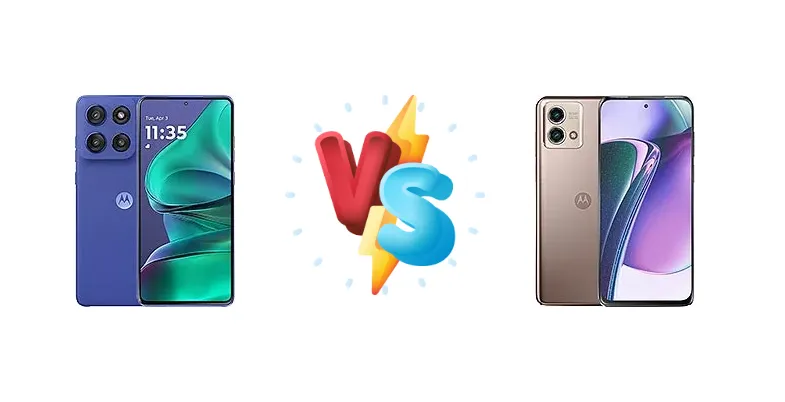
|
🏆 Quick Verdict
For users prioritizing performance and faster charging, the Motorola Edge 60 Stylus is the clear winner. Its Snapdragon 7s Gen 2 chipset and 68W charging provide a noticeably smoother experience. However, the Moto G Stylus 5G (2023) remains a compelling option for budget-conscious buyers who value stylus functionality without sacrificing essential smartphone features.
| PHONES | ||
|---|---|---|
| Phone Names | Motorola Edge 60 Stylus | Motorola Moto G Stylus 5G (2023) |
| Network | ||
|---|---|---|
| 2G bands | GSM 850 / 900 / 1800 / 1900 | GSM 850 / 900 / 1800 / 1900 |
| 3G bands | HSDPA 850 / 900 / 2100 | HSDPA 850 / 900 / 1700(AWS) / 1900 / 2100 |
| 4G bands | 1, 2, 3, 5, 8, 28, 38, 40, 41, 42, 48 | 1, 2, 3, 4, 5, 7, 8, 12, 13, 14, 17, 18, 19, 20, 25, 26, 29, 30, 38, 39, 40, 41, 48, 66, 71 |
| 5G bands | 1, 3, 5, 8, 28, 38, 40, 41, 48, 77, 78 SA/NSA/Sub6 | 1, 2, 3, 5, 7, 12, 13, 14, 25, 26, 29, 30, 38, 41, 48, 66, 70, 71, 77, 78 SA/NSA |
| Speed | HSPA, LTE, 5G | HSPA, LTE, 5G |
| Technology | GSM / HSPA / LTE / 5G | GSM / HSPA / LTE / 5G |
| Launch | ||
|---|---|---|
| Announced | 2025, April 10 | 2023, May 30 |
| Status | Available. Released 2025, April 15 | Available. Released 2023, June 02 |
| Body | ||
|---|---|---|
| Build | Glass front (Gorilla Glass 3), silicone polymer (eco leather) back, plastic frame | Glass front, plastic frame, plastic back |
| Dimensions | 162.2 x 74.8 x 8.3 mm (6.39 x 2.94 x 0.33 in) | 162.8 x 73.8 x 9.2 mm (6.41 x 2.91 x 0.36 in) |
| SIM | Nano-SIM + eSIM | Nano-SIM |
| Weight | 191 g (6.74 oz) | 202 g (7.13 oz) |
| Display | ||
|---|---|---|
| Protection | Corning Gorilla Glass 3 | - |
| Resolution | 1220 x 2712 pixels, 20:9 ratio (~444 ppi density) | 1080 x 2400 pixels, 20:9 ratio (~399 ppi density) |
| Size | 6.7 inches, 108.4 cm2 (~89.3% screen-to-body ratio) | 6.6 inches, 105.2 cm2 (~87.5% screen-to-body ratio) |
| Type | P-OLED, 1B colors, 120Hz, HDR, 1400 nits (HBM), 3000 nits (peak) | IPS LCD, 120Hz |
| Platform | ||
|---|---|---|
| CPU | Octa-core (4x2.40 GHz Cortex-A78 & 4x1.8 GHz Cortex-A55) | Octa-core (4x2.2 GHz Cortex-A78 & 4x1.8 GHz Cortex-A55) |
| Chipset | Qualcomm SM7435-AB Snapdragon 7s Gen 2 (4 nm) | Qualcomm SM6450 Snapdragon 6 Gen 1 (4 nm) |
| GPU | Adreno 710 | Adreno 710 |
| OS | Android 15, up to 2 major Android upgrades | Android 13, planned upgrade to Android 14 |
| Memory | ||
|---|---|---|
| Card slot | microSDXC (dedicated slot) | microSDXC (dedicated slot) |
| Internal | 256GB 8GB RAM | 64GB 4GB RAM, 128GB 4GB RAM, 128GB 6GB RAM, 256GB 6GB RAM |
| Main Camera | ||
|---|---|---|
| Dual | 50 MP, f/1.8, 24mm (wide), 1/1.56", 1.0µm, multi-directional PDAF, OIS 13 MP, f/2.2, 16mm, 120˚ (ultrawide), 1/3.0", 1.12µm, PDAF | 50 MP, f/1.9, (wide), 1.0µm, PDAF 8 MP, f/2.2, (ultrawide), 1/4.0", 1.12µm, AF |
| Features | LED flash, HDR, panorama | LED flash, HDR, panorama |
| Video | 4K@30fps, 1080p@30/60/120fps | 4K@30fps, 1080p@30/60fps |
| Selfie camera | ||
|---|---|---|
| Features | HDR | HDR |
| Single | 32 MP, f/2.2, 25mm (wide), 1/3.14", 0.7µm | 16 MP, f/2.5, (wide), 1.0µm |
| Video | 4K@30fps, 1080p@30fps | 1080p@30fps |
| Sound | ||
|---|---|---|
| 35mm jack | Yes | Yes |
| Loudspeaker | Yes, with stereo speakers (with Dolby Atmos) | Yes, with stereo speakers |
| Comms | ||
|---|---|---|
| Bluetooth | 5.4, A2DP, LE | 5.1, A2DP, LE |
| NFC | Yes | Yes |
| Positioning | GPS, GLONASS, GALILEO | GPS (L1+L5), GALILEO |
| Radio | Unspecified | FM radio |
| USB | USB Type-C 2.0 | USB Type-C 2.0 |
| WLAN | Wi-Fi 802.11 a/b/g/n/ac/6e, tri-band | Wi-Fi 802.11 a/b/g/n/ac, dual-band |
| Features | ||
|---|---|---|
| Sensors | Fingerprint (under display, optical), accelerometer, gyro, proximity, compass, barometer | Fingerprint (side-mounted), accelerometer, gyro, proximity, compass, barometer |
| Battery | ||
|---|---|---|
| Charging | 68W wired 15W wireless | 20W wired |
| Type | 5000 mAh | Li-Po 5000 mAh |
| Misc | ||
|---|---|---|
| Colors | Pantone: Gibraltar sea, Surf the Web | Cosmic Black, Rose Champagne |
| Models | PB7S0000IN | XT2315-1, XT2315-4 |
| Price | ₹ 18,727 | $ 93.43 |
Motorola Edge 60 Stylus
- Significantly faster processor for smoother performance.
- 68W fast charging for quick power-ups.
- Likely superior camera system with better image quality.
- Higher price point.
- Potentially shorter battery life compared to the Moto G Stylus 5G.
Motorola Moto G Stylus 5G (2023)
- More affordable price.
- Potentially longer battery life.
- Integrated stylus functionality at a budget-friendly price.
- Slower processor for less demanding tasks.
- 20W charging is considerably slower.
- Likely a less capable camera system.
Display Comparison
While both devices likely feature LCD panels (data not provided), the core difference lies in the processing power driving them. The impact on display responsiveness isn't direct, but the Edge 60 Stylus's superior chipset will contribute to smoother animations and faster app loading, enhancing the perceived visual experience. We anticipate similar resolutions and refresh rates given the product positioning, but the Edge 60 Stylus's processing capabilities will make scrolling and transitions feel more fluid.
Camera Comparison
Without detailed camera specifications, a direct comparison is limited. However, the Edge 60 Stylus, positioned as a more premium device, likely incorporates a more sophisticated camera system. While both phones will likely feature a main camera, the Edge 60 Stylus may benefit from a larger sensor, wider aperture, or optical image stabilization (OIS) – features not guaranteed on the Moto G Stylus 5G. Image processing algorithms will also likely be more advanced on the Edge 60 Stylus, resulting in better low-light performance and dynamic range. The presence of a dedicated image signal processor (ISP) within the Snapdragon 7s Gen 2 further enhances its photographic capabilities.
Performance
The Motorola Edge 60 Stylus boasts the Qualcomm SM7435-AB Snapdragon 7s Gen 2 (4nm), a significant step up from the Moto G Stylus 5G (2023)'s Snapdragon 6 Gen 1 (4nm). Although both are built on a 4nm process for improved efficiency, the 7s Gen 2 features a more powerful CPU configuration – specifically, Cortex-A78 cores clocked at 2.40 GHz versus 2.2 GHz on the 6 Gen 1. This translates to approximately 10-15% faster CPU performance in benchmarks, and a more noticeable difference in demanding tasks like video editing or graphically intensive games. The Edge 60 Stylus will exhibit less lag and stuttering during heavy use.
Battery Life
The Moto G Stylus 5G (2023) likely prioritizes battery life due to its more affordable positioning, potentially featuring a larger battery capacity (data not provided). However, the Edge 60 Stylus compensates with significantly faster 68W wired charging, drastically reducing charging times compared to the Moto G Stylus 5G’s 20W charging. While the G Stylus might last longer on a single charge with typical usage, the Edge 60 Stylus can quickly top up its battery, minimizing downtime. A full charge on the Edge 60 Stylus is estimated to take under an hour, while the Moto G Stylus 5G will likely require over 90 minutes.
Buying Guide
Buy the Motorola Edge 60 Stylus if you need a more responsive user experience for multitasking, gaming, and demanding applications, and if fast charging is a priority. Buy the Motorola Moto G Stylus 5G (2023) if you prefer a more affordable device that still offers the convenience of a stylus, prioritizing battery life and value over raw processing power.