
Motorola Edge 5G UW (2021) vs LG V60 ThinQ 5G UW: Which 5G Phone Reigns Supreme?
| Phones Images | |||||
|---|---|---|---|---|---|
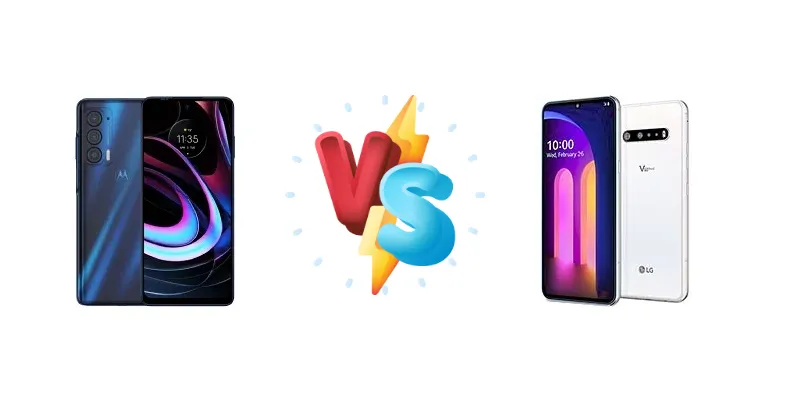
|
🏆 Quick Verdict
The LG V60 ThinQ 5G UW generally wins due to its superior Snapdragon 865 chipset, wireless charging, and more versatile camera system. However, the Motorola Edge 5G UW (2021) offers a compelling value proposition with a sleek design and competitive price, especially if 5G UW is a priority.
| PHONES | ||
|---|---|---|
| Phone Names | Motorola Edge 5G UW (2021) | LG V60 ThinQ 5G UW |
| Network | ||
|---|---|---|
| 2G bands | GSM 850 / 900 / 1800 / 1900 | GSM 850 / 900 / 1800 / 1900 |
| 3G bands | HSDPA 850 / 900 / 1700(AWS) / 1900 / 2100 | HSDPA 850 / 900 / 1700(AWS) / 1900 / 2100 |
| 4G bands | 1, 2, 3, 4, 5, 7, 8, 12, 13, 14, 17, 18, 19, 20, 25, 26, 29, 30, 38, 39, 40, 41, 66, 71 | 2, 3, 4, 5, 7, 12, 13, 20, 28, 46, 48, 66 |
| 5G bands | 2, 5, 25, 41, 66, 71, 77, 78, 260, 261 SA/NSA/Sub6/mmWave - Verizon, USA | 260, 261 mmWave |
| Speed | HSPA 42.2/5.76 Mbps, LTE Cat18 1200/150 Mbps, 5G | HSPA 42.2/5.76 Mbps, LTE (7CA) Cat22, 5G |
| Technology | GSM / HSPA / LTE / 5G | GSM / CDMA / HSPA / EVDO / LTE / 5G |
| - | CDMA2000 1xEV-DO | |
| Launch | ||
|---|---|---|
| Announced | 2021, October 14 | 2020, February 26. Released 2020, April 02 |
| Status | Available. Released 2021, October 14 | Discontinued |
| Body | ||
|---|---|---|
| Build | Glass front, plastic back | Glass front (Gorilla Glass 5), glass back (Gorilla Glass 6), aluminum frame |
| Dimensions | 169 x 75.6 x 9 mm (6.65 x 2.98 x 0.35 in) | 169.3 x 77.6 x 8.9 mm (6.67 x 3.06 x 0.35 in) |
| SIM | Nano-SIM | Nano-SIM (pre-installed) |
| Weight | 200 g (7.05 oz) | 218 g (7.69 oz) |
| Water-repellent design | IP68 dust/water resistant (up to 1.5m for 30 min) MIL-STD-810G compliant* Method 516.6, Procedure IV "Transit Drop" *does not guarantee ruggedness or use in extreme conditions | |
| Display | ||
|---|---|---|
| Protection | Corning Gorilla Glass 3 | Corning Gorilla Glass 5 |
| Resolution | 1080 x 2460 pixels (~395 ppi density) | 1080 x 2460 pixels (~395 ppi density) |
| Size | 6.8 inches, 109.8 cm2 (~85.9% screen-to-body ratio) | 6.8 inches, 109.8 cm2 (~83.6% screen-to-body ratio) |
| Type | LCD, 144Hz, HDR10 | P-OLED, HDR10+ |
| - | Always-on display | |
| Platform | ||
|---|---|---|
| CPU | Octa-core (1x2.4 GHz Cortex-A78 & 3x2.2 GHz Cortex-A78 & 4x1.9 GHz Cortex-A55) | Octa-core (1x2.84 GHz Cortex-A77 & 3x2.42 GHz Cortex-A77 & 4x1.80 GHz Cortex-A55) |
| Chipset | Qualcomm SM7325 Snapdragon 778G 5G (6 nm) | Qualcomm SM8250 Snapdragon 865 5G (7 nm+) |
| GPU | Adreno 642L | Adreno 650 |
| OS | Android 11 | Android 10, upgradable to Android 13 |
| Memory | ||
|---|---|---|
| Card slot | No | microSDXC (uses shared SIM slot) - dual-SIM model |
| Internal | 128GB 6GB RAM, 256GB 6GB RAM | 128GB 8GB RAM |
| - | UFS 2.1 | |
| Main Camera | ||
|---|---|---|
| Dual | - | 64 MP, f/1.8, 27mm (standard), 1/1.72", 0.8µm, dual pixel PDAF, OIS 13 MP, f/1.9, 12mm (ultrawide), 1/3.4", 1.0µm 0.3 MP, TOF 3D, f/1.4, (depth) |
| Features | Dual-LED dual-tone flash, HDR, panorama | Dual-LED dual-tone flash, HDR, panorama |
| Triple | 108 MP, f/1.9, (wide), 1/1.52", 0.7µm, PDAF 8 MP, f/2.2, 119˚ (ultrawide), 1.12µm, AF Auxiliary lens | - |
| Video | 4K@30fps, 1080p@30/60/120ps, 720p@960fps, gyro-EIS | 8K@30fps, 4K@30/60fps, 1080p, HDR10+, 24-bit/192kHz stereo sound rec., gyro-EIS |
| Selfie camera | ||
|---|---|---|
| Features | HDR | HDR |
| Single | 32 MP, f/2.3, (wide), 0.7µm | 10 MP, f/1.9, 30mm (standard), 1/3.1", 1.22µm |
| Video | 4K@30fps, 1080p@30/120fps | 4K@30fps, gyro-EIS |
| Sound | ||
|---|---|---|
| 3.5mm jack | No | Yes |
| 35mm jack | No | Yes |
| Loudspeaker | Yes | Yes, with stereo speakers |
| - | 32-bit/192kHz audio 24-bit/192kHz audio recording | |
| Comms | ||
|---|---|---|
| Bluetooth | 5.2, A2DP, LE | 5.1, A2DP, LE, aptX HD |
| NFC | Yes | Yes |
| Positioning | GPS, GLONASS, GALILEO | GPS, GLONASS, GALILEO, BDS |
| Radio | No | FM radio (USA model only) |
| USB | USB Type-C 2.0 | USB Type-C 3.1, OTG |
| WLAN | Wi-Fi 802.11 a/b/g/n/ac/6e, dual-band, Wi-Fi Direct | Wi-Fi 802.11 a/b/g/n/ac/6, dual-band, Wi-Fi Direct, DLNA |
| Features | ||
|---|---|---|
| Sensors | Fingerprint (side-mounted), accelerometer, gyro, proximity, compass, barometer | Fingerprint (under display, optical), accelerometer, gyro, proximity, compass, barometer |
| Battery | ||
|---|---|---|
| Charging | 30W wired | Wired, PD2.0, QC4 Wireless |
| Type | Li-Po 5000 mAh | Li-Po 5000 mAh |
| Misc | ||
|---|---|---|
| Colors | Nebula Blue | Classy Blue, Classy White |
| Models | - | LM-V600VML, LMV600VML |
| Price | About 550 EUR | About 870 EUR |
| SAR | - | 0.85 W/kg (head) 1.12 W/kg (body) |
Motorola Edge 5G UW (2021)
- Sleek and modern design
- Competitive price
- 90Hz display
- Strong 5G UW connectivity
- 108MP Main Camera
- Less powerful chipset than V60
- No wireless charging
- Less versatile camera system
- Plastic build
LG V60 ThinQ 5G UW
- Powerful Snapdragon 865 chipset
- Wireless charging
- Versatile camera system with telephoto lens
- Larger display
- Headphone Jack
- Higher price
- Less exciting design
- No high refresh rate display
- LG's exit from the smartphone market raises concerns about future software updates
Display Comparison
The LG V60 ThinQ boasts a 6.8-inch OLED display with a 20.4:9 aspect ratio, offering a larger and more immersive viewing experience. The Motorola Edge 5G UW (2021) features a 6.8-inch OLED display, but with a 90Hz refresh rate, providing smoother scrolling and animations. While both are OLED, the V60's size and the Edge's refresh rate are key differentiators.
Camera Comparison
The LG V60 ThinQ's camera system is more versatile, featuring a triple-lens setup with a 64MP main sensor, a 13MP ultrawide lens, and a 10MP telephoto lens. The Motorola Edge 5G UW (2021) has a triple-lens setup with a 108MP main sensor, an 8MP ultrawide lens, and a 2MP depth sensor. While the Edge has a higher megapixel count, the V60's telephoto lens provides greater zoom capabilities.
Performance
Here's where the LG V60 ThinQ truly shines. The Snapdragon 865 chipset provides significantly more processing power than the Snapdragon 778G in the Edge. Expect faster app loading, smoother multitasking, and better performance in demanding games. The Edge is still capable, but the V60 offers a noticeable performance edge.
Battery Life
Both phones offer a 4,500mAh battery. However, the LG V60 ThinQ's more efficient Snapdragon 865 chipset and the ability to utilize wireless charging give it a slight advantage in battery life and charging convenience.
Buying Guide
Who should buy the Motorola Edge 5G UW (2021)? Users prioritizing a stylish design, good value for money, and strong 5G UW connectivity. Who should buy the LG V60 ThinQ 5G UW? Users seeking top-tier performance, a more advanced camera system, and the convenience of wireless charging, even if it comes at a slightly higher price.