
Motorola Edge 30 Neo vs. Moto G73: A Head-to-Head Showdown
| Phones Images | |||||
|---|---|---|---|---|---|
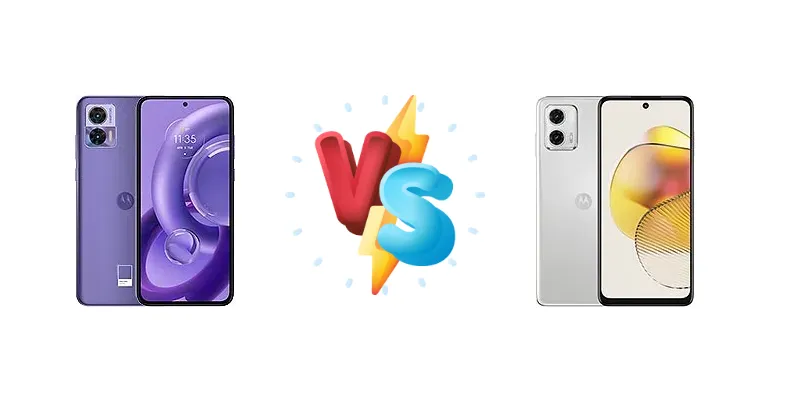
|
🏆 Quick Verdict
The Edge 30 Neo takes the crown thanks to its significantly faster charging, brighter display, and generally more premium feel. However, the Moto G73 offers a compelling alternative with a potentially more efficient chipset and a slightly larger screen, making it a strong contender for budget-conscious buyers.
| PHONES | ||
|---|---|---|
| Phone Names | Motorola Edge 30 Neo | Motorola Moto G73 |
| Network | ||
|---|---|---|
| 2G bands | GSM 850 / 900 / 1800 / 1900 | GSM 850 / 900 / 1800 / 1900 |
| 3G bands | HSDPA 850 / 900 / 1700(AWS) / 1900 / 2100 | HSDPA 850 / 900 / 1900 / 2100 |
| 4G bands | 1, 2, 3, 4, 5, 7, 8, 12, 17, 20, 25, 26, 28, 32, 38, 40, 41, 42, 43 | 1, 2, 3, 5, 7, 8, 18, 19, 20, 26, 28, 32, 38, 40, 41, 42 |
| 5G bands | 1, 3, 5, 7, 8, 20, 28, 38, 40, 41, 66, 78 SA/NSA | 1, 3, 5, 7, 8, 20, 28, 38, 40, 41, 77, 78 SA/NSA |
| Speed | HSPA, LTE, 5G | HSPA, LTE, 5G |
| Technology | GSM / HSPA / LTE / 5G | GSM / HSPA / LTE / 5G |
| Launch | ||
|---|---|---|
| Announced | 2022, September 08 | 2023, January 24 |
| Status | Available. Released 2022, October 07 | Available. Released 2023, January 24 |
| Body | ||
|---|---|---|
| Build | Glass front, plastic frame, plastic back | Glass front, plastic back, plastic frame |
| Dimensions | 152.9 x 71.2 x 7.8 mm (6.02 x 2.80 x 0.31 in) | 161.4 x 73.8 x 8.3 mm (6.35 x 2.91 x 0.33 in) |
| SIM | · Nano-SIM· Nano-SIM + Nano-SIM | Nano-SIM + Nano-SIM |
| Weight | 155 g (5.47 oz) | 181 g (6.38 oz) |
| Splash and dust resistant | Water-resistant design | |
| Display | ||
|---|---|---|
| Resolution | 1080 x 2400 pixels, 20:9 ratio (~419 ppi density) | 1080 x 2400 pixels, 20:9 ratio (~405 ppi density) |
| Size | 6.28 inches, 95.2 cm2 (~87.5% screen-to-body ratio) | 6.5 inches, 102.0 cm2 (~85.6% screen-to-body ratio) |
| Type | P-OLED, 120Hz | IPS LCD, 120Hz |
| Platform | ||
|---|---|---|
| CPU | Octa-core (2x2.2 GHz Kryo 660 Gold & 6x1.7 GHz Kryo 660 Silver) | Octa-core (2x2.2 GHz Cortex-A78 & 6x2.0 GHz Cortex-A55) |
| Chipset | Qualcomm SM6375 Snapdragon 695 5G (6 nm) | Mediatek Dimensity 930 (6 nm) |
| GPU | Adreno 619 | IMG BXM-8-256 |
| OS | Android 12, planned upgrade to Android 15 | Android 13, planned upgrade to Android 14 |
| Memory | ||
|---|---|---|
| Card slot | No | microSDXC (uses shared SIM slot) |
| Internal | 128GB 6GB RAM, 128GB 8GB RAM, 256GB 8GB RAM | 128GB 8GB RAM, 256GB 8GB RAM |
| Main Camera | ||
|---|---|---|
| Dual | 64 MP, f/1.8, (wide), 1/1.97", 0.7µm, PDAF, OIS 13 MP, f/2.2, 120˚ (ultrawide), 1/3.0", 1.12µm, AF | 50 MP, f/1.8, (wide), 1.0µm, PDAF 8 MP, f/2.2, 118˚ (ultrawide), 1.12µm, AF |
| Features | Dual-LED flash, HDR, panorama | LED flash, HDR, panorama |
| Video | 1080p@30/60/120fps | 1080p@30/60fps |
| Selfie camera | ||
|---|---|---|
| Features | HDR | - |
| Single | 32 MP, f/2.4, (wide), 1/3.0", 0.7µm | 16 MP, f/2.4, (wide), 1.0µm |
| Video | 1080p@30fps | 1080p@30fps |
| Sound | ||
|---|---|---|
| 3.5mm jack | No | Yes |
| 35mm jack | No | Yes |
| Loudspeaker | Yes, with stereo speakers | Yes, with stereo speakers |
| Comms | ||
|---|---|---|
| Bluetooth | 5.1, A2DP, LE, aptX HD, aptX Adaptive | 5.3, A2DP, LE |
| NFC | Yes | Yes |
| Positioning | GPS, GLONASS, GALILEO | GPS, GLONASS, GALILEO |
| Radio | No | Unspecified |
| USB | USB Type-C 3.1, OTG | USB Type-C 2.0, OTG |
| WLAN | Wi-Fi 802.11 a/b/g/n/ac, dual-band, Wi-Fi Direct | Wi-Fi 802.11 a/b/g/n/ac, dual-band |
| Features | ||
|---|---|---|
| Sensors | Fingerprint (under display, optical), accelerometer, proximity, compass | Fingerprint (side-mounted), accelerometer, proximity, compass |
| Battery | ||
|---|---|---|
| Charging | 68W wired 5W wireless | 30W wired |
| Type | Li-Po 4020 mAh | Li-Po 5000 mAh |
| Misc | ||
|---|---|---|
| Colors | Very Peri, Black Onyx, Ice Palace, Aqua Foam | Lucent White, Midnight Blue |
| Models | XT2245-1 | - |
| Price | € 156.44 / $ 185.00 / £ 229.00 | About 190 EUR |
| Tests | ||
|---|---|---|
| Battery life | Endurance rating 104h | - |
| Camera | Photo / Video | - |
| Display | Contrast ratio: Infinite (nominal) | - |
| Loudspeaker | -26.4 LUFS (Good) | - |
| Performance | AnTuTu: 380818 (v9) GeekBench: 1964 (v5.1) GFXBench: 16fps (ES 3.1 onscreen) | - |
Motorola Edge 30 Neo
- Faster Charging (68W)
- Brighter Display (1004 nits)
- Generally Better Performance
- Premium Design
- Potentially Higher Price
- Smaller Battery Capacity (estimated)
Motorola Moto G73
- Larger Screen Size (estimated)
- Potentially Better Battery Efficiency
- More Affordable Price
- Slower Charging (30W)
- Less Bright Display (estimated)
- Lower Performance
Display Comparison
The Edge 30 Neo boasts a significantly brighter display, peaking at 1004 nits compared to the Moto G73's likely lower brightness (estimated around 500-700 nits based on typical G-series displays). Both feature OLED panels, offering excellent contrast and vibrant colors. The Edge 30 Neo's higher brightness makes it better suited for outdoor use. The Moto G73 has a slightly larger screen size, which some users may prefer for media consumption.
Camera Comparison
Camera performance is a complex area. Both phones feature capable camera systems, but the Edge 30 Neo likely has a slight edge in image processing and overall quality, especially in well-lit conditions. The Moto G73's camera setup is expected to be solid, but may not match the Edge 30 Neo's capabilities. Detailed camera testing would be needed for a definitive conclusion.
Performance
The Edge 30 Neo's Snapdragon 695 5G generally outperforms the Moto G73's Dimensity 930 in most benchmarks and real-world usage. While both are capable of handling everyday tasks, the Edge 30 Neo offers smoother multitasking and a more responsive feel. Gaming performance will also be better on the Edge 30 Neo. However, the Dimensity 930 is known for its efficiency, potentially leading to slightly better battery life in some scenarios.
Battery Life
The Edge 30 Neo's 68W wired charging is a game-changer, allowing for incredibly fast top-ups. The Moto G73's 30W charging is considerably slower. While the Moto G73 might have slightly better battery efficiency due to its chipset, the Edge 30 Neo's charging speed more than compensates for any potential difference.
Buying Guide
The Motorola Edge 30 Neo is ideal for users who prioritize fast charging, a vibrant display, and a more polished design. The Moto G73 is a great pick for those seeking a larger screen, potentially better battery efficiency, and a more affordable price point.