
Motorola Edge 30 Fusion vs Edge 40: The Ultimate Showdown
| Phones Images | |||||
|---|---|---|---|---|---|
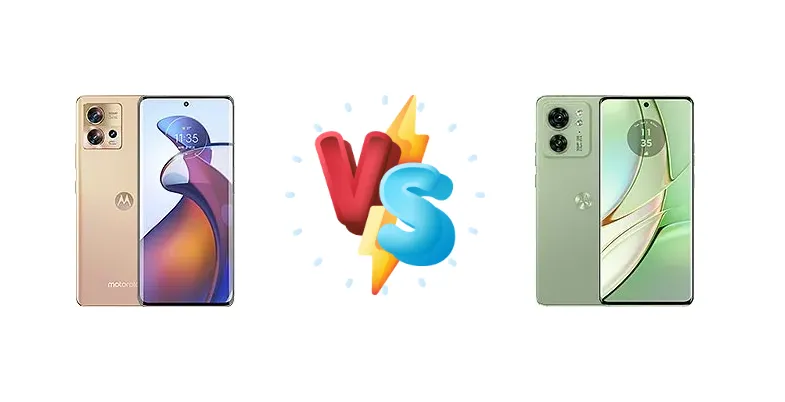
|
🏆 Quick Verdict
The Edge 40 edges out the Fusion thanks to its brighter display, wireless charging, and slightly more modern design. However, the Fusion's Snapdragon 888+ offers a performance boost in some scenarios, making it a compelling choice for those prioritizing raw power. Ultimately, the Edge 40 provides a more well-rounded experience.
| PHONES | ||
|---|---|---|
| Phone Names | Motorola Edge 30 Fusion | Motorola Edge 40 |
| Network | ||
|---|---|---|
| 2G bands | GSM 850 / 900 / 1800 / 1900 | GSM 850 / 900 / 1800 / 1900 |
| 3G bands | HSDPA 850 / 900 / 1700(AWS) / 1900 / 2100 - International | HSDPA 850 / 900 / 1700(AWS) / 1900 / 2100 |
| 4G bands | 1, 2, 3, 4, 5, 7, 8, 12, 13, 17, 18, 19, 20, 25, 26, 28, 32, 38, 39, 40, 41, 42, 43, 66 - International | 1, 2, 3, 4, 5, 7, 8, 12, 13, 17, 20, 26, 28, 32, 38, 39, 40, 41, 42, 43, 66 |
| 5G bands | 1, 3, 5, 7, 8, 20, 28, 38, 40, 41, 66, 77, 78 SA/NSA - International | 1, 2, 3, 5, 7, 8, 20, 28, 38, 40, 41, 66, 77, 78 SA/NSA/Sub6 |
| Speed | HSPA, LTE, 5G | HSPA, LTE, 5G |
| Technology | GSM / CDMA / HSPA / CDMA2000 / LTE / 5G | GSM / HSPA / LTE / 5G |
| 1, 2, 3, 5, 7, 8, 20, 28, 38, 41, 77, 78 SA/NSA - PRC | - | |
| Launch | ||
|---|---|---|
| Announced | 2022, September 08 | 2023, May 04 |
| Status | Available. Released 2022, September 08 | Available. Released 2023, May 04 |
| Body | ||
|---|---|---|
| Build | Glass front (Gorilla Glass 5), glass back (Gorilla Glass 5), aluminum frame | Glass front, aluminum frame, plastic back or eco leather back |
| Dimensions | 158.5 x 72 x 7.5 mm or 7.7 mm | 158.4 x 72 x 7.6 mm (6.24 x 2.83 x 0.30 in) |
| SIM | · Nano-SIM· Nano-SIM + Nano-SIM | · Nano-SIM· Nano-SIM + eSIM· Nano-SIM + Nano-SIM |
| Weight | 168 g / 175 g (5.93 oz) | 167 g or 171 g (5.89 oz) |
| Splash and dust resistant | IP68 dust/water resistant (up to 1.5m for 30 min) | |
| Display | ||
|---|---|---|
| Protection | Corning Gorilla Glass 5 | - |
| Resolution | 1080 x 2400 pixels, 20:9 ratio (~402 ppi density) | 1080 x 2400 pixels, 20:9 ratio (~402 ppi density) |
| Size | 6.55 inches, 103.6 cm2 (~90.8% screen-to-body ratio) | 6.55 inches, 103.6 cm2 (~90.8% screen-to-body ratio) |
| Type | P-OLED, 1B colors, 144Hz, HDR10+, 1100 nits (peak) | P-OLED, 144Hz, HDR10+, 1200 nits (peak) |
| Platform | ||
|---|---|---|
| CPU | Octa-core (1x2.99 GHz Cortex-X1 & 3x2.42 GHz Cortex-A78 & 4x1.80 GHz Cortex-A55) | Octa-core (4x2.6 GHz Cortex-A78 & 4x2.0 GHz Cortex-A55) |
| Chipset | Qualcomm SM8350 Snapdragon 888+ 5G (5 nm) | Mediatek Dimensity 8020 (6 nm) |
| GPU | Adreno 660 | Mali-G77 MC9 |
| OS | Android 12, upgradable to Android 14 | Android 13, up to 2 major Android upgrades |
| Memory | ||
|---|---|---|
| Card slot | No | No |
| Internal | 128GB 8GB RAM, 256GB 6GB RAM, 256GB 8GB RAM, 256GB 12GB RAM, 512GB 12GB RAM | 128GB 8GB RAM, 256GB 8GB RAM |
| UFS 3.1 | UFS 3.1 | |
| Main Camera | ||
|---|---|---|
| Dual | - | 50 MP, f/1.4, (wide), 1/1.55", 1.0µm, multi-directional PDAF, OIS 13 MP, f/2.2, 120˚ (ultrawide), 1/3.0", 1.12µm, AF |
| Features | LED flash, panorama, HDR | Dual-LED flash, HDR, panorama |
| Triple | 50 MP, f/1.8, (wide), 1/1.55", 1.0µm, multi-directional PDAF, OIS 13 MP, f/2.2, 120˚ (ultrawide), 1.12µm, AF Auxiliary lens | - |
| Video | 8K@30fps, 4K@30fps, 1080p@30/60/120fps, 720p@960fps, gyro-EIS | 4K@30fps, 1080p@30/60/120fps, 720p@960fps, HDR10, gyro-EIS |
| Selfie camera | ||
|---|---|---|
| Features | HDR | HDR |
| Single | 32 MP, f/2.5, (wide), 1/2.8", 0.8µm, AF | 32 MP, f/2.4, (wide), 1/3.0", 0.7µm |
| Video | 4K@30fps, 1080p@30fps | 4K@30fps, 1080p@30/120fps |
| Sound | ||
|---|---|---|
| 3.5mm jack | No | No |
| 35mm jack | No | No |
| Loudspeaker | Yes, with stereo speakers | Yes, with stereo speakers |
| Comms | ||
|---|---|---|
| Bluetooth | 5.2, A2DP, LE, aptX HD, aptX Adaptive | 5.2, A2DP, LE |
| NFC | Yes | Yes |
| Positioning | GPS (L1+L5), GLONASS, BDS (B1I+B1c), GALILEO | GPS, GLONASS, GALILEO, BDS |
| Radio | No | No |
| USB | USB Type-C 3.1, OTG | USB Type-C 2.0, OTG |
| WLAN | Wi-Fi 802.11 a/b/g/n/ac/6e, tri-band, Wi-Fi Direct | Wi-Fi 802.11 a/b/g/n/ac/6e, tri-band, Wi-Fi Direct |
| Features | ||
|---|---|---|
| Sensors | Fingerprint (under display, optical), accelerometer, gyro, proximity, compass | Fingerprint (under display, optical), accelerometer, gyro, proximity, compass |
| Ready For 3.5 support | Moto Ready For support | |
| Battery | ||
|---|---|---|
| Charging | 68W wired, 50% in 10 min | 68W wired 15W wireless |
| Type | Li-Po 4400 mAh | Li-Po 4400 mAh |
| Misc | ||
|---|---|---|
| Colors | Neptune Blue, Cosmic Grey, Solar Gold, Aurora White, Viva Magenta | Nebula Green, Lunar Blue, Eclipse Black, Viva Magenta |
| Models | XT2243-1 | XT2303-2 |
| Price | About 150 EUR | € 202.03 / $ 419.99 / £ 199.00 / ₹ 29,999 |
| Tests | ||
|---|---|---|
| Battery life | Endurance rating 101h | Endurance rating 98h |
| Camera | Photo / Video | Photo / Video |
| Display | Contrast ratio: Infinite (nominal) | Contrast ratio: Infinite (nominal) |
| Loudspeaker | -24.6 LUFS (Very good) | -24.2 LUFS (Very good) |
| Performance | AnTuTu: 827929 (v9) GeekBench: 3458 (v5.1) GFXBench: 62fps (ES 3.1 onscreen) | AnTuTu: 688347 (v9) GeekBench: 3320 (v5.1), 3603 (v6) GFXBench: 33fps (ES 3.1 onscreen) |
Motorola Edge 30 Fusion
- Excellent performance (Snapdragon 888+)
- Impressive battery life (101h endurance)
- Fast 68W wired charging
- Competitive price
- Slightly less bright display than Edge 40
- No wireless charging
- Design is a bit more utilitarian
Motorola Edge 40
- Brighter display (1043 nits)
- Wireless charging (15W)
- Sleeker design
- Modern chipset (Dimensity 8020)
- Slightly lower endurance rating (98h)
- Performance slightly behind the Fusion in some scenarios
- Potentially higher price
Display Comparison
The Edge 40 takes the display crown with a measured peak brightness of 1043 nits compared to the Fusion's 946 nits. Both offer excellent contrast ratios (infinite nominal), but the Edge 40's higher brightness makes it more visible in direct sunlight. Both utilize OLED panels, ensuring vibrant colors and deep blacks.
Camera Comparison
Both phones feature capable camera systems, but detailed camera comparisons require more in-depth testing. Generally, the Edge 40 is expected to have slightly improved image processing and low-light performance due to newer software and potentially a refined sensor. Both offer versatile camera setups for various shooting scenarios.
Performance
The Edge 30 Fusion packs a Snapdragon 888+ chipset, known for its strong performance. The Edge 40 utilizes a Dimensity 8020. While the Dimensity 8020 is a capable chip, the 888+ generally holds a slight edge in sustained performance and gaming, particularly in graphically intensive titles. However, day-to-day tasks will feel snappy on both devices.
Battery Life
The Edge 30 Fusion boasts an impressive endurance rating of 101 hours, slightly surpassing the Edge 40's 98 hours. However, real-world battery life will depend on usage patterns. The Edge 40's inclusion of 15W wireless charging provides added convenience.
Buying Guide
The Motorola Edge 30 Fusion is ideal for users who prioritize performance and value, especially gamers or those who frequently use demanding apps. The Motorola Edge 40 is a better fit for those who want a brighter display, wireless charging convenience, and a more refined overall experience, even if it means a slight trade-off in raw processing power.