
Motorola Edge 20 vs Sony Xperia 10 III Lite: Which Mid-Range 5G Phone Wins?
| Phones Images | |||||
|---|---|---|---|---|---|
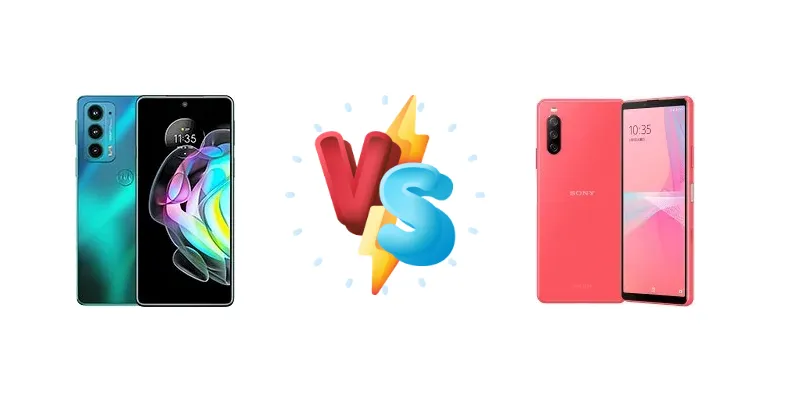
|
🏆 Quick Verdict
For the average user prioritizing performance and display quality, the Motorola Edge 20 is the clear winner. Its Snapdragon 778G chipset provides a substantial performance advantage over the Xperia 10 III Lite’s Snapdragon 690, while the 650 nits peak brightness offers a more usable outdoor experience. The Xperia 10 III Lite remains a viable option for those on a tighter budget.
| PHONES | ||
|---|---|---|
| Phone Names | Motorola Edge 20 | Sony Xperia 10 III Lite |
| Network | ||
|---|---|---|
| 2G bands | GSM 850 / 900 / 1800 / 1900 | GSM 850 / 900 / 1800 / 1900 |
| 3G bands | HSDPA 850 / 900 / 1700(AWS) / 1900 / 2100 | HSDPA 850 / 1900 |
| 4G bands | 1, 2, 3, 4, 5, 7, 8, 12, 18, 19, 20, 26, 28, 32, 34, 38, 39, 40, 41, 42, 43, 66 | 1, 3, 4, 12, 18, 19, 38, 41 |
| 5G bands | 1, 3, 5, 7, 8, 28, 38, 41, 66, 77, 78 SA/NSA/Sub6 | 77, 78 SA/NSA |
| Speed | HSPA 42.2/5.76 Mbps, LTE Cat18 1200/150 Mbps, 5G | HSPA, LTE, 5G |
| Technology | GSM / HSPA / LTE / 5G | GSM / HSPA / LTE / 5G |
| Launch | ||
|---|---|---|
| Announced | 2021, July 29 | 2021, August 20 |
| Status | Available. Released 2021, August 16 | Available. Released 2021, August 27 |
| Body | ||
|---|---|---|
| Build | Glass front (Gorilla Glass 5), aluminum frame, glass back (Gorilla Glass 3) | Glass front (Gorilla Glass 6), glass back (Gorilla Glass 6), plastic frame |
| Dimensions | 163 x 76 x 7 mm (6.42 x 2.99 x 0.28 in) | 154 x 68 x 8.3 mm (6.06 x 2.68 x 0.33 in) |
| SIM | Nano-SIM + Nano-SIM | Nano-SIM + eSIM |
| Weight | 163 g (5.75 oz) | 169 g (5.96 oz) |
| Water-repellent design | - | |
| Display | ||
|---|---|---|
| Protection | Corning Gorilla Glass 5 | Corning Gorilla Glass 6 |
| Resolution | 1080 x 2400 pixels, 19.5:9 ratio (~385 ppi density) | 1080 x 2520 pixels, 21:9 ratio (~457 ppi density) |
| Size | 6.7 inches, 110.2 cm2 (~89.0% screen-to-body ratio) | 6.0 inches, 84.1 cm2 (~80.3% screen-to-body ratio) |
| Type | OLED, 1B colors, 144Hz, HDR10+ | OLED, 1B colors, HDR |
| Platform | ||
|---|---|---|
| CPU | Octa-core (1x2.4 GHz Cortex-A78 & 3x2.2 GHz Cortex-A78 & 4x1.9 GHz Cortex-A55) | Octa-core (2x2.0 GHz Kryo 560 Gold & 6x1.7 GHz Kryo 560 Silver) |
| Chipset | Qualcomm SM7325 Snapdragon 778G 5G (6 nm) | Qualcomm SM6350 Snapdragon 690 5G (8 nm) |
| GPU | Adreno 642L | Adreno 619 |
| OS | Android 11, upgradable to Android 13 | Android 11 |
| Memory | ||
|---|---|---|
| Card slot | No | microSDXC (uses shared SIM slot) |
| Internal | 128GB 6GB RAM, 128GB 8GB RAM, 256GB 8GB RAM | 64GB 6GB RAM |
| UFS | - | |
| Main Camera | ||
|---|---|---|
| Features | Dual-LED dual-tone flash, HDR, panorama | LED flash, HDR, panorama |
| Triple | 108 MP, f/1.9, (wide), 1/1.52", 0.7µm, PDAF 8 MP, f/2.4, 79mm (telephoto), 1.0µm, 3x optical zoom, PDAF, OIS 16 MP, f/2.2, 17mm, 119˚ (ultrawide), 1/3.06", 1.0µm, AF | 12 MP, f/1.8, 27mm (wide), 1/2.8", PDAF 8 MP, f/2.4, 54mm (telephoto), 1/4.0", PDAF, 2x optical zoom 8 MP, f/2.2, 16mm, 120˚ (ultrawide), 1/4.0" |
| Video | 4K@30fps, 1080p@30/60/120/240fps, 720p@960fps, gyro-EIS | 4K@30fps, 1080p@30fps |
| Selfie camera | ||
|---|---|---|
| Features | HDR | HDR |
| Single | 32 MP, f/2.3, (wide), 0.7µm | 8 MP, f/2.0, 24mm (wide), 1/4.0" |
| Video | 1080p@30fps | 1080p@30fps |
| Sound | ||
|---|---|---|
| 3.5mm jack | No | Yes |
| 35mm jack | No | Yes |
| Loudspeaker | Yes | Yes |
| Comms | ||
|---|---|---|
| Bluetooth | 5.2, A2DP, LE, aptX HD, aptX Adaptive | 5.1, A2DP, LE, aptX HD |
| NFC | Yes | Yes |
| Positioning | GPS, GLONASS, BDS, GALILEO | GPS, GLONASS, GALILEO, BDS, QZSS |
| Radio | No | No |
| USB | USB Type-C 2.0 | USB Type-C 3.1, OTG, video output |
| WLAN | Wi-Fi 802.11 a/b/g/n/ac/6e, dual-band, Wi-Fi Direct | Wi-Fi 802.11 a/b/g/n/ac, dual-band, Wi-Fi Direct |
| Features | ||
|---|---|---|
| Sensors | Fingerprint (side-mounted), accelerometer, gyro, proximity, compass | Fingerprint (side-mounted), accelerometer, proximity, compass |
| Battery | ||
|---|---|---|
| Charging | 30W wired | 30W wired, PD, QC |
| Type | Li-Po 4000 mAh | Li-Po 4500 mAh |
| Misc | ||
|---|---|---|
| Colors | Frosted Grey, Frosted White, Frosted Emerald | Black, White, Blue, Pink |
| Models | XT2143-1 | XQ-BT44 |
| Price | About 140 EUR | About 370 EUR |
| Tests | ||
|---|---|---|
| Battery life | Endurance rating 86h | - |
| Camera | Photo / Video | - |
| Display | Contrast ratio: Infinite (nominal) | - |
| Loudspeaker | -28.7 LUFS (Average) | - |
| Performance | AnTuTu: 424031 (v8), 488574 (v9) GeekBench: 2550 (v5.1) GFXBench: 29fps (ES 3.1 onscreen) | - |
Motorola Edge 20
- Significantly faster processor (Snapdragon 778G)
- Brighter display for better outdoor visibility
- Likely superior camera performance
- More efficient 6nm chipset
- May be slightly larger and heavier
- Potentially higher price (though decreasing)
Sony Xperia 10 III Lite
- More affordable price point
- Support for PD and QC charging standards
- Potentially more compact form factor
- Sony’s natural color image processing
- Less powerful processor (Snapdragon 690)
- Likely dimmer display
- Potentially slower performance in demanding tasks
Display Comparison
The Motorola Edge 20 boasts a significantly brighter display, reaching a measured 650 nits peak brightness. This is crucial for outdoor visibility, a common pain point with many smartphones. While the Xperia 10 III Lite’s display specifications aren’t provided, Sony typically prioritizes color accuracy over peak brightness in this series. The Edge 20’s ‘Infinite’ contrast ratio (nominal) suggests a typical OLED panel, offering deeper blacks and more vivid colors compared to the likely LCD panel in the Xperia 10 III Lite. This difference will be noticeable when consuming HDR content.
Camera Comparison
Both phones are listed as having Photo/Video capabilities, but detailed camera specifications are lacking. However, given the Edge 20’s positioning, it likely features a more sophisticated camera system with a larger sensor and more advanced image processing. Sony’s Xperia 10 III Lite typically focuses on natural color reproduction, while Motorola often leans towards more vibrant, saturated images. Without specific sensor details, it’s difficult to make a definitive judgment, but the Edge 20’s more powerful ISP (Image Signal Processor) within the Snapdragon 778G suggests superior image quality, particularly in low-light conditions.
Performance
The core difference between these two phones lies in their chipsets. The Motorola Edge 20 utilizes the Qualcomm SM7325 Snapdragon 778G 5G (6 nm), a processor built on a more efficient 6nm process. Its octa-core CPU configuration – 1x2.4 GHz Cortex-A78, 3x2.2 GHz Cortex-A78, and 4x1.9 GHz Cortex-A55 – provides a substantial performance uplift compared to the Sony Xperia 10 III Lite’s Snapdragon 690 (8 nm). The 778G’s more powerful CPU cores and Adreno 642L GPU translate to smoother multitasking, faster app loading times, and a better gaming experience. The 8nm process of the 690, while still capable, is less efficient, potentially leading to more thermal throttling under sustained load.
Battery Life
The Motorola Edge 20 has an endurance rating of 86 hours, indicating solid battery life. Both phones support 30W wired charging, with the Xperia 10 III Lite adding support for PD and QC standards. While the Edge 20’s battery capacity isn’t specified, the 86-hour endurance rating suggests a well-optimized combination of battery size and power efficiency. The Snapdragon 778G’s 6nm process contributes to this efficiency. The Xperia 10 III Lite’s battery capacity is also unknown, but its less powerful chipset may offset a potentially smaller battery size.
Buying Guide
Buy the Motorola Edge 20 if you need a phone capable of handling demanding applications, enjoy mobile gaming, and value a brighter, more vibrant display. Buy the Sony Xperia 10 III Lite if you prioritize a more compact form factor, prefer Sony’s image processing style, and are looking for the most affordable 5G experience without sacrificing essential functionality.