
Motorola Edge 20 Pro vs Edge 20: The Ultimate Showdown
| Phones Images | |||||
|---|---|---|---|---|---|
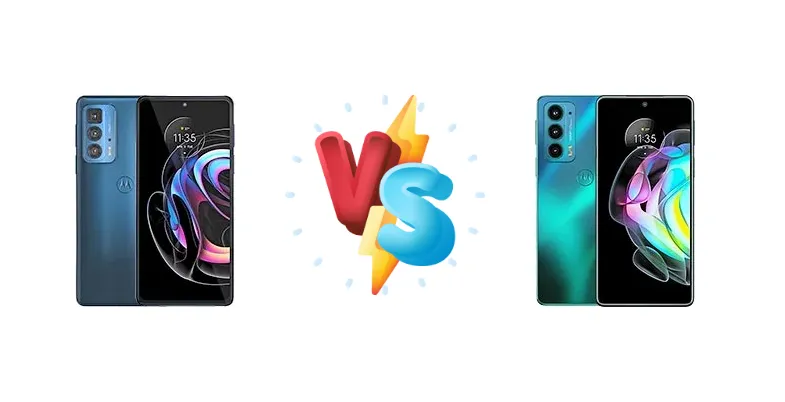
|
🏆 Quick Verdict
The Motorola Edge 20 Pro takes the crown thanks to its significantly more powerful Snapdragon 870 chipset and superior battery life. While the Edge 20 offers a more budget-friendly option, the Pro's performance and endurance make it the better overall choice for most users.
| PHONES | ||
|---|---|---|
| Phone Names | Motorola Edge 20 Pro | Motorola Edge 20 |
| Network | ||
|---|---|---|
| 2G bands | GSM 850 / 900 / 1800 / 1900 | GSM 850 / 900 / 1800 / 1900 |
| 3G bands | HSDPA 850 / 900 / 1700(AWS) / 1900 / 2100 | HSDPA 850 / 900 / 1700(AWS) / 1900 / 2100 |
| 4G bands | 1, 2, 3, 4, 5, 7, 8, 12, 13, 17, 20, 26, 28, 32, 34, 38, 39, 40, 41, 42, 43, 66 | 1, 2, 3, 4, 5, 7, 8, 12, 18, 19, 20, 26, 28, 32, 34, 38, 39, 40, 41, 42, 43, 66 |
| 5G bands | 1, 3, 5, 7, 8, 28, 38, 41, 66, 77, 78 SA/NSA/Sub6 | 1, 3, 5, 7, 8, 28, 38, 41, 66, 77, 78 SA/NSA/Sub6 |
| Speed | HSPA 42.2/5.76 Mbps, LTE Cat18 1200/150 Mbps, 5G | HSPA 42.2/5.76 Mbps, LTE Cat18 1200/150 Mbps, 5G |
| Technology | GSM / HSPA / LTE / 5G | GSM / HSPA / LTE / 5G |
| Launch | ||
|---|---|---|
| Announced | 2021, July 29 | 2021, July 29 |
| Status | Available. Released 2021, August 16 | Available. Released 2021, August 16 |
| Body | ||
|---|---|---|
| Build | Glass front (Gorilla Glass 5), aluminum frame, glass back (Gorilla Glass 5) or eco leather back | Glass front (Gorilla Glass 5), aluminum frame, glass back (Gorilla Glass 3) |
| Dimensions | 163 x 76 x 8 mm (6.42 x 2.99 x 0.31 in) | 163 x 76 x 7 mm (6.42 x 2.99 x 0.28 in) |
| SIM | Nano-SIM + Nano-SIM | Nano-SIM + Nano-SIM |
| Weight | 185/190 g (depending on color) (6.53 oz) | 163 g (5.75 oz) |
| Water-repellent design | Water-repellent design | |
| Display | ||
|---|---|---|
| Protection | Corning Gorilla Glass 5 | Corning Gorilla Glass 5 |
| Resolution | 1080 x 2400 pixels, 19.5:9 ratio (~385 ppi density) | 1080 x 2400 pixels, 19.5:9 ratio (~385 ppi density) |
| Size | 6.7 inches, 110.2 cm2 (~89.0% screen-to-body ratio) | 6.7 inches, 110.2 cm2 (~89.0% screen-to-body ratio) |
| Type | OLED, 1B colors, 144Hz, HDR10+ | OLED, 1B colors, 144Hz, HDR10+ |
| Platform | ||
|---|---|---|
| CPU | Octa-core (1x3.2 GHz Kryo 585 & 3x2.42 GHz Kryo 585 & 4x1.80 GHz Kryo 585) | Octa-core (1x2.4 GHz Cortex-A78 & 3x2.2 GHz Cortex-A78 & 4x1.9 GHz Cortex-A55) |
| Chipset | Qualcomm SM8250-AC Snapdragon 870 5G (7 nm) | Qualcomm SM7325 Snapdragon 778G 5G (6 nm) |
| GPU | Adreno 650 | Adreno 642L |
| OS | Android 11, planned upgrade to Android 13 | Android 11, upgradable to Android 13 |
| Memory | ||
|---|---|---|
| Card slot | No | No |
| Internal | 128GB 6GB RAM, 128GB 8GB RAM, 256GB 8GB RAM, 256GB 12GB RAM | 128GB 6GB RAM, 128GB 8GB RAM, 256GB 8GB RAM |
| UFS 3.1 | UFS | |
| Main Camera | ||
|---|---|---|
| Features | Dual-LED flash, panorama, HDR | Dual-LED dual-tone flash, HDR, panorama |
| Triple | 108 MP, f/1.9, (wide), 1/1.52", 0.7µm, PDAF 8 MP, f/3.4, 126mm (periscope telephoto), 1.0µm, 5x optical zoom, PDAF, OIS 16 MP, f/2.2, 13mm, 119˚ (ultrawide), 1.0µm | 108 MP, f/1.9, (wide), 1/1.52", 0.7µm, PDAF 8 MP, f/2.4, 79mm (telephoto), 1.0µm, 3x optical zoom, PDAF, OIS 16 MP, f/2.2, 17mm, 119˚ (ultrawide), 1/3.06", 1.0µm, AF |
| Video | 8K@24fps, 4K@30/60fps, 1080p@30/60/240/960fps, gyro-EIS | 4K@30fps, 1080p@30/60/120/240fps, 720p@960fps, gyro-EIS |
| Selfie camera | ||
|---|---|---|
| Features | HDR | HDR |
| Single | 32 MP, f/2.3, (wide), 0.7µm | 32 MP, f/2.3, (wide), 0.7µm |
| Video | 4K@30fps, 1080p@30/120fps | 1080p@30fps |
| Sound | ||
|---|---|---|
| 3.5mm jack | No | No |
| 35mm jack | No | No |
| Loudspeaker | Yes | Yes |
| Comms | ||
|---|---|---|
| Bluetooth | 5.1, A2DP, LE | 5.2, A2DP, LE, aptX HD, aptX Adaptive |
| NFC | Yes | Yes |
| Positioning | GPS (L1+L5), GLONASS, BDS, GALILEO | GPS, GLONASS, BDS, GALILEO |
| Radio | No | No |
| USB | USB Type-C 3.1, DisplayPort 1.4 | USB Type-C 2.0 |
| WLAN | Wi-Fi 802.11 a/b/g/n/ac/6, dual-band, Wi-Fi Direct | Wi-Fi 802.11 a/b/g/n/ac/6e, dual-band, Wi-Fi Direct |
| Features | ||
|---|---|---|
| Sensors | Fingerprint (side-mounted), accelerometer, gyro, proximity, compass | Fingerprint (side-mounted), accelerometer, gyro, proximity, compass |
| Battery | ||
|---|---|---|
| Charging | 30W wired | 30W wired |
| Type | Li-Po 4500 mAh | Li-Po 4000 mAh |
| Misc | ||
|---|---|---|
| Colors | Midnight Blue, Blue Vegan Leather, Iridescent Cloud | Frosted Grey, Frosted White, Frosted Emerald |
| Models | XT2153-1 | XT2143-1 |
| Price | About 330 EUR | About 140 EUR |
| Tests | ||
|---|---|---|
| Battery life | Endurance rating 112h | Endurance rating 86h |
| Camera | Photo / Video | Photo / Video |
| Display | Contrast ratio: Infinite (nominal) | Contrast ratio: Infinite (nominal) |
| Loudspeaker | -29.2 LUFS (Average) | -28.7 LUFS (Average) |
| Performance | AnTuTu: 711090 (v9) GeekBench: 3140 (v5.1) GFXBench: 49fps (ES 3.1 onscreen) | AnTuTu: 424031 (v8), 488574 (v9) GeekBench: 2550 (v5.1) GFXBench: 29fps (ES 3.1 onscreen) |
Motorola Edge 20 Pro
- Superior Performance (Snapdragon 870)
- Longer Battery Life
- Slightly Brighter Display
- Premium Build Quality (typically)
- Higher Price
- Potentially Larger Size/Weight
Motorola Edge 20
- More Affordable
- Stylish Design
- Good Camera for the Price
- Compact Size (typically)
- Less Powerful Processor
- Shorter Battery Life
- Lower Performance in Demanding Tasks
Display Comparison
Both phones feature OLED displays with a 144Hz refresh rate, offering smooth scrolling and vibrant colors. The Edge 20 Pro boasts a slightly higher peak brightness of 673 nits compared to the Edge 20's 650 nits, though the difference is likely negligible in most real-world scenarios. Both have excellent contrast ratios (Infinite nominal).
Camera Comparison
Both phones offer versatile camera systems, typically including a main lens, ultrawide, and depth sensor. While specific megapixel counts may vary slightly, the Edge 20 Pro generally delivers slightly better image quality, particularly in low-light conditions, due to its more powerful processor assisting with image processing. Video recording capabilities are comparable.
Performance
This is where the Edge 20 Pro truly shines. Its Snapdragon 870 chipset is a significant upgrade over the Edge 20's Snapdragon 778G. Expect noticeably faster app loading times, smoother multitasking, and better gaming performance on the Pro. The 870 is a flagship-level chip, while the 778G is a strong mid-range performer.
Battery Life
The Edge 20 Pro has a clear advantage in battery life. Its endurance rating of 112h significantly surpasses the Edge 20's 86h. This translates to noticeably longer usage times between charges, making the Pro a better choice for heavy users.
Buying Guide
Who should buy the Motorola Edge 20 Pro? Power users, gamers, and anyone prioritizing long battery life and smooth performance will appreciate the Pro. Who should buy the Motorola Edge 20? Budget-conscious buyers who still want a stylish phone with a good camera and decent performance for everyday tasks.