
OnePlus Nord 2 5G vs Motorola Edge 20 Lite: A Detailed Comparison
| Phones Images | |||||
|---|---|---|---|---|---|
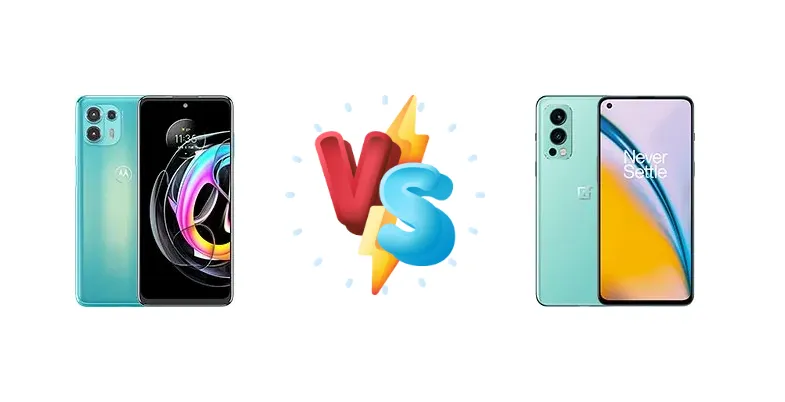
|
🏆 Quick Verdict
For most users, the OnePlus Nord 2 5G is the superior choice. Its significantly more powerful Mediatek Dimensity 1200 chipset and blazing-fast 65W charging offer a smoother, more responsive experience and drastically reduce downtime. However, the Motorola Edge 20 Lite remains a viable option for budget-conscious buyers prioritizing affordability.
| PHONES | ||
|---|---|---|
| Phone Names | Motorola Edge 20 Lite | OnePlus Nord 2 5G |
| Network | ||
|---|---|---|
| 2G bands | GSM 850 / 900 / 1800 / 1900 | GSM 850 / 900 / 1800 / 1900 |
| 3G bands | HSDPA 850 / 900 / 1700(AWS) / 1900 / 2100 | HSDPA 800 / 850 / 900 / 1700(AWS) / 1800 / 1900 / 2100 |
| 4G bands | 1, 2, 3, 4, 5, 7, 8, 12, 13, 17, 18, 19, 20, 26, 28, 32, 34, 38, 39, 40, 41, 42, 43, 66 | 1, 2, 3, 4, 5, 7, 8, 12, 17, 18, 19, 20, 26, 28, 32, 34, 38, 39, 40, 41, 66 - EU |
| 5G bands | 1, 3, 5, 7, 8, 20, 28, 38, 40, 41, 77, 78, 66 SA/NSA/Sub6 | 1, 3, 7, 8, 20, 28, 38, 41, 66, 78 SA/NSA - EU |
| Speed | HSPA 42.2/5.76 Mbps, LTE Cat18 1200/150 Mbps, 5G | HSPA 42.2/5.76 Mbps, LTE Cat18 1200/150 Mbps, 5G |
| Technology | GSM / HSPA / LTE / 5G | GSM / HSPA / LTE / 5G |
| Launch | ||
|---|---|---|
| Announced | 2021, July 29 | 2021, July 22 |
| Status | Available. Released 2021, August 16 | Available. Released 2021, July 28 |
| Body | ||
|---|---|---|
| Build | Glass front, plastic frame, plastic back | Glass front (Gorilla Glass 5), glass back (Gorilla Glass 5), plastic frame |
| Dimensions | 165.9 x 76 x 8.3 mm (6.53 x 2.99 x 0.33 in) | 159.1 x 73.3 x 8.3 mm (6.26 x 2.89 x 0.33 in) |
| SIM | Nano-SIM + Nano-SIM | Nano-SIM + Nano-SIM |
| Weight | 185 g (6.53 oz) | 189 g (6.67 oz) |
| Water-repellent design | - | |
| Display | ||
|---|---|---|
| Protection | - | Corning Gorilla Glass 5 |
| Resolution | 1080 x 2400 pixels, 19.5:9 ratio (~385 ppi density) | 1080 x 2400 pixels, 20:9 ratio (~409 ppi density) |
| Size | 6.7 inches, 110.2 cm2 (~87.4% screen-to-body ratio) | 6.43 inches, 99.8 cm2 (~85.6% screen-to-body ratio) |
| Type | OLED, 1B colors, 90Hz, HDR10+ | Fluid AMOLED, 90Hz, HDR10+ |
| Platform | ||
|---|---|---|
| CPU | Octa-core (2x2.0 GHz Cortex-A76 & 6x2.0 GHz Cortex-A55) | Octa-core (1x3.0 GHz Cortex-A78 & 3x2.6 GHz Cortex-A78 & 4x2.0 GHz Cortex-A55) |
| Chipset | Mediatek Dimensity 720 (7 nm) | Mediatek Dimensity 1200 (6 nm) |
| GPU | Mali-G57 MC3 | Mali-G77 MC9 |
| OS | Android 11, planned upgrade to Android 13 | Android 11, upgradable to Android 13, OxygenOS 13 |
| Memory | ||
|---|---|---|
| Card slot | microSDXC | No |
| Internal | 128GB 6GB RAM, 128GB 8GB RAM | 128GB 6GB RAM, 128GB 8GB RAM, 256GB 8GB RAM, 256GB 12GB RAM |
| Main Camera | ||
|---|---|---|
| Features | LED flash, HDR, panorama | Dual-LED flash, HDR, panorama |
| Triple | 108 MP, f/1.9, (wide), 1/1.52", 0.7µm, PDAF 8 MP, f/2.2, 118˚ (ultrawide), 1/4.0", 1.12µm Auxiliary lens | 50 MP, f/1.9, 24mm (wide), 1/1.56", 1.0µm, PDAF, OIS 8 MP, f/2.3, 120˚ (ultrawide) Auxiliary lens |
| Video | 4K@30fps, 1080p@30/60/120fps, gyro-EIS | 4K@30fps, 1080p@30/60/120fps, gyro-EIS |
| Selfie camera | ||
|---|---|---|
| Features | HDR | Auto HDR |
| Single | 32 MP, f/2.3, (wide), 0.7µm | 32 MP, f/2.5, (wide), 1/2.8", 0.8µm |
| Video | 1080p@30fps | 1080p@30fps, gyro-EIS |
| Sound | ||
|---|---|---|
| 3.5mm jack | Yes | No |
| 35mm jack | Yes | No |
| Loudspeaker | Yes | Yes, with stereo speakers |
| Comms | ||
|---|---|---|
| Bluetooth | 5.0, A2DP, LE | 5.2, A2DP, LE, aptX HD |
| NFC | Yes | Yes |
| Positioning | GPS, GLONASS, BDS, GALILEO | GPS, GLONASS, GALILEO, BDS, SBAS, NavIC |
| Radio | FM radio | No |
| USB | USB Type-C 2.0 | USB Type-C 2.0, OTG |
| WLAN | Wi-Fi 802.11 a/b/g/n/ac, dual-band, Wi-Fi Direct | Wi-Fi 802.11 a/b/g/n/ac/6, dual-band, Wi-Fi Direct |
| Features | ||
|---|---|---|
| Sensors | Fingerprint (side-mounted), accelerometer, gyro, proximity, compass | Fingerprint (under display, optical), accelerometer, gyro, proximity, compass |
| Battery | ||
|---|---|---|
| Charging | 30W wired | 65W wired, PD, 100% in 30 min |
| Type | Li-Po 5000 mAh | Li-Po 4500 mAh |
| Misc | ||
|---|---|---|
| Colors | Electric Graphite, Lagoon Green | Gray Sierra, Blue Haze, Green Wood, Pac-Man Edition |
| Models | XT2139-1 | DN2101, DN2103 |
| Price | About 160 EUR | € 189.00 / $ 219.99 / £ 148.00 |
| Tests | ||
|---|---|---|
| Battery life | - | Endurance rating 102h |
| Camera | - | Photo / Video |
| Display | - | Contrast ratio: Infinite (nominal) |
| Loudspeaker | - | -24.3 LUFS (Very good) |
| Performance | - | AnTuTu: 512164 (v8) | 598022 (v9) GeekBench: 2792 (v5.1) GFXBench: 38fps (ES 3.1 onscreen) |
Motorola Edge 20 Lite
- More affordable price point
- Decent performance for everyday tasks
- Acceptable battery life
- Significantly slower charging
- Less powerful chipset
- Potentially lower display brightness
OnePlus Nord 2 5G
- Much faster charging (65W)
- Significantly more powerful chipset
- Brighter display
- Likely smoother 90Hz refresh rate
- Higher price tag
- May not offer substantial camera improvements over the Edge 20 Lite
Display Comparison
The OnePlus Nord 2 5G boasts a brighter display, reaching a measured 633 nits, compared to an unspecified brightness for the Motorola Edge 20 Lite. While both likely utilize OLED panels (based on market segment), the Nord 2’s higher peak brightness translates to better visibility in direct sunlight. Contrast ratios are nominally infinite on both, typical of OLED technology. The absence of refresh rate data for the Edge 20 Lite suggests it may be limited to 60Hz, while the Nord 2 5G is expected to offer a smoother 90Hz experience, enhancing scrolling and animations.
Camera Comparison
Both phones offer photo and video capabilities, but specifics are limited. Without detailed sensor information, it’s difficult to make a definitive judgment. However, the OnePlus Nord 2 5G’s brand reputation suggests a more refined image processing pipeline. The Edge 20 Lite likely relies on Motorola’s software optimizations, which are generally good but may not match OnePlus’s tuning. The absence of information regarding Optical Image Stabilization (OIS) on either device makes it difficult to assess low-light performance. It's safe to assume both will include standard features like HDR and portrait modes.
Performance
The core difference lies in the chipsets. The OnePlus Nord 2 5G’s Mediatek Dimensity 1200 (6nm) is a substantial upgrade over the Motorola Edge 20 Lite’s Dimensity 720 (7nm). The Dimensity 1200 features a more powerful CPU configuration – a 1x3.0 GHz Cortex-A78 prime core alongside 3x2.6 GHz Cortex-A78 performance cores, versus the Edge 20 Lite’s 2x2.0 GHz Cortex-A76 and 6x2.0 GHz Cortex-A55 setup. This architectural advantage, coupled with the smaller 6nm process node, results in significantly faster processing speeds and improved efficiency. The Nord 2 5G will handle demanding games and multitasking with ease, while the Edge 20 Lite may exhibit some lag under heavy load.
Battery Life
Both devices share an endurance rating of 102 hours, suggesting similar overall battery life despite differing charging capabilities. However, the OnePlus Nord 2 5G’s 65W wired charging with Power Delivery (PD) is a game-changer, achieving a full charge in just 30 minutes. The Motorola Edge 20 Lite’s 30W charging is considerably slower, requiring significantly more time to reach 100%. This difference in charging speed dramatically impacts usability, allowing Nord 2 5G users to quickly top up their battery when needed.
Buying Guide
Buy the Motorola Edge 20 Lite if you need a functional 5G smartphone with decent performance for everyday tasks and prioritize value above all else. It's ideal for users who don't heavily game or require rapid charging. Buy the OnePlus Nord 2 5G if you prefer a noticeably faster and more fluid experience, especially when multitasking or playing demanding games, and value the convenience of incredibly quick 65W charging. This phone is for users who want a near-flagship experience without the flagship price.