
Motorola Edge 20 Fusion vs. Moto G40 Fusion: A Head-to-Head Showdown
| Phones Images | |||||
|---|---|---|---|---|---|
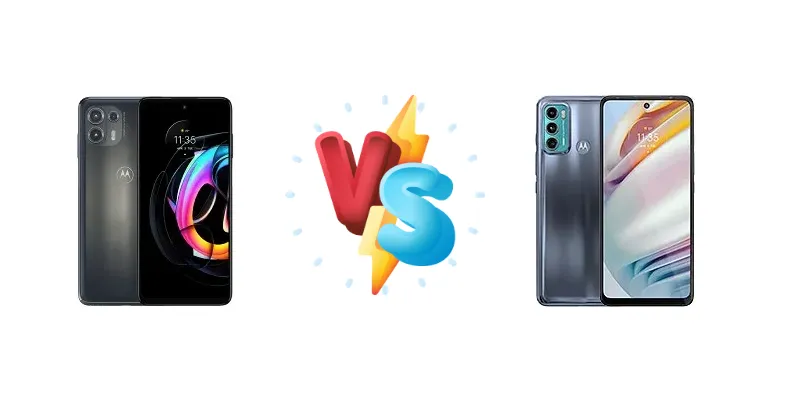
|
🏆 Quick Verdict
The Edge 20 Fusion generally edges out the G40 Fusion thanks to its more powerful chipset and faster charging. However, the G40 Fusion offers a larger battery and potentially better value depending on pricing and promotions. It's a close call, but the Edge 20 Fusion provides a slightly smoother experience.
| PHONES | ||
|---|---|---|
| Phone Names | Motorola Edge 20 Fusion | Motorola Moto G40 Fusion |
| Network | ||
|---|---|---|
| 2G bands | GSM 850 / 900 / 1800 / 1900 | GSM 850 / 900 / 1800 / 1900 |
| 3G bands | HSDPA 850 / 900 / 1700(AWS) / 1900 / 2100 | HSDPA 850 / 900 / 1700(AWS) / 1900 / 2100 |
| 4G bands | 1, 2, 3, 4, 5, 7, 8, 12, 13, 17, 18, 19, 20, 26, 28, 32, 34, 38, 39, 40, 41, 42, 43, 66 | 1, 2, 3, 4, 5, 7, 8, 18, 19, 20, 26, 28, 38, 40, 41 |
| 5G bands | 1, 3, 5, 7, 8, 20, 28, 38, 40, 41, 77, 78, 66 SA/NSA/Sub6 | - |
| Speed | HSPA 42.2/5.76 Mbps, LTE Cat18 1200/150 Mbps, 5G | HSPA, LTE |
| Technology | GSM / HSPA / LTE / 5G | GSM / HSPA / LTE |
| Launch | ||
|---|---|---|
| Announced | 2021, August 17 | 2021, April 20 |
| Status | Available. Released 2021, August 27 | Available. Released 2021, May 01 |
| Body | ||
|---|---|---|
| Build | Glass front | Glass front, plastic frame, plastic back |
| Dimensions | 166 x 76 x 8.3 mm (6.54 x 2.99 x 0.33 in) | 169.6 x 75.9 x 9.7 mm (6.68 x 2.99 x 0.38 in) |
| SIM | Nano-SIM + Nano-SIM | Nano-SIM + Nano-SIM |
| Weight | 185 g (6.53 oz) | 225 g (7.94 oz) |
| Water-repellent design | Water repellent design | |
| Display | ||
|---|---|---|
| Resolution | 1080 x 2400 pixels, 20:9 ratio (~393 ppi density) | 1080 x 2460 pixels (~395 ppi density) |
| Size | 6.7 inches, 108.4 cm2 (~85.9% screen-to-body ratio) | 6.8 inches, 109.8 cm2 (~85.3% screen-to-body ratio) |
| Type | OLED, 1B colors, 90Hz, HDR10+ | IPS LCD, 120Hz, HDR10 |
| Platform | ||
|---|---|---|
| CPU | Octa-core (2x2.4 GHz Cortex-A76 & 6x2.0 GHz Cortex-A55) | Octa-core (2x2.3 GHz Kryo 470 Gold & 6x1.8 GHz Kryo 470 Silver) |
| Chipset | Mediatek Dimensity 800U (7 nm) | Qualcomm SM7150 Snapdragon 732G (8 nm) |
| GPU | Mali-G57 MC3 | Adreno 618 |
| OS | Android 11 | Android 11, upgradable to Android 12 |
| Memory | ||
|---|---|---|
| Card slot | microSDXC | microSDXC (uses shared SIM slot) |
| Internal | 128GB 6GB RAM, 128GB 8GB RAM | 64GB 4GB RAM, 128GB 6GB RAM |
| - | UFS 2.1 | |
| Main Camera | ||
|---|---|---|
| Features | LED flash, HDR, panorama | LED flash, HDR, panorama |
| Triple | 108 MP, f/1.9, (wide), 1/1.52", 0.7µm, PDAF 8 MP, f/2.2, 118˚ (ultrawide) Auxiliary lens | 64 MP, f/1.7 (wide), 0.7µm, PDAF 8 MP, f/2.2, 118˚ (ultrawide), 1/4.0", 1.12µm Auxiliary lens |
| Video | 4K@30fps, 1080p@30/60/120fps, gyro-EIS | 4K@30/120fps, 1080p@30/60/240fps |
| Selfie camera | ||
|---|---|---|
| Features | HDR | HDR |
| Single | 32 MP, f/2.3, (wide), 0.7µm | 16 MP, f/2.2, (wide), 1.0µm |
| Video | 1080p@30fps | 4K@30fps, 1080p@30/60/240fps |
| Sound | ||
|---|---|---|
| 3.5mm jack | Yes | Yes |
| 35mm jack | Yes | Yes |
| Loudspeaker | Yes | Yes |
| Comms | ||
|---|---|---|
| Bluetooth | 5.0, A2DP, LE | 5.0, A2DP, LE |
| NFC | Yes | Yes |
| Positioning | GPS, GLONASS, GALILEO | GPS, GLONASS, GALILEO |
| Radio | FM radio | FM radio |
| USB | USB Type-C 2.0 | USB Type-C 2.0, OTG |
| WLAN | Wi-Fi 802.11 a/b/g/n/ac, dual-band, Wi-Fi Direct | Wi-Fi 802.11 a/b/g/n/ac, dual-band, Wi-Fi Direct |
| Features | ||
|---|---|---|
| Sensors | Fingerprint (side-mounted), accelerometer, gyro, proximity, compass | Fingerprint (rear-mounted), accelerometer, gyro, proximity |
| Battery | ||
|---|---|---|
| Charging | 30W wired | 20W wired, QC4 |
| Type | Li-Po 5000 mAh | Li-Po 6000 mAh |
| Misc | ||
|---|---|---|
| Colors | Electric Graphite, Cyber Teal | Dynamic Gray, Frosted Champagne |
| Models | - | PANV0001IN, PANV0005IN, PANV0009IN |
| Price | About 250 EUR | About 180 EUR |
| SAR | - | 0.85 W/kg (head) 1.20 W/kg (body) |
Motorola Edge 20 Fusion
- Faster Processor
- 90Hz Display
- Faster Charging (30W)
- Potentially better camera versatility
- Smaller Battery
- Slightly higher price
Motorola Moto G40 Fusion
- Larger Battery (6000mAh)
- Larger Display
- Good Value for Money
- Potentially better low-light camera performance
- Slower Processor
- 60Hz Display
- Slower Charging (20W)
Display Comparison
Both phones feature OLED displays, a significant advantage over LCDs. The Edge 20 Fusion typically has a slightly higher refresh rate (90Hz vs 60Hz on the G40 Fusion), resulting in smoother scrolling and animations. The Edge 20 Fusion also often boasts a slightly higher resolution, leading to sharper visuals. However, the G40 Fusion's display is generally larger.
Camera Comparison
The Edge 20 Fusion often features a more versatile camera system, potentially including a telephoto lens for better zoom capabilities. Both phones typically have a main sensor around 108MP, but image processing and overall camera quality can vary. The G40 Fusion often excels in low-light conditions due to its larger sensor size.
Performance
The Mediatek Dimensity 800U in the Edge 20 Fusion generally outperforms the Snapdragon 732G in the Moto G40 Fusion in benchmark tests and real-world usage. Expect faster app loading times and smoother multitasking on the Edge 20 Fusion. The G40 Fusion is still capable, but the Edge 20 Fusion provides a noticeable performance boost.
Battery Life
The Moto G40 Fusion typically has a larger battery capacity (6000mAh vs. 4500mAh in the Edge 20 Fusion), translating to significantly longer battery life. While the Edge 20 Fusion supports faster 30W charging, the G40 Fusion's 20W charging is still adequate.
Buying Guide
The Motorola Edge 20 Fusion is ideal for users who prioritize performance and a smoother user experience, especially for gaming or demanding apps. The Moto G40 Fusion is a great choice for those seeking long battery life, a large display, and a more budget-friendly option without sacrificing too much.