
Motorola Edge 20 Fusion vs Edge 30 Neo: A Head-to-Head Comparison
| Phones Images | |||||
|---|---|---|---|---|---|
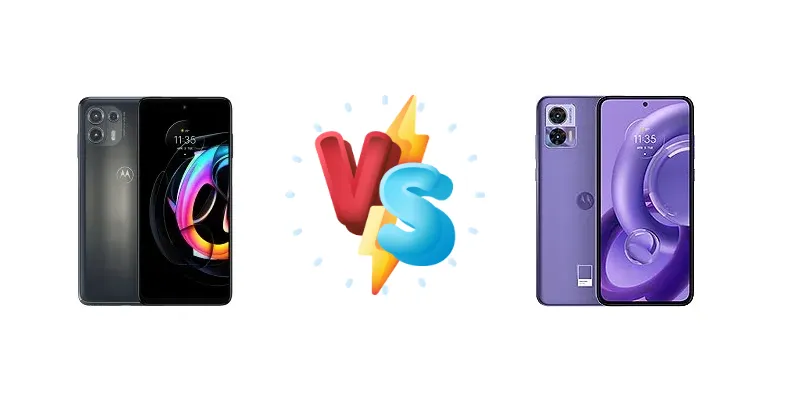
|
🏆 Quick Verdict
The Motorola Edge 30 Neo emerges as the clear winner thanks to its significantly faster charging, brighter display, and more modern chipset. While the 20 Fusion offers decent performance, the 30 Neo's upgrades make it a more attractive option for most users.
| PHONES | ||
|---|---|---|
| Phone Names | Motorola Edge 20 Fusion | Motorola Edge 30 Neo |
| Network | ||
|---|---|---|
| 2G bands | GSM 850 / 900 / 1800 / 1900 | GSM 850 / 900 / 1800 / 1900 |
| 3G bands | HSDPA 850 / 900 / 1700(AWS) / 1900 / 2100 | HSDPA 850 / 900 / 1700(AWS) / 1900 / 2100 |
| 4G bands | 1, 2, 3, 4, 5, 7, 8, 12, 13, 17, 18, 19, 20, 26, 28, 32, 34, 38, 39, 40, 41, 42, 43, 66 | 1, 2, 3, 4, 5, 7, 8, 12, 17, 20, 25, 26, 28, 32, 38, 40, 41, 42, 43 |
| 5G bands | 1, 3, 5, 7, 8, 20, 28, 38, 40, 41, 77, 78, 66 SA/NSA/Sub6 | 1, 3, 5, 7, 8, 20, 28, 38, 40, 41, 66, 78 SA/NSA |
| Speed | HSPA 42.2/5.76 Mbps, LTE Cat18 1200/150 Mbps, 5G | HSPA, LTE, 5G |
| Technology | GSM / HSPA / LTE / 5G | GSM / HSPA / LTE / 5G |
| Launch | ||
|---|---|---|
| Announced | 2021, August 17 | 2022, September 08 |
| Status | Available. Released 2021, August 27 | Available. Released 2022, October 07 |
| Body | ||
|---|---|---|
| Build | Glass front | Glass front, plastic frame, plastic back |
| Dimensions | 166 x 76 x 8.3 mm (6.54 x 2.99 x 0.33 in) | 152.9 x 71.2 x 7.8 mm (6.02 x 2.80 x 0.31 in) |
| SIM | Nano-SIM + Nano-SIM | · Nano-SIM· Nano-SIM + Nano-SIM |
| Weight | 185 g (6.53 oz) | 155 g (5.47 oz) |
| Water-repellent design | Splash and dust resistant | |
| Display | ||
|---|---|---|
| Resolution | 1080 x 2400 pixels, 20:9 ratio (~393 ppi density) | 1080 x 2400 pixels, 20:9 ratio (~419 ppi density) |
| Size | 6.7 inches, 108.4 cm2 (~85.9% screen-to-body ratio) | 6.28 inches, 95.2 cm2 (~87.5% screen-to-body ratio) |
| Type | OLED, 1B colors, 90Hz, HDR10+ | P-OLED, 120Hz |
| Platform | ||
|---|---|---|
| CPU | Octa-core (2x2.4 GHz Cortex-A76 & 6x2.0 GHz Cortex-A55) | Octa-core (2x2.2 GHz Kryo 660 Gold & 6x1.7 GHz Kryo 660 Silver) |
| Chipset | Mediatek Dimensity 800U (7 nm) | Qualcomm SM6375 Snapdragon 695 5G (6 nm) |
| GPU | Mali-G57 MC3 | Adreno 619 |
| OS | Android 11 | Android 12, planned upgrade to Android 15 |
| Memory | ||
|---|---|---|
| Card slot | microSDXC | No |
| Internal | 128GB 6GB RAM, 128GB 8GB RAM | 128GB 6GB RAM, 128GB 8GB RAM, 256GB 8GB RAM |
| Main Camera | ||
|---|---|---|
| Dual | - | 64 MP, f/1.8, (wide), 1/1.97", 0.7µm, PDAF, OIS 13 MP, f/2.2, 120˚ (ultrawide), 1/3.0", 1.12µm, AF |
| Features | LED flash, HDR, panorama | Dual-LED flash, HDR, panorama |
| Triple | 108 MP, f/1.9, (wide), 1/1.52", 0.7µm, PDAF 8 MP, f/2.2, 118˚ (ultrawide) Auxiliary lens | - |
| Video | 4K@30fps, 1080p@30/60/120fps, gyro-EIS | 1080p@30/60/120fps |
| Selfie camera | ||
|---|---|---|
| Features | HDR | HDR |
| Single | 32 MP, f/2.3, (wide), 0.7µm | 32 MP, f/2.4, (wide), 1/3.0", 0.7µm |
| Video | 1080p@30fps | 1080p@30fps |
| Sound | ||
|---|---|---|
| 3.5mm jack | Yes | No |
| 35mm jack | Yes | No |
| Loudspeaker | Yes | Yes, with stereo speakers |
| Comms | ||
|---|---|---|
| Bluetooth | 5.0, A2DP, LE | 5.1, A2DP, LE, aptX HD, aptX Adaptive |
| NFC | Yes | Yes |
| Positioning | GPS, GLONASS, GALILEO | GPS, GLONASS, GALILEO |
| Radio | FM radio | No |
| USB | USB Type-C 2.0 | USB Type-C 3.1, OTG |
| WLAN | Wi-Fi 802.11 a/b/g/n/ac, dual-band, Wi-Fi Direct | Wi-Fi 802.11 a/b/g/n/ac, dual-band, Wi-Fi Direct |
| Features | ||
|---|---|---|
| Sensors | Fingerprint (side-mounted), accelerometer, gyro, proximity, compass | Fingerprint (under display, optical), accelerometer, proximity, compass |
| Battery | ||
|---|---|---|
| Charging | 30W wired | 68W wired 5W wireless |
| Type | Li-Po 5000 mAh | Li-Po 4020 mAh |
| Misc | ||
|---|---|---|
| Colors | Electric Graphite, Cyber Teal | Very Peri, Black Onyx, Ice Palace, Aqua Foam |
| Models | - | XT2245-1 |
| Price | About 250 EUR | € 156.44 / $ 185.00 / £ 229.00 |
| Tests | ||
|---|---|---|
| Battery life | - | Endurance rating 104h |
| Camera | - | Photo / Video |
| Display | - | Contrast ratio: Infinite (nominal) |
| Loudspeaker | - | -26.4 LUFS (Good) |
| Performance | - | AnTuTu: 380818 (v9) GeekBench: 1964 (v5.1) GFXBench: 16fps (ES 3.1 onscreen) |
Motorola Edge 20 Fusion
- Larger Display
- Good Value
- Decent Performance
- Slower Charging
- Older Chipset
- Lower Brightness
Motorola Edge 30 Neo
- Faster Charging (68W)
- Brighter Display (1004 nits)
- More Modern Chipset (Snapdragon 695 5G)
- Wireless Charging
- Smaller Display
- Potentially Higher Price
Display Comparison
The Edge 30 Neo boasts a significant advantage with its 1004 nits peak brightness, making it much easier to view outdoors. The contrast ratio is also excellent. The 20 Fusion's display is adequate but lacks the same vibrancy and outdoor visibility. Both offer OLED panels, ensuring good color accuracy and deep blacks.
Camera Comparison
Both phones offer capable camera systems, but the Edge 30 Neo likely has slightly improved image processing due to its newer chipset. Both offer Photo/Video capabilities, but detailed camera comparisons would require more in-depth testing. Expect decent image quality in good lighting conditions from both.
Performance
The Snapdragon 695 5G in the Edge 30 Neo provides a noticeable performance boost over the Dimensity 800U in the 20 Fusion. While both are capable of handling everyday tasks, the 30 Neo will feel snappier and handle more demanding games better. The 6nm process of the 30 Neo's chipset also contributes to better power efficiency.
Battery Life
Both phones achieve an impressive endurance rating of 104 hours. However, the Edge 30 Neo's 68W wired charging is a game-changer compared to the 20 Fusion's 30W. This means significantly faster charging times for the 30 Neo.
Buying Guide
Who should buy the Motorola Edge 20 Fusion? It's a good choice for budget-conscious users who prioritize a larger screen and don't need the absolute fastest charging. Who should buy the Motorola Edge 30 Neo? Ideal for those seeking a vibrant display, faster charging speeds, and a more recent chipset for improved performance and 5G connectivity.