
Motorola Edge 20 Fusion vs. Edge 30 Fusion: A Head-to-Head Showdown
| Phones Images | |||||
|---|---|---|---|---|---|
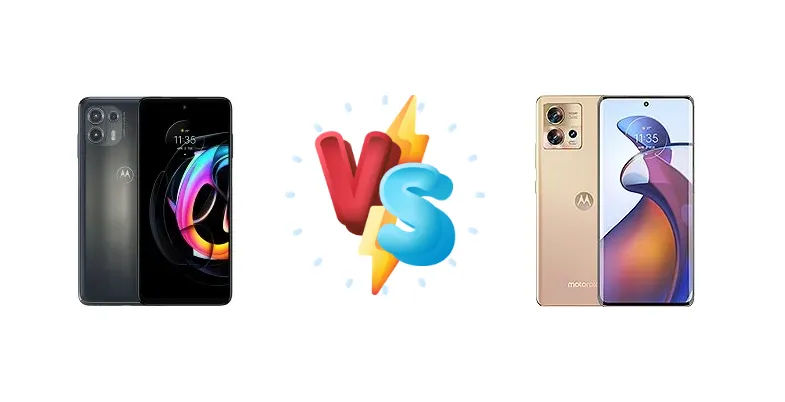
|
🏆 Quick Verdict
The Motorola Edge 30 Fusion is the clear winner, boasting a significantly faster Snapdragon 888+ chipset, a brighter display, and much faster charging. While the 20 Fusion is a decent option, the 30 Fusion's upgrades make it a worthwhile investment for most users.
| PHONES | ||
|---|---|---|
| Phone Names | Motorola Edge 20 Fusion | Motorola Edge 30 Fusion |
| Network | ||
|---|---|---|
| 2G bands | GSM 850 / 900 / 1800 / 1900 | GSM 850 / 900 / 1800 / 1900 |
| 3G bands | HSDPA 850 / 900 / 1700(AWS) / 1900 / 2100 | HSDPA 850 / 900 / 1700(AWS) / 1900 / 2100 - International |
| 4G bands | 1, 2, 3, 4, 5, 7, 8, 12, 13, 17, 18, 19, 20, 26, 28, 32, 34, 38, 39, 40, 41, 42, 43, 66 | 1, 2, 3, 4, 5, 7, 8, 12, 13, 17, 18, 19, 20, 25, 26, 28, 32, 38, 39, 40, 41, 42, 43, 66 - International |
| 5G bands | 1, 3, 5, 7, 8, 20, 28, 38, 40, 41, 77, 78, 66 SA/NSA/Sub6 | 1, 3, 5, 7, 8, 20, 28, 38, 40, 41, 66, 77, 78 SA/NSA - International |
| Speed | HSPA 42.2/5.76 Mbps, LTE Cat18 1200/150 Mbps, 5G | HSPA, LTE, 5G |
| Technology | GSM / HSPA / LTE / 5G | GSM / CDMA / HSPA / CDMA2000 / LTE / 5G |
| - | 1, 2, 3, 5, 7, 8, 20, 28, 38, 41, 77, 78 SA/NSA - PRC | |
| Launch | ||
|---|---|---|
| Announced | 2021, August 17 | 2022, September 08 |
| Status | Available. Released 2021, August 27 | Available. Released 2022, September 08 |
| Body | ||
|---|---|---|
| Build | Glass front | Glass front (Gorilla Glass 5), glass back (Gorilla Glass 5), aluminum frame |
| Dimensions | 166 x 76 x 8.3 mm (6.54 x 2.99 x 0.33 in) | 158.5 x 72 x 7.5 mm or 7.7 mm |
| SIM | Nano-SIM + Nano-SIM | · Nano-SIM· Nano-SIM + Nano-SIM |
| Weight | 185 g (6.53 oz) | 168 g / 175 g (5.93 oz) |
| Water-repellent design | Splash and dust resistant | |
| Display | ||
|---|---|---|
| Protection | - | Corning Gorilla Glass 5 |
| Resolution | 1080 x 2400 pixels, 20:9 ratio (~393 ppi density) | 1080 x 2400 pixels, 20:9 ratio (~402 ppi density) |
| Size | 6.7 inches, 108.4 cm2 (~85.9% screen-to-body ratio) | 6.55 inches, 103.6 cm2 (~90.8% screen-to-body ratio) |
| Type | OLED, 1B colors, 90Hz, HDR10+ | P-OLED, 1B colors, 144Hz, HDR10+, 1100 nits (peak) |
| Platform | ||
|---|---|---|
| CPU | Octa-core (2x2.4 GHz Cortex-A76 & 6x2.0 GHz Cortex-A55) | Octa-core (1x2.99 GHz Cortex-X1 & 3x2.42 GHz Cortex-A78 & 4x1.80 GHz Cortex-A55) |
| Chipset | Mediatek Dimensity 800U (7 nm) | Qualcomm SM8350 Snapdragon 888+ 5G (5 nm) |
| GPU | Mali-G57 MC3 | Adreno 660 |
| OS | Android 11 | Android 12, upgradable to Android 14 |
| Memory | ||
|---|---|---|
| Card slot | microSDXC | No |
| Internal | 128GB 6GB RAM, 128GB 8GB RAM | 128GB 8GB RAM, 256GB 6GB RAM, 256GB 8GB RAM, 256GB 12GB RAM, 512GB 12GB RAM |
| - | UFS 3.1 | |
| Main Camera | ||
|---|---|---|
| Features | LED flash, HDR, panorama | LED flash, panorama, HDR |
| Triple | 108 MP, f/1.9, (wide), 1/1.52", 0.7µm, PDAF 8 MP, f/2.2, 118˚ (ultrawide) Auxiliary lens | 50 MP, f/1.8, (wide), 1/1.55", 1.0µm, multi-directional PDAF, OIS 13 MP, f/2.2, 120˚ (ultrawide), 1.12µm, AF Auxiliary lens |
| Video | 4K@30fps, 1080p@30/60/120fps, gyro-EIS | 8K@30fps, 4K@30fps, 1080p@30/60/120fps, 720p@960fps, gyro-EIS |
| Selfie camera | ||
|---|---|---|
| Features | HDR | HDR |
| Single | 32 MP, f/2.3, (wide), 0.7µm | 32 MP, f/2.5, (wide), 1/2.8", 0.8µm, AF |
| Video | 1080p@30fps | 4K@30fps, 1080p@30fps |
| Sound | ||
|---|---|---|
| 3.5mm jack | Yes | No |
| 35mm jack | Yes | No |
| Loudspeaker | Yes | Yes, with stereo speakers |
| Comms | ||
|---|---|---|
| Bluetooth | 5.0, A2DP, LE | 5.2, A2DP, LE, aptX HD, aptX Adaptive |
| NFC | Yes | Yes |
| Positioning | GPS, GLONASS, GALILEO | GPS (L1+L5), GLONASS, BDS (B1I+B1c), GALILEO |
| Radio | FM radio | No |
| USB | USB Type-C 2.0 | USB Type-C 3.1, OTG |
| WLAN | Wi-Fi 802.11 a/b/g/n/ac, dual-band, Wi-Fi Direct | Wi-Fi 802.11 a/b/g/n/ac/6e, tri-band, Wi-Fi Direct |
| Features | ||
|---|---|---|
| Sensors | Fingerprint (side-mounted), accelerometer, gyro, proximity, compass | Fingerprint (under display, optical), accelerometer, gyro, proximity, compass |
| - | Ready For 3.5 support | |
| Battery | ||
|---|---|---|
| Charging | 30W wired | 68W wired, 50% in 10 min |
| Type | Li-Po 5000 mAh | Li-Po 4400 mAh |
| Misc | ||
|---|---|---|
| Colors | Electric Graphite, Cyber Teal | Neptune Blue, Cosmic Grey, Solar Gold, Aurora White, Viva Magenta |
| Models | - | XT2243-1 |
| Price | About 250 EUR | About 150 EUR |
| Tests | ||
|---|---|---|
| Battery life | - | Endurance rating 101h |
| Camera | - | Photo / Video |
| Display | - | Contrast ratio: Infinite (nominal) |
| Loudspeaker | - | -24.6 LUFS (Very good) |
| Performance | - | AnTuTu: 827929 (v9) GeekBench: 3458 (v5.1) GFXBench: 62fps (ES 3.1 onscreen) |
Motorola Edge 20 Fusion
- More affordable
- Reliable everyday performance
- Good battery life
- Slower processor
- Less bright display
- Slower charging
Motorola Edge 30 Fusion
- Faster Snapdragon 888+ processor
- Brighter and more vibrant display
- Significantly faster 68W charging
- Excellent battery life
- More expensive
- Potential for slightly higher heat generation under heavy load
Display Comparison
The Edge 30 Fusion takes a commanding lead in the display department. Its 946 nits max brightness is significantly higher than the 20 Fusion, offering better visibility in sunlight. The 'Infinite' contrast ratio (though nominal) suggests excellent image quality. The 20 Fusion's display is adequate, but lacks the punch and vibrancy of its successor.
Camera Comparison
Both phones offer capable cameras, but the Edge 30 Fusion likely benefits from the more powerful processor for improved image processing. While specific camera specs are not detailed, the 888+ generally allows for better low-light performance and video recording capabilities. Expect slightly better image quality and more features on the 30 Fusion.
Performance
The Snapdragon 888+ in the Edge 30 Fusion is a substantial upgrade over the Dimensity 800U in the 20 Fusion. Expect noticeably faster app loading, smoother multitasking, and better gaming performance. The 30 Fusion handles demanding tasks with ease, while the 20 Fusion might show some lag under heavy load.
Battery Life
Both phones boast an impressive endurance rating of 101h, suggesting excellent battery life. However, the Edge 30 Fusion's 68W charging is a game-changer, allowing for a 50% charge in just 10 minutes – a significant advantage over the 20 Fusion's 30W charging.
Buying Guide
Who should buy the Motorola Edge 20 Fusion? It's a good choice for budget-conscious users who prioritize a reliable, everyday smartphone experience and don't need top-tier performance. Who should buy the Motorola Edge 30 Fusion? It's ideal for those seeking a faster processor, a vibrant display, and quicker charging speeds, even if it means spending a bit more.